English
×
All rights reserved. All content and images used on this website
belong to EMA Kimya and may not be used without permission.
cour
 EMA Kimya | Concrete Admixtures, Cement Additives, Construction Chemicals, Superplasticizers, High-Range Water Reducers, Concrete Performance Solutions, Ready-Mix and Precast Concrete Technologies, Infrastructure, Industrial Projects, Technical Support, Production and Cost Consulting  EMA Kimya | Concrete Admixtures, Cement Additives, Construction Chemicals, Superplasticizers, High-Range Water Reducers, Concrete Performance Solutions, Ready-Mix and Precast Concrete Technologies, Infrastructure, Industrial Projects, Technical Support, Production and Cost Consulting
EMA Kimya | Concrete Admixtures, Cement Additives, Construction Chemicals, Superplasticizers, High-Range Water Reducers, Concrete Performance Solutions, Ready-Mix and Precast Concrete Technologies, Infrastructure, Industrial Projects, Technical Support, Production and Cost Consulting

"Strength in Every Mix,
Quality in Every Drop"

×

Quality, reliability, and a commitment to sustainable production.

We provide professional solutions in concrete admixtures and construction chemicals.

Menu

Quality, reliability, and a commitment to sustainable production.

We provide professional solutions in concrete admixtures and construction chemicals.

19 September 2026

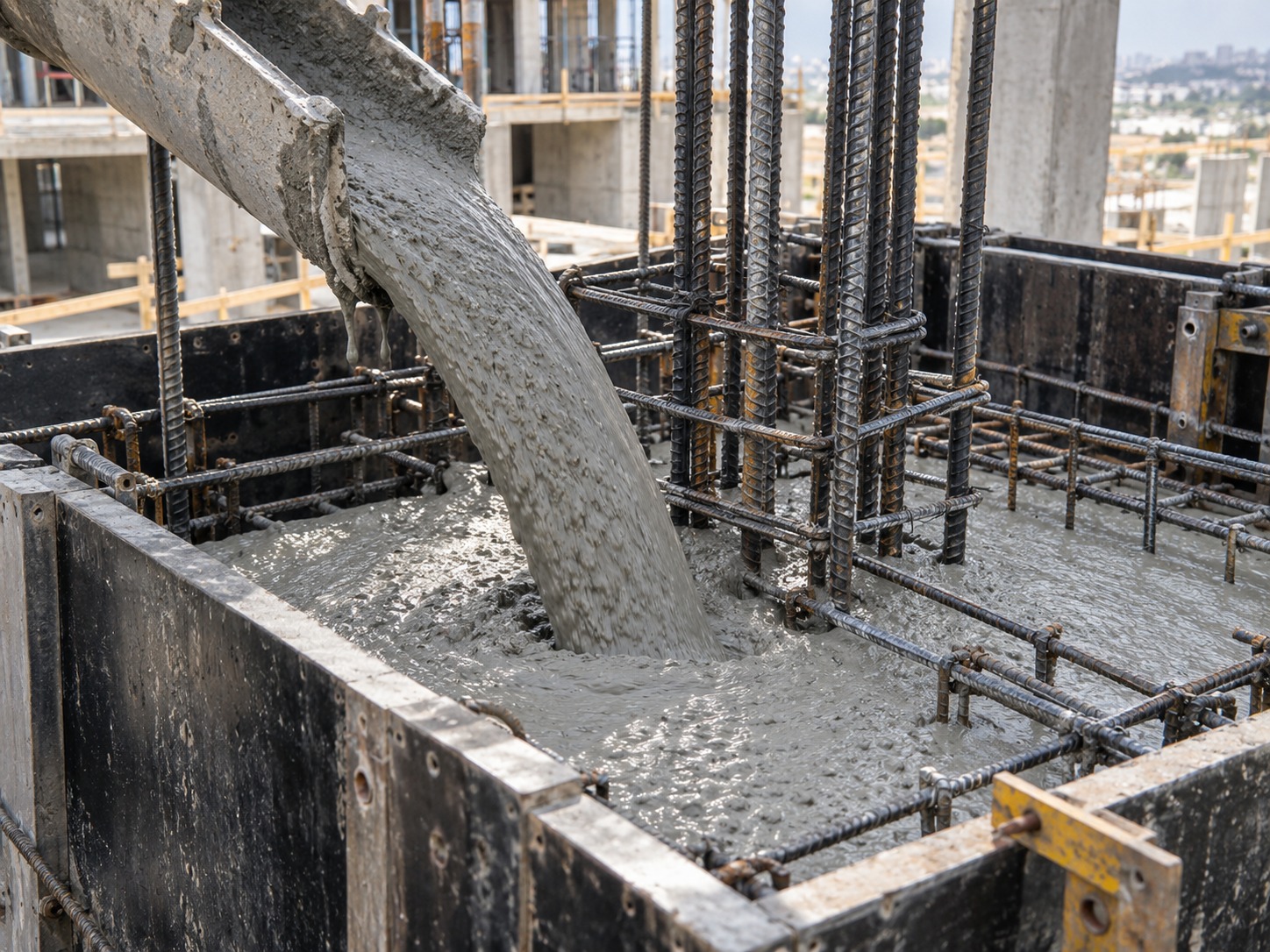
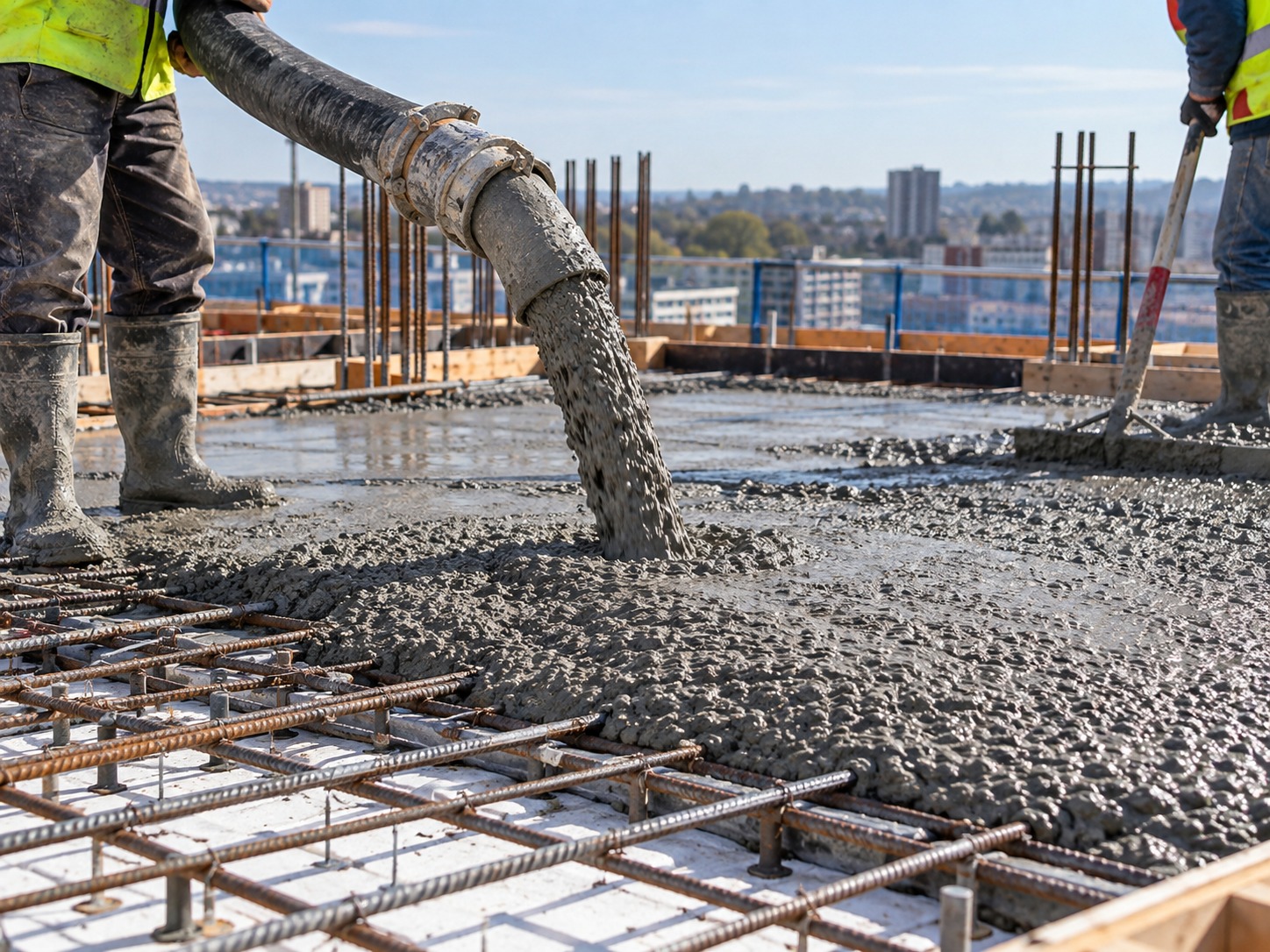
In heavily reinforced concrete structures, complex formwork geometries and projects requiring high surface quality, it is essential for concrete to fill the formwork completely and uniformly.

In conventional concrete applications, vibration may be required to compact the concrete. However, in some projects, dense reinforcement, narrow sections or complex geometries can make vibration difficult.

At this point, self-compacting concrete, also known as SCC, stands out as a special concrete technology that can flow under its own weight, pass through reinforcement and fill the formwork homogeneously without the need for mechanical vibration.

The right concrete admixture system plays an important role in achieving this high flowability while controlling segregation and bleeding.

What Is Self-Compacting Concrete?

Self-compacting concrete is a special type of concrete that has high flowability while maintaining mixture stability.

High flowability alone is not sufficient.

The concrete must also preserve its homogeneous structure while flowing through formwork, prevent coarse aggregate separation and maintain stable performance throughout placement.

For this reason, flowability, passing ability and segregation resistance should be evaluated together when designing self-compacting concrete.

How Is High Flowability Achieved?

Simply adding more water is not the correct way to increase concrete flowability.

Uncontrolled water addition increases the water/cement ratio and can negatively affect concrete strength and long-term durability.

For this reason, high-range water-reducing admixtures and superplasticizers are commonly used in self-compacting concrete production.

These admixtures make it possible to achieve high flowability at a lower water/cement ratio.

As a result, both fresh concrete placement performance and hardened concrete mechanical properties can be improved.

Why Is Segregation Control Important?

When concrete becomes highly flowable, the risk of coarse aggregate separating from the cement paste can increase.

This can create non-homogeneous areas within the concrete and reduce overall quality.

Suitable auxiliary admixtures and viscosity-modifying admixtures help maintain mixture stability in self-compacting concrete.

The objective is to allow concrete to flow easily while keeping the aggregate evenly distributed throughout the mixture.

Advantages in Heavily Reinforced Concrete Structures

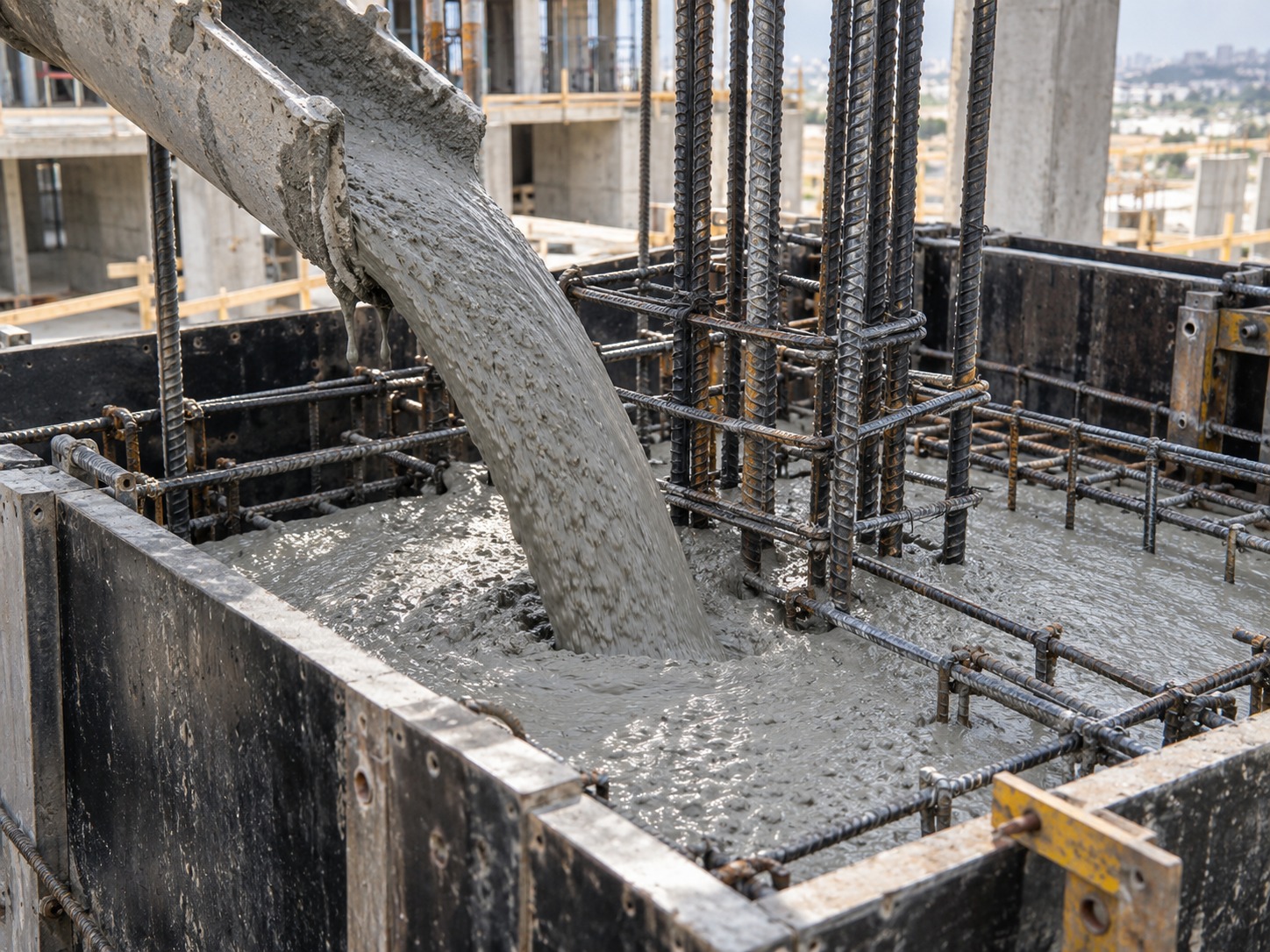
In heavily reinforced columns, walls, beams and special structural elements, it can be difficult for conventional concrete to reach every void.

Insufficient placement can lead to honeycombing, voids and surface defects.

Self-compacting concrete can move through narrow spaces between reinforcement bars thanks to its high passing ability.

This makes SCC particularly advantageous in structures with dense reinforcement.

Use of SCC in Precast and Prefabricated Concrete Production

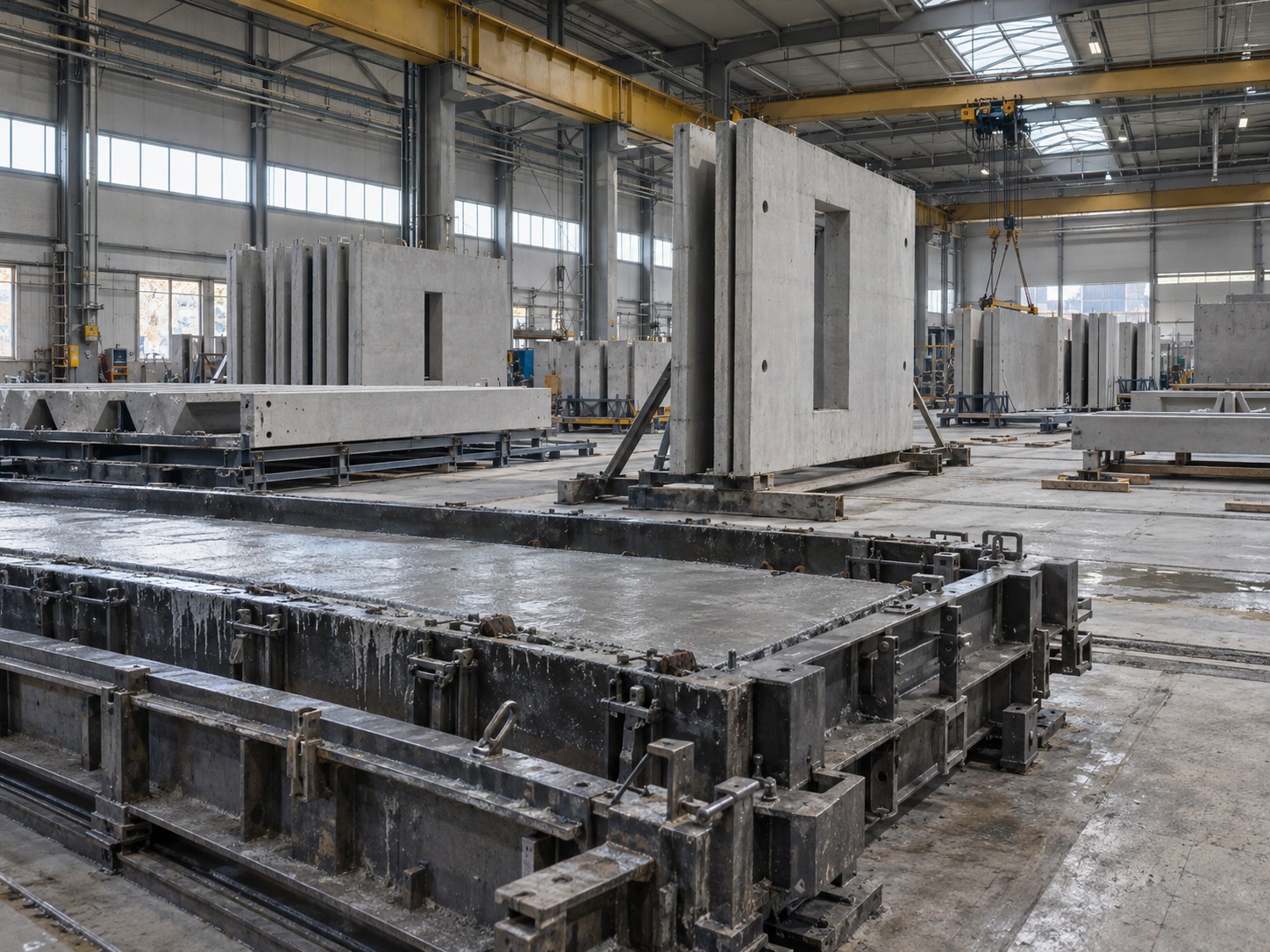
Surface quality and dimensional accuracy are important quality criteria in precast and prefabricated concrete production.

Self-compacting concrete can help fill detailed and complex molds more effectively and contribute to smoother, more uniform surfaces.

Reducing or eliminating the need for vibration can also help decrease production noise and application time.

These advantages make self-compacting concrete a valuable solution for precast elements with complex geometries.

Contribution to Concrete Surface Quality

Surface appearance directly affects the quality perception of architectural and precast concrete elements.

Insufficient contact between concrete and formwork may create air voids and surface imperfections.

Self-compacting concrete systems with high flowability and proper mixture stability can help fill the mold more uniformly.

With the right mix design, smoother surfaces and reduced finishing or repair requirements can be achieved.

Reducing the Need for Vibration

In conventional concrete applications, vibration is used to reduce trapped air and help concrete settle properly into the formwork.

However, vibration requires additional equipment, labor and application time.

When properly designed, self-compacting concrete can flow and settle under its own weight, significantly reducing the need for mechanical vibration.

This can provide a more controlled and efficient application process.

Is Every Concrete Admixture Suitable for Self-Compacting Concrete?

Achieving high flowability alone is not enough in SCC production.

Cement characteristics, aggregate grading, fine material content, water/cement ratio and concrete temperature can directly influence admixture performance.

The same admixture system may behave differently when used with different raw materials.

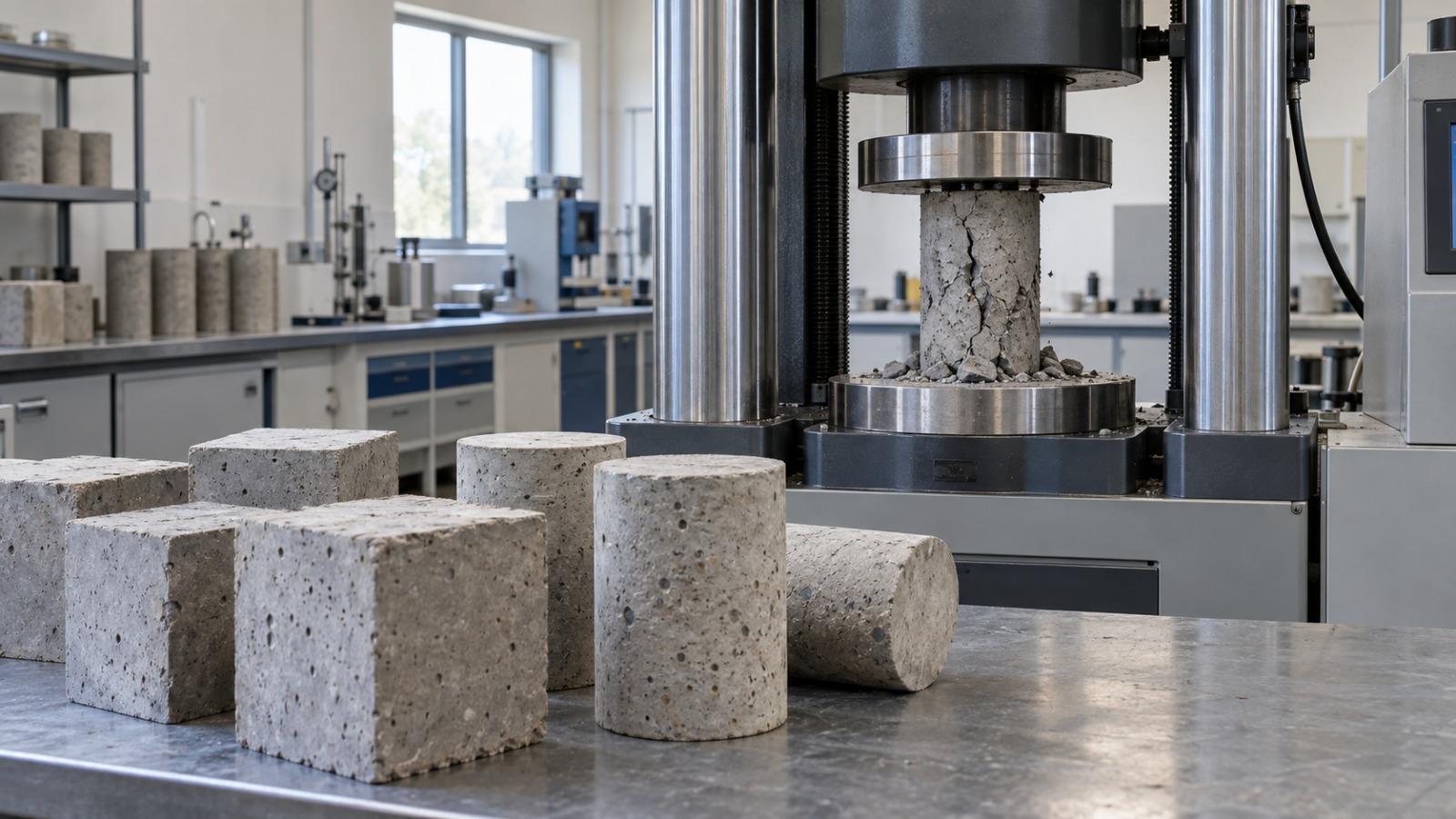
For this reason, concrete mix designs should be evaluated in laboratory conditions by monitoring parameters such as flow spread, viscosity, passing ability and segregation resistance.

Laboratory Testing for SCC Production

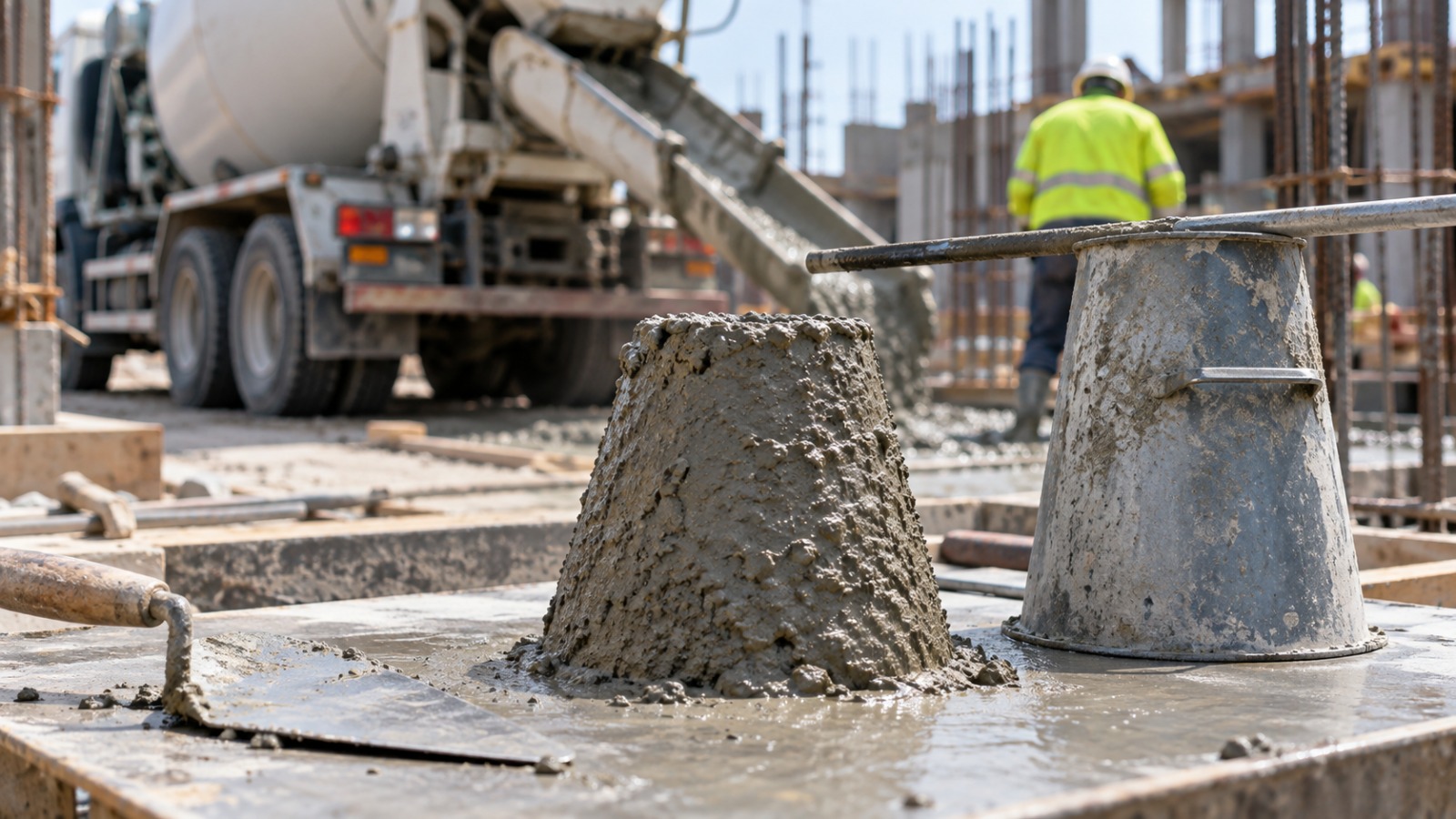
The performance of self-compacting concrete mixtures can be evaluated through various fresh concrete tests.

Tests such as slump flow provide information about the spreading ability of the concrete, while other methods can be used to evaluate viscosity, passing ability and segregation resistance.

These results help optimize admixture type and dosage according to the concrete mix design.

Production trials performed after laboratory testing are also important for confirming the performance of the system under actual site or plant conditions.

EMA Kimya Self-Compacting Concrete Admixture Solutions

EMA Kimya develops professional concrete admixture technologies for ready-mixed concrete plants, precast and prefabricated manufacturers, heavily reinforced concrete structures and high-performance concrete applications.

High-range water-reducing, superplasticizing and auxiliary concrete admixture systems can be optimized according to cement type, aggregate structure, target flowability and project requirements.

EMA Kimya's technical approach focuses not only on achieving high flowability, but also on improving mixture stability, placement performance, concrete strength and production consistency.

High flowability, controlled viscosity and a homogeneous concrete structure form the foundation of a successful self-compacting concrete application.

Related News

What Are Concrete Strength-Enhancing Admixtures? How Can Concrete Compressive Strength Be Increased?

Publication Date: 19 Eylül 2026

Why Does Concrete Lose Slump? How Can Workability Be Maintained in Ready-Mixed Concrete?

Publication Date: 19 Eylül 2026

The Right Admixture Technology for Early Strength and Faster Demolding in Precast Concrete Production

Publication Date: 19 Eylül 2026

What Causes Plastic Shrinkage Cracks in Concrete? How Can Early Surface Cracking Be Prevented?

Publication Date: 19 Eylül 2026

High Flowability and Controlled Concrete Performance with Self-Compacting Concrete Admixtures

Publication Date: 19 Eylül 2026

How Is Low-Carbon Concrete Produced?

Publication Date: 19 Eylül 2026

What Are Concrete Admixtures? Types and Applications

Publication Date: 19 Eylül 2026

What Is Alkali-Silica Reaction (ASR) in Concrete? How Can Internal Cracking and Long-Term Durability Loss Be Prevented?

Publication Date: 19 Eylül 2026

What Are Concrete Admixture Dosing Errors? Correct Storage and Use in Ready-Mixed Concrete Plants

Publication Date: 19 Eylül 2026

How to Improve Concrete Pumpability? Choosing the Right Admixture for Pumped Concrete

Publication Date: 19 Eylül 2026

How to Improve Water Resistance in Concrete? The Right Admixture Technology for Low-Permeability Concrete

Publication Date: 19 Eylül 2026

How Can Ready-Mixed Concrete Production Costs Be Reduced? Mix Design and Cost Optimization with Concrete Admixtures

Publication Date: 19 Eylül 2026

What Are Cement Grinding Aids? How Can Grinding Efficiency, Energy Savings and Cement Performance Be Improved in Cement Plants?

Publication Date: 19 Eylül 2026

How Does the Use of Recycled Water in Ready-Mixed Concrete Production Affect Concrete Quality? Concrete Admixtures and Water Management

Publication Date: 19 Eylül 2026

How Can Hydration Heat Be Controlled in Mass Concrete? The Right Admixture Technology for Dams and Large Concrete Pours

Publication Date: 19 Eylül 2026

Web Design & Software | COUR Media