English
×
All rights reserved. All content and images used on this website
belong to EMA Kimya and may not be used without permission.
cour
 EMA Kimya | Concrete Admixtures, Cement Additives, Construction Chemicals, Superplasticizers, High-Range Water Reducers, Concrete Performance Solutions, Ready-Mix and Precast Concrete Technologies, Infrastructure, Industrial Projects, Technical Support, Production and Cost Consulting  EMA Kimya | Concrete Admixtures, Cement Additives, Construction Chemicals, Superplasticizers, High-Range Water Reducers, Concrete Performance Solutions, Ready-Mix and Precast Concrete Technologies, Infrastructure, Industrial Projects, Technical Support, Production and Cost Consulting
EMA Kimya | Concrete Admixtures, Cement Additives, Construction Chemicals, Superplasticizers, High-Range Water Reducers, Concrete Performance Solutions, Ready-Mix and Precast Concrete Technologies, Infrastructure, Industrial Projects, Technical Support, Production and Cost Consulting

"Strength in Every Mix,
Quality in Every Drop"

×

Quality, reliability, and a commitment to sustainable production.

We provide professional solutions in concrete admixtures and construction chemicals.

Menu

Quality, reliability, and a commitment to sustainable production.

We provide professional solutions in concrete admixtures and construction chemicals.

10 October 2026

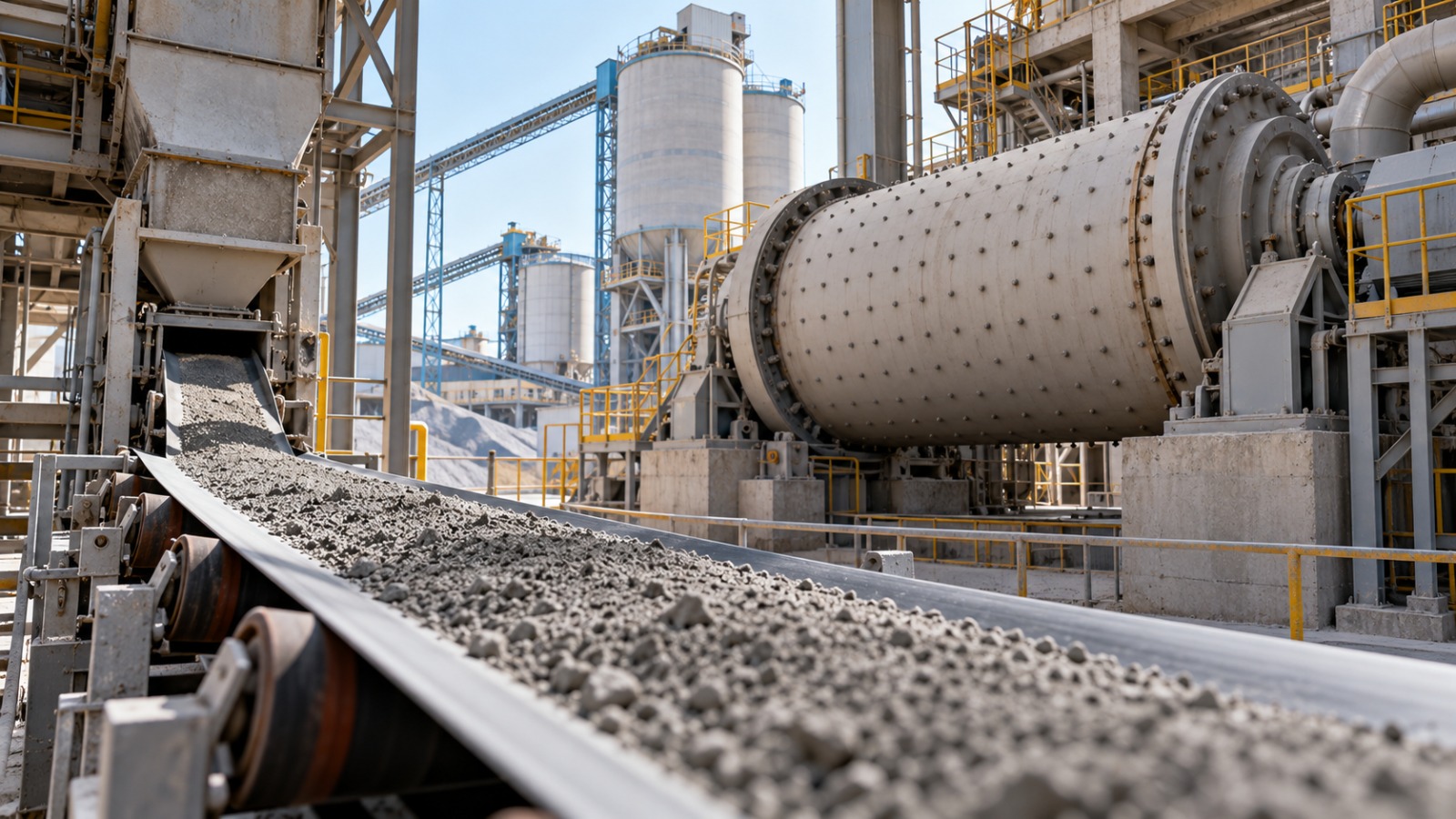
Grinding is one of the most important stages of cement production, directly affecting the fineness, particle size distribution and overall production efficiency of the final product.

Grinding systems used in cement plants consume significant amounts of electrical energy to reduce clinker and other cement components to the required fineness. Therefore, efficient grinding operations are essential for both production capacity and cement manufacturing costs.

Cement grinding aids are chemical admixture systems used in modern cement production to help reduce particle agglomeration during grinding, improve material flow and enhance grinding efficiency.

Under suitable process conditions, the right grinding aid technology may help increase production capacity at the same energy consumption level or reduce specific energy consumption while maintaining the required production output.

However, the performance of cement grinding aids does not depend solely on the chemical product used. Clinker characteristics, mineral components, grinding mill type, separator efficiency, target fineness and cement quality requirements must all be evaluated together.

Therefore, successful application of cement grinding aids and performance enhancers requires the combined optimization of chemical admixture selection and production processes.

What Is a Cement Grinding Aid?

Cement grinding aids are low-dosage chemical admixture systems used during the grinding of clinker and other cement components.

These products can help reduce the tendency of fine particles to adhere to one another and improve the movement of ground material throughout the grinding process.

Agglomeration of fine particles inside cement mills is one of the factors that can negatively affect grinding efficiency.

Suitable grinding aids can help control these particle interactions, contributing to more efficient achievement of the required cement fineness.

However, the same grinding aid should not be expected to provide identical results in every cement plant.

Why Is Grinding Important in Cement Production?

In cement production, clinker, gypsum and other components, depending on the cement type, are ground in specific proportions to produce the final product.

The resulting particle size distribution influences cement hydration behavior and strength development.

If sufficient grinding is not achieved, reaching the required cement performance may become more difficult.

However, excessive grinding can also increase energy consumption and production costs.

Therefore, the objective is not simply to produce the finest possible cement, but to achieve the required quality and strength characteristics under the most efficient grinding conditions.

What Is Particle Agglomeration in Cement Mills?

Agglomeration refers to the tendency of fine cement particles formed during grinding to adhere to one another and create larger clusters.

The surface characteristics of cement particles and the interactions occurring during grinding can influence this behavior.

As agglomeration increases, some fine particles may behave as clusters rather than moving independently.

This can negatively affect material flow, separator performance and overall grinding mill efficiency.

One of the main functions of cement grinding aids is to help control these particle interactions.

How Do Cement Grinding Aids Work?

Depending on the chemical technology used, cement grinding aids can interact with the surfaces of particles during the grinding process.

These interactions may help reduce the tendency of particles to adhere to each other and improve their dispersion during grinding.

As a result, fine particle agglomeration may be limited, supporting a more efficient grinding process.

However, the effectiveness of a chemical grinding aid depends on clinker properties, mill operating conditions and the other cement components used.

Therefore, grinding aid performance must be verified under actual production conditions.

Can Cement Grinding Aids Reduce Energy Consumption?

Suitable cement grinding aids can help improve energy efficiency under certain production conditions.

They may enable the required cement fineness to be achieved with lower specific energy consumption.

Alternatively, higher production capacity may be obtained at the same energy consumption level.

However, both benefits should not be assumed to occur simultaneously or at the same rate.

The actual level of energy savings depends on the mill type, existing process efficiency, clinker characteristics and required cement quality.

Therefore, the energy performance of a grinding aid should be evaluated according to electrical energy consumed per ton of cement produced.

What Is Specific Energy Consumption in Cement Plants?

Specific energy consumption refers to the amount of energy required to produce a defined quantity of material.

In cement grinding operations, this value is generally expressed in kWh/ton.

For example, the relationship between the electricity consumed by a grinding mill and the quantity of cement produced at a given operating capacity is an important indicator of process efficiency.

During grinding aid trials, mill energy consumption, production capacity and final product quality should be monitored together.

The economic performance of a grinding aid should not be determined solely by production tonnage.

How Can Cement Grinding Capacity Be Increased?

Grinding capacity in cement plants is influenced by several factors.

Clinker grindability, mill loading, grinding media condition, material feed rate, separator performance and process temperature can all affect production capacity.

Suitable cement grinding aids can help reduce particle agglomeration and support increased production capacity in certain grinding systems.

However, improvements in grinding capacity must not compromise the fineness, particle size distribution or strength requirements of the finished cement.

Therefore, capacity optimization should always be evaluated together with final product quality.

Cement Grinding Aids in Ball Mills

Ball mills are among the grinding systems used in cement production.

In these systems, materials are reduced in size through the impact and friction generated by grinding balls inside the mill.

Fine particles produced during grinding may accumulate on the grinding media and internal mill surfaces under certain conditions.

Suitable grinding aids can help reduce particle adhesion to these surfaces and limit agglomeration between particles.

This may improve grinding conditions and support higher production efficiency.

Grinding Aid Applications in Vertical Roller Mills

Vertical roller mills are used for grinding cement and various mineral materials.

In these systems, material is ground under pressure between the rollers and the grinding table.

The performance of grinding aids in vertical roller mills may differ from their behavior in ball mills.

Grinding bed stability, drying conditions, internal material circulation and separator performance all influence system efficiency.

Therefore, the grinding aid technology used in vertical roller mills should be evaluated according to the specific requirements of the process.

How Do Clinker Characteristics Affect Grinding Efficiency?

The mineralogical composition, burning conditions and cooling process of clinker can influence its grindability.

Different clinker sources may produce different energy consumption levels and particle size distributions under the same grinding conditions.

Therefore, a grinding aid that performs successfully with one clinker source may not provide identical results with clinker having different characteristics.

When clinker properties change, grinding aid dosage and process performance should be reassessed.

The objective is to maintain production consistency through a chemical grinding aid system compatible with the raw materials used.

What Is Blaine Fineness and Why Is It Important?

Blaine fineness is a commonly used parameter for evaluating the specific surface area of cement.

Cement fineness can influence hydration behavior and strength development.

However, two cements with the same Blaine value may have different particle size distributions.

Therefore, identical Blaine fineness values do not necessarily mean that the cements will exhibit identical performance characteristics.

When evaluating cement grinding aids, particle size distribution, setting behavior and strength results should be monitored alongside Blaine fineness.

Does Particle Size Distribution Affect Cement Strength?

Yes.

The proportions of different particle sizes within cement can influence the rate of cement hydration and strength development.

Very fine particles may play an important role in early-age hydration, while coarser particles can contribute to reactions occurring over longer periods.

However, simply increasing the proportion of fine particles does not always produce the optimum result.

Cement water demand, workability and strength requirements must be evaluated together.

Therefore, cement performance depends not only on total fineness but also on achieving a suitable particle size distribution.

Are Cement Grinding Aids and Performance Enhancers the Same?

Not exactly.

The primary purpose of cement grinding aids is to support grinding process efficiency.

Cement performance enhancers, depending on the chemical technology used, are designed to improve specific physical or mechanical characteristics of cement.

Some chemical systems may influence both grinding efficiency and certain cement performance properties.

However, increasing grinding capacity does not automatically mean that a grinding aid will also increase cement strength.

Therefore, grinding efficiency and final cement quality must be tested separately.

Do Cement Performance Enhancers Affect Early Strength?

Early cement strength development is related to clinker characteristics, cement fineness, particle size distribution, binder composition and hydration behavior.

Certain performance-enhancing admixture technologies may help improve early-age strength in specific cement systems.

In these applications, 1-day and 2-day compressive strength results are important evaluation criteria.

However, changes in early strength performance should not be evaluated independently from the final cement properties.

The admixture system should be examined for both early strength and the strength values required at later ages by relevant standards and project specifications.

Can Cement Grinding Aids Affect 28-Day Strength?

The effect of grinding aids on final cement performance depends on the chemical technology and cement system used.

Changes in particle size distribution and grinding conditions may influence cement hydration behavior.

However, increased grinding efficiency alone does not guarantee higher 28-day compressive strength.

Therefore, strength results at the specified testing ages should be compared during grinding aid trials.

The objective is to improve production efficiency while ensuring that the cement continues to meet the required quality standards.

Why Are Gypsum and Sulfate Balance Important?

Gypsum plays an important role in controlling cement setting behavior.

The sulfate balance of cement should be evaluated together with clinker composition, grinding conditions and other binder components.

Grinding temperature and process conditions can influence the behavior of calcium sulfate phases.

Therefore, when introducing a new grinding aid or performance enhancer, not only production capacity but also setting behavior and other cement properties should be monitored.

How Does Separator Efficiency Affect Grinding Performance?

Separators in cement grinding plants classify ground materials according to particle size.

Depending on the system design, particles that have not reached the required fineness may be returned to the grinding circuit.

Efficient separator operation is important for achieving the target fineness and particle size distribution of the final product.

When evaluating grinding aid performance, separator settings and parameters such as circulating material load should also be considered.

Changes in product quality should not automatically be attributed solely to the chemical grinding aid.

How Is Cement Grinding Aid Dosage Determined?

The optimum dosage of a cement grinding aid depends on its chemical characteristics, cement composition and target performance.

Insufficient dosage may fail to provide the expected improvement in grinding efficiency.

Excessive dosage may increase production costs without providing additional technical benefits or may affect certain cement properties.

For this reason, different dosage levels should be compared through laboratory studies and industrial trials.

The preferred dosage should not be the highest possible amount, but the amount that delivers the required technical performance at the most suitable cost.

Is the Grinding Aid Dosing Point Important?

Yes.

The point at which a grinding aid is introduced into the system and the method of application can influence its distribution throughout the grinding process.

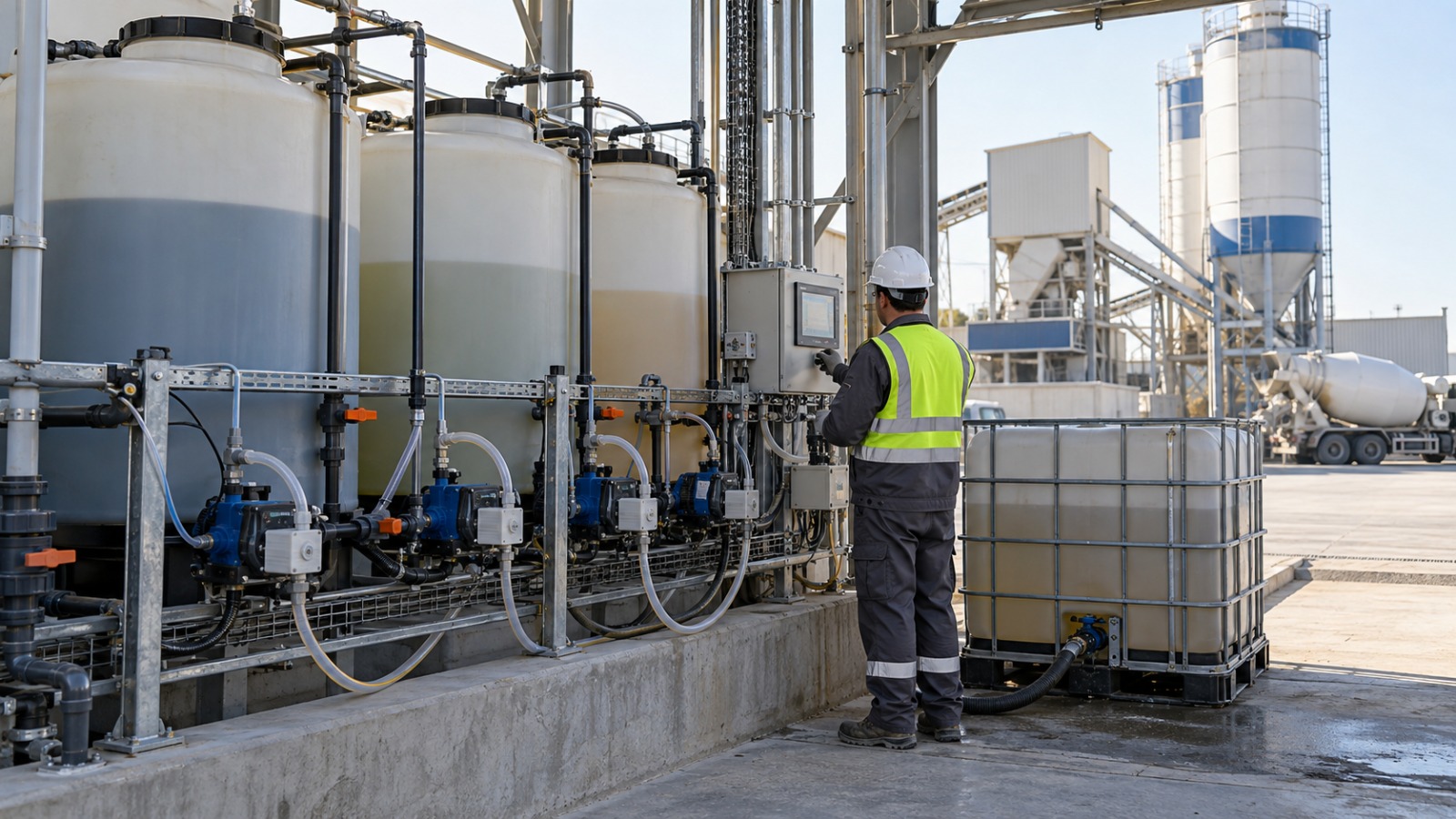
The dosing point, dosing pump capacity, physical characteristics of the grinding aid and operating conditions should be evaluated together.

Consistent admixture dosing is important for stable production.

Therefore, cement grinding aid applications should include not only product selection but also verification of dosing-system accuracy and continuity.

Can Cement Grinding Aids Reduce Production Costs?

The economic benefits of a suitable grinding aid system may appear in several ways.

These may include reduced specific energy consumption, increased production capacity or more efficient achievement of the required cement quality.

However, the economic value of a grinding aid cannot be determined solely by its price per kilogram.

Admixture cost, energy consumption, production capacity, final product quality and maintenance requirements should all be considered.

The main objective of economic evaluation is to optimize the total cost of producing one ton of cement that meets the applicable quality standards.

Can Cement Grinding Aids Help Reduce Carbon Emissions?

Improving energy efficiency in the cement industry is important for reducing the environmental impacts of production.

Reducing electricity consumption during grinding can contribute to lower indirect carbon emissions, depending on the source of electricity.

In addition, suitable cement technologies and binder optimization may support efforts to reduce clinker consumption in certain applications.

However, using a grinding aid does not automatically guarantee a specific reduction in carbon emissions.

Actual environmental benefits should be verified using production data and appropriate calculation methods.

The Role of Performance Enhancers in Clinker Ratio Optimization

Clinker is one of the primary binding components used in cement production.

Depending on the cement type and relevant standards, limestone, ground granulated blast furnace slag, fly ash and other suitable mineral components may also be incorporated.

The proportions of these components can influence cement strength, water demand and other performance characteristics.

Certain cement performance-enhancing technologies may help optimize binder composition in suitable systems.

However, any changes in clinker content must be verified for compliance with applicable standards and final cement performance requirements.

Do Cement Grinding Aids Affect Storage and Transportation?

The flow behavior of ground cement can be important for storage and transportation operations.

Depending on the technology used, certain grinding aids may influence the flow characteristics of cement particles.

However, the extent of this effect depends on cement fineness, moisture conditions, temperature and storage conditions.

Therefore, the potential effects of grinding aids on silo operation and cement dispatch performance may also be evaluated according to actual production requirements.

Which Parameters Should Be Evaluated in Laboratory Trials?

Evaluating only one parameter is not sufficient when testing cement grinding aids.

Depending on the product and application conditions, grinding fineness, particle size distribution, admixture dosage, setting time and compressive strength may be examined.

The behavior of the admixture with different clinker sources and mineral components is also important.

Laboratory testing provides an important starting point for selecting a suitable grinding aid.

However, laboratory results alone do not guarantee the same performance under actual industrial grinding conditions.

Why Are Industrial Cement Mill Trials Important?

Cement mills operating under actual production conditions have different mechanical and operational characteristics compared with laboratory grinding equipment.

Mill loading, grinding energy, feed rate, separator settings and process temperature can all affect performance.

For this reason, controlled industrial trials are important when evaluating grinding aids for critical applications.

Production capacity, specific energy consumption, product fineness, particle size distribution and strength results should be compared before and after the trial.

Comparisons conducted under conditions that are as consistent as possible provide a more reliable assessment of the grinding aid's actual performance.

Why Is Continuous Quality Control Necessary in Cement Plants?

Raw materials and process conditions in cement production may change over time.

Clinker characteristics, mineral component proportions, grinding conditions and the target cement class can all be affected by these changes.

For this reason, successful grinding aid application should not be based solely on the results of the initial trial.

Regular quality control, monitoring of admixture dosage and evaluation of process data are important for production continuity.

Where necessary, the grinding aid system and dosage should be re-optimized.

What Should Be Considered When Choosing a Cement Admixture Supplier?

The selection of a cement grinding aid and performance enhancer supplier should not be based only on product price.

Compatibility with the existing clinker and grinding mill system, technical data support, contribution to laboratory studies and the approach to industrial trials are important evaluation criteria.

Consistent product supply and ongoing monitoring of application performance can also influence production continuity.

Therefore, cement admixture procurement should involve both technical and economic evaluation.

Grinding Efficiency in Cement Plants in Türkiye

Clinker sources, grinding mill technologies, cement types and production capacities can vary between cement plants in Türkiye.

Different process conditions may also be found in Konya, Ankara, Kayseri, Eskişehir, Sivas and other production regions of Central Anatolia.

For this reason, the same grinding aid and dosage should not be assumed to provide optimum results in every cement plant.

The most suitable grinding aid technology should be determined by evaluating local raw material characteristics, product quality targets and the existing production system.

EMA Kimya Cement Grinding Aids and Performance Enhancement Solutions

EMA Kimya develops professional cement and concrete admixture technologies for cement plants, clinker grinding facilities, ready-mixed concrete manufacturers and large-scale construction material production processes.

When evaluating cement grinding aids and performance enhancers, clinker characteristics, mineral components, mill type, production capacity, target cement fineness, strength requirements and energy consumption should be considered together.

Suitable grinding aids and performance-enhancing systems can be optimized according to actual plant conditions to help improve grinding efficiency, production consistency and final cement performance.

EMA Kimya's technical approach focuses not only on chemical admixture supply but also on cement production efficiency, energy consumption, admixture dosage, cement quality control, production cost and sustainable manufacturing objectives.

Efficient cement production is not simply about grinding more cement. It is about achieving the required cement performance more economically and sustainably through suitable grinding aid technology, optimized process conditions and controlled quality management.

Related News

What Are Concrete Admixture Dosing Errors? Correct Storage and Use in Ready-Mixed Concrete Plants

Publication Date: 10 Ekim 2026

Concrete Protection Products and Their Advantages

Publication Date: 10 Ekim 2026

How Can Reinforcement Corrosion Be Prevented in Reinforced Concrete Structures? The Importance of Concrete Protection Products

Publication Date: 10 Ekim 2026

The Importance of Set-Accelerating Admixtures in Cold Weather Concrete Applications

Publication Date: 10 Ekim 2026

Why Do Honeycombing and Voids Occur in Concrete? The Right Application and Admixture Technology for More Homogeneous Concrete

Publication Date: 10 Ekim 2026

Why Does Concrete Lose Slump? How Can Workability Be Maintained in Ready-Mixed Concrete?

Publication Date: 10 Ekim 2026

What Is the Difference Between Superplasticizers and High-Range Water-Reducing Concrete Admixtures?

Publication Date: 10 Ekim 2026

The Importance of the Right Admixture Technology for Shrinkage and Crack Control in Concrete

Publication Date: 10 Ekim 2026

What Is a Set-Accelerating Concrete Admixture? How Can Setting Time and Early Strength Be Controlled in Cold Weather?

Publication Date: 10 Ekim 2026

How to Improve Concrete Pumpability? Choosing the Right Admixture for Pumped Concrete

Publication Date: 10 Ekim 2026

How Can Ready-Mixed Concrete Production Costs Be Reduced? Mix Design and Cost Optimization with Concrete Admixtures

Publication Date: 10 Ekim 2026

Support Surface Strength and Long-Term Performance with Concrete Curing and Protection Products

Publication Date: 10 Ekim 2026

What Are Concrete Strength-Enhancing Admixtures? How Can Concrete Compressive Strength Be Increased?

Publication Date: 10 Ekim 2026

How Can Concrete Strength Be Increased?

Publication Date: 10 Ekim 2026

How Is Low-Carbon Concrete Produced?

Publication Date: 10 Ekim 2026

Web Design & Software | COUR Media