English
×
All rights reserved. All content and images used on this website
belong to EMA Kimya and may not be used without permission.
cour
 EMA Kimya | Concrete Admixtures, Cement Additives, Construction Chemicals, Superplasticizers, High-Range Water Reducers, Concrete Performance Solutions, Ready-Mix and Precast Concrete Technologies, Infrastructure, Industrial Projects, Technical Support, Production and Cost Consulting  EMA Kimya | Concrete Admixtures, Cement Additives, Construction Chemicals, Superplasticizers, High-Range Water Reducers, Concrete Performance Solutions, Ready-Mix and Precast Concrete Technologies, Infrastructure, Industrial Projects, Technical Support, Production and Cost Consulting
EMA Kimya | Concrete Admixtures, Cement Additives, Construction Chemicals, Superplasticizers, High-Range Water Reducers, Concrete Performance Solutions, Ready-Mix and Precast Concrete Technologies, Infrastructure, Industrial Projects, Technical Support, Production and Cost Consulting

"Strength in Every Mix,
Quality in Every Drop"

×

Quality, reliability, and a commitment to sustainable production.

We provide professional solutions in concrete admixtures and construction chemicals.

Menu

Quality, reliability, and a commitment to sustainable production.

We provide professional solutions in concrete admixtures and construction chemicals.

25 September 2026

How Is Low-Carbon Concrete Produced? Cement Optimization and Concrete Admixture Technologies

In the concrete industry, strength, workability and production cost are no longer the only important considerations. Using raw materials more efficiently is also becoming increasingly important. In particular, designing the binder system correctly is a key engineering issue when the goal is to achieve the required performance without using unnecessary amounts of cement.

This approach is one of the main foundations of low-carbon concrete and more resource-efficient concrete production.

However, producing low-carbon concrete does not simply mean reducing the amount of cement in the mix. The water/cement ratio, mineral components, aggregate characteristics, chemical admixtures, curing conditions and target strength class should all be evaluated together.

The right concrete admixture technology can help achieve the required workability with lower water demand and support more efficient use of the available binder system.

What Is Low-Carbon Concrete?

Low-carbon concrete refers to concrete systems designed to reduce environmental impact while maintaining the technical performance required by the project.

The overall environmental performance of concrete can vary depending on cement type, clinker content, mineral additions, transportation distances, production energy and concrete mix design.

For this reason, low-carbon concrete cannot be evaluated by looking at only one component of the mixture.

The objective is to maintain the required strength and durability while using raw materials as efficiently as possible.

Why Is Cement Content Important in Concrete?

Cement is one of the primary components responsible for creating the binder structure of concrete.

However, continuously increasing cement content to improve concrete strength is not always the most efficient solution.

Excessive binder content can increase production costs, raise heat of hydration and influence shrinkage behavior in some concrete mixtures.

For this reason, modern concrete design does not focus only on using more cement, but on achieving higher and more balanced performance from the binder already used.

Can Cement Content Be Reduced in Concrete?

Reducing cement content is only meaningful if the required concrete performance can still be maintained.

Concrete class, early and final strength, workability, pumpability, permeability and durability should all be evaluated together.

Uncontrolled reduction of cement can lead to significant losses in concrete strength and workability.

For this reason, binder optimization should be supported by laboratory studies and production trials.

The Role of High-Range Water-Reducing Admixtures

Producing concrete with a low water/cement ratio is an important part of high-performance and resource-efficient concrete design.

However, reducing water content can also reduce workability.

At this point, high-range water-reducing admixtures and superplasticizers help disperse cement particles more effectively and support the required workability with less mixing water.

The objective is not only to make concrete more fluid, but also to use the binder system more efficiently.

The Relationship Between Water/Cement Ratio and Binder Efficiency

The amount of water in concrete directly affects the pore structure of hardened concrete.

Excessive water can lead to higher capillary porosity after hardening.

This may increase the amount of cement required to reach a specific strength target.

By reducing the water/cement ratio with a suitable water-reducing admixture system, a denser concrete structure can be achieved.

This makes not only cement quantity but also cement efficiency an important part of modern concrete design.

The Role of Mineral Components in Concrete Mix Design

Modern concrete mixtures may contain various mineral components in addition to Portland cement.

The type and amount of these materials can influence early strength, final strength, workability and long-term concrete performance.

When mineral components are introduced into the binder system, the chemical admixture system should also be evaluated according to the new binder composition.

Changes in cementitious materials can directly affect the performance of concrete admixtures.

Low-Clinker Cements and Concrete Admixtures

Binder systems with reduced clinker content are becoming increasingly important in cement and concrete technology.

However, changes in cement composition may influence water demand, setting behavior and early strength development.

For this reason, admixture compatibility should be carefully evaluated when using low-clinker cements or cements containing different mineral components.

A suitable admixture system can help support the required workability and performance in these binder systems.

Why Can Early Strength Be Critical?

Changes in binder composition may affect early strength development in certain concrete mixes.

This becomes particularly important in precast production, fast-demolding applications and plants operating with short production cycles.

For this reason, cement optimization should not be evaluated only according to 28-day compressive strength.

Depending on project requirements, 1-day, 2-day, 7-day and final strength performance should also be considered together.

Mix Design Optimization in Ready-Mixed Concrete Plants

Concrete mix optimization should not remain limited to theoretical calculations.

The actual characteristics of cement, aggregate grading, aggregate moisture, fine material content and concrete temperature can directly affect production performance.

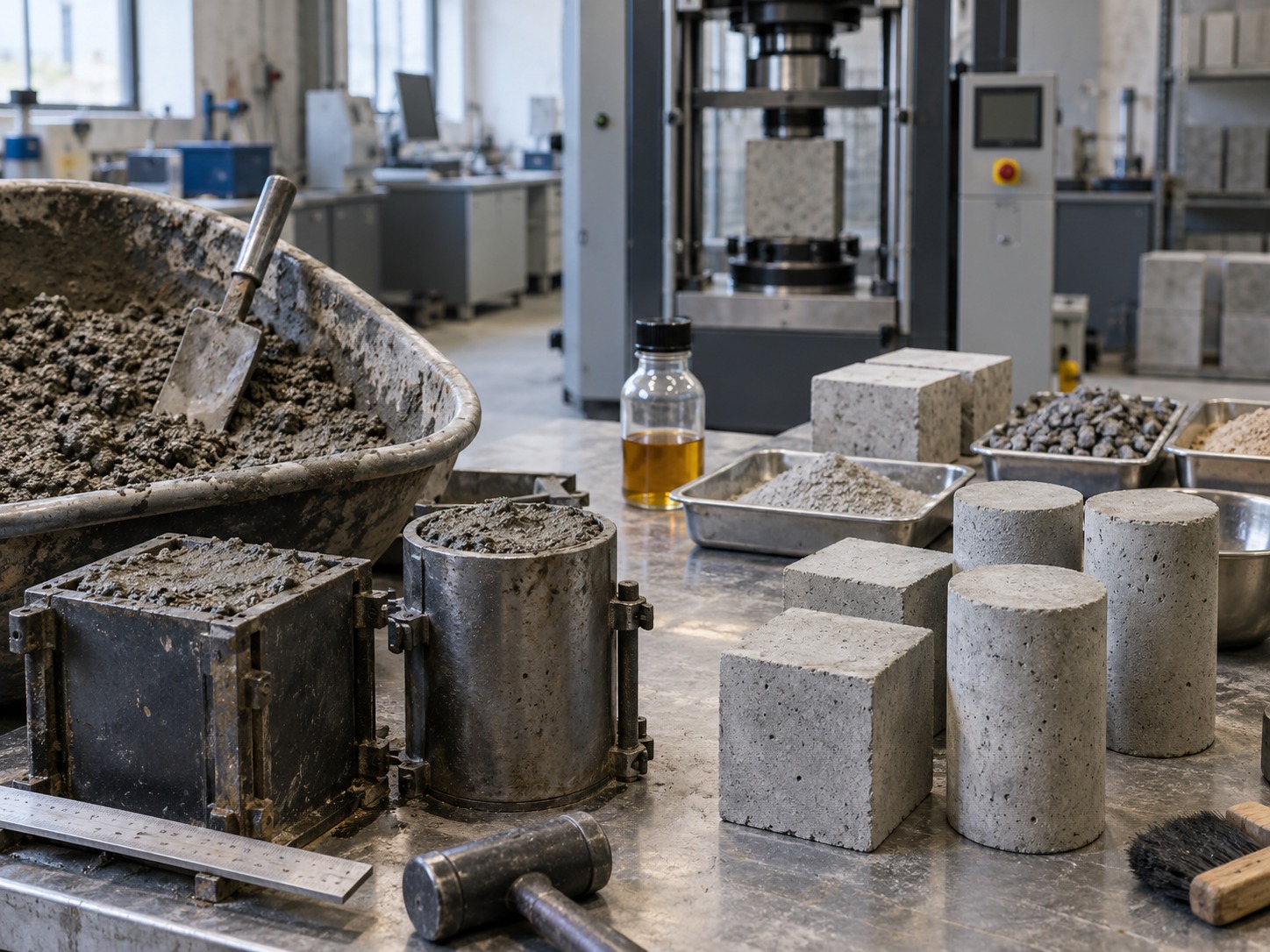
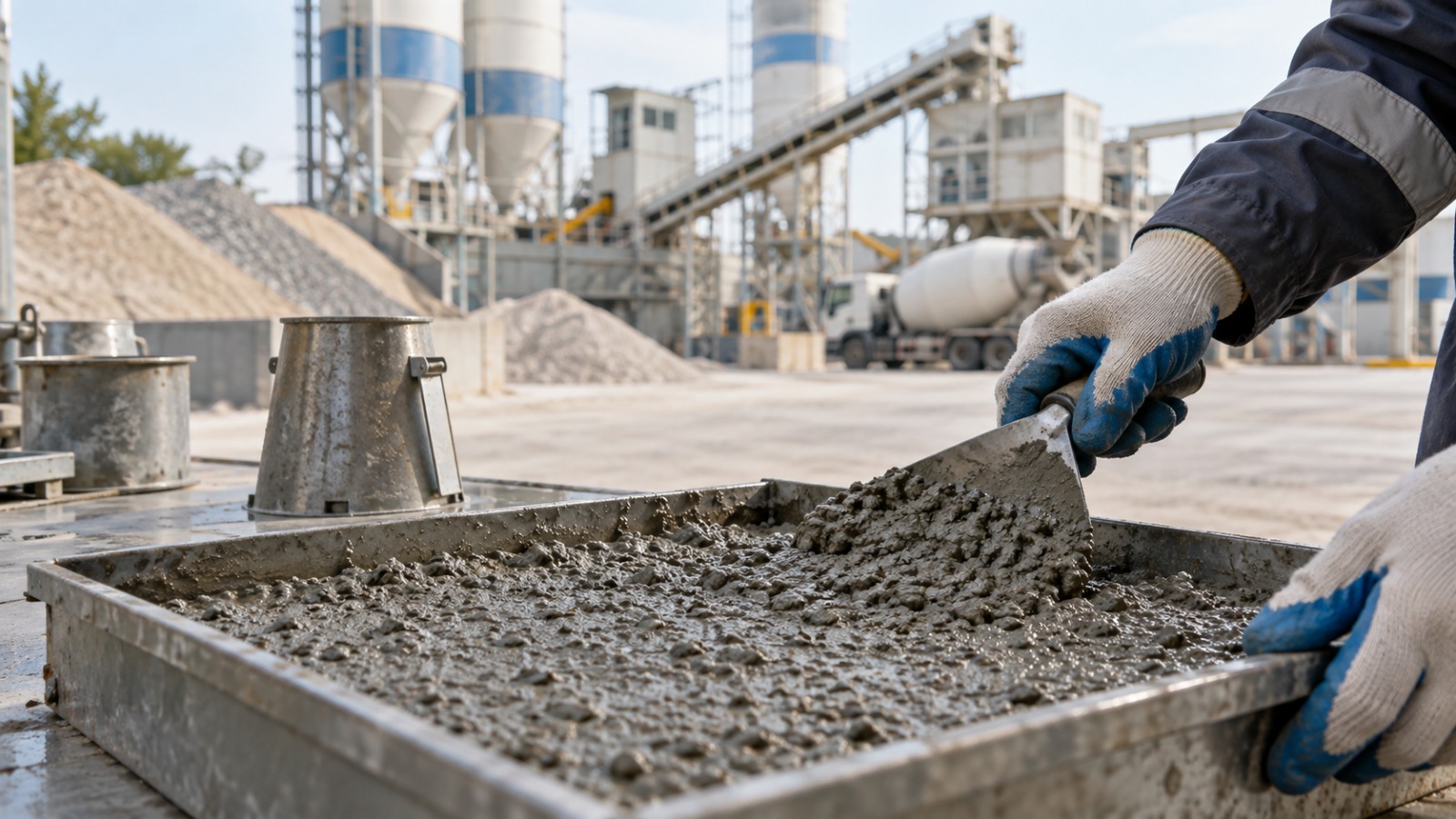
For this reason, different binder and admixture combinations should be tested under laboratory conditions.

Production trials can then be used to confirm laboratory results under actual batching plant conditions.

Is Less Cement Always Better?

No.

Reducing cement content as much as possible is not, by itself, a sound engineering objective.

Concrete must still meet the required strength, durability, pumpability, surface quality and service-life requirements.

Using too much binder may be inefficient, but using too little can also place concrete performance at risk.

For this reason, the objective should be an optimum binder system, not simply the minimum possible cement content.

Why Should Concrete Durability Be Considered?

It is not sufficient to focus only on material consumption during concrete production.

A concrete element should also maintain its performance throughout its intended service life.

For this reason, when designing low-carbon or resource-efficient concrete, permeability, crack control, freeze-thaw resistance and other project-specific durability requirements should also be considered.

Combining high performance with efficient material use creates a more balanced concrete design approach.

Can Concrete Admixtures Help Reduce Cement Consumption?

In suitable concrete mix designs, chemical admixtures can help improve the efficiency of the binder system.

In particular, admixtures with strong water-reducing performance can help achieve the required workability at lower water contents.

This can make it possible to re-evaluate and optimize binder content in certain concrete mixtures.

However, the achievable level of optimization depends on the raw materials and performance requirements.

For this reason, it is not technically correct to define a fixed cement-reduction percentage for every concrete mixture.

Cost and Performance Should Be Evaluated Together

Concrete mix optimization should not focus only on cement quantity or the price per kilogram of admixture.

Total binder cost per cubic meter, admixture cost, production efficiency and achieved concrete performance should all be considered together.

A higher-performance admixture system may allow other components of the concrete mix to be used more efficiently.

For this reason, the most accurate evaluation is based on total concrete cost and achieved performance, rather than unit product price alone.

Why Are Laboratory Studies Necessary?

Reliable binder optimization requires different concrete mix designs to be compared.

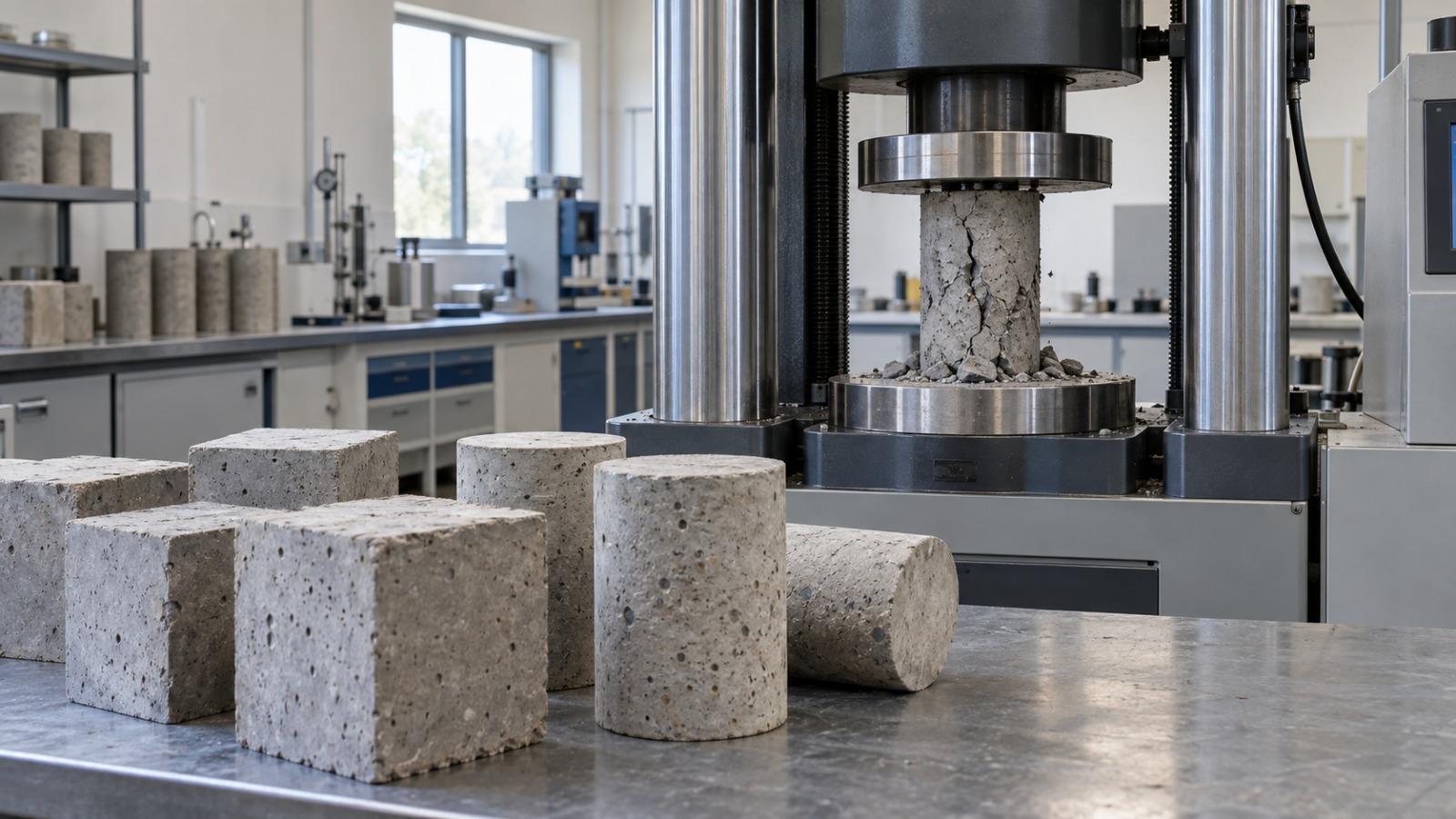
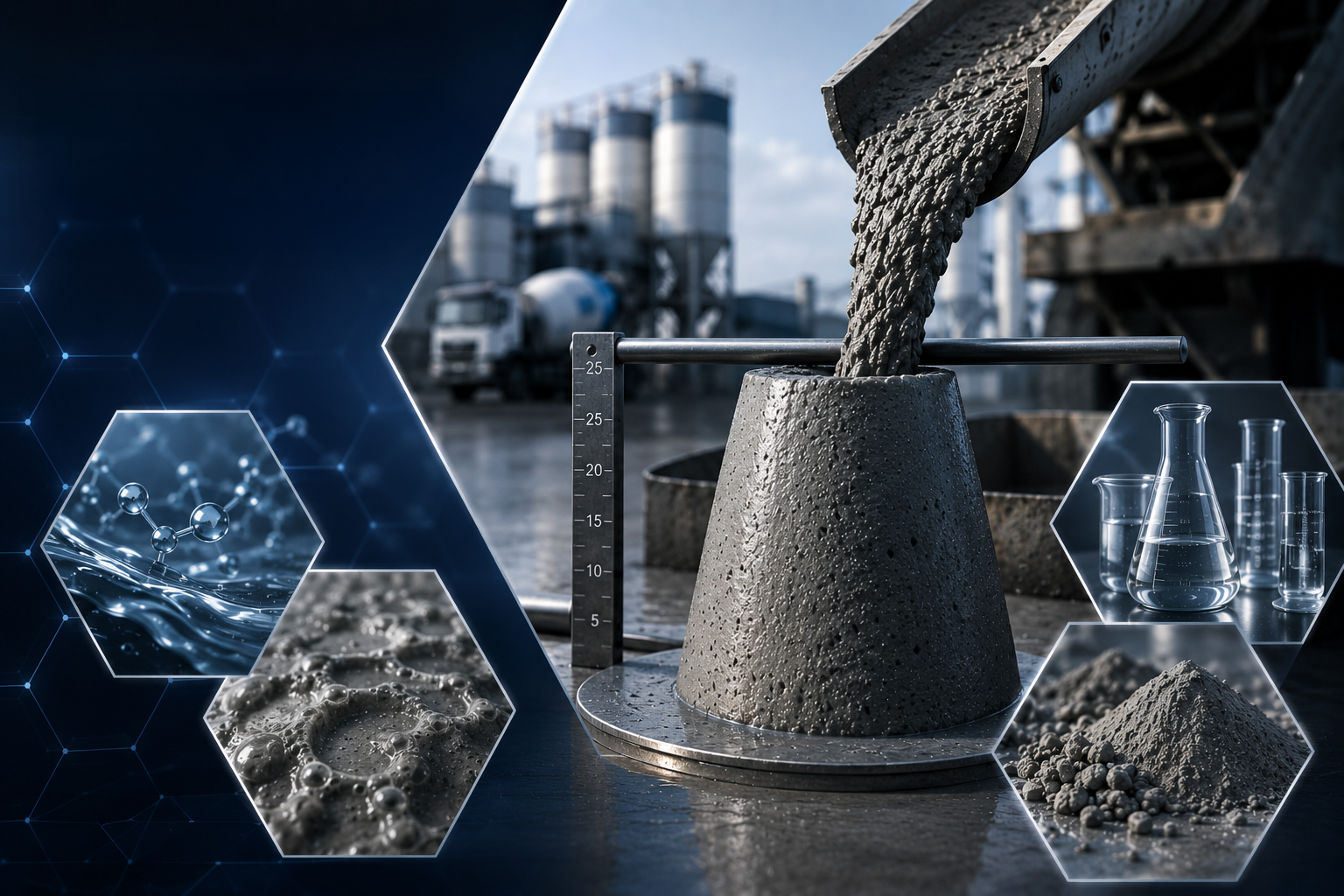
Water demand, initial consistency, slump retention, air content, setting time, early strength, 7-day strength and 28-day strength can all be evaluated during laboratory trials.

Where necessary, permeability and other durability tests can also be included.

These studies help identify a concrete mix that not only uses an optimized amount of binder but also delivers the required performance.

EMA Kimya Concrete and Binder Optimization Solutions

EMA Kimya develops professional concrete and cement admixture technologies for ready-mixed concrete plants, precast and prefabricated manufacturers, cement plants, high-performance concrete applications and large-scale infrastructure projects.

Cement characteristics, mineral components, aggregate structure, target concrete class, water/cement ratio and production conditions can be evaluated together to optimize the most suitable admixture system for each project.

EMA Kimya's technical approach focuses not only on increasing concrete flowability, but also on improving binder efficiency, water reduction, strength, workability and long-term concrete performance together.

More efficient concrete production is not simply about using less material; it is about obtaining the required performance from every component in the most effective way.

Related News

What Causes Segregation and Bleeding in Concrete? How Can Homogeneous Concrete Be Achieved?

Publication Date: 25 Eylül 2026

Shotcrete Admixtures for Fast and Controlled Application in Tunnel and Underground Projects

Publication Date: 25 Eylül 2026

The Right Admixture Technology for Early Strength and Faster Demolding in Precast Concrete Production

Publication Date: 25 Eylül 2026

The Importance of Set-Retarding Concrete Admixtures in Hot Weather and Long Transportation Times

Publication Date: 25 Eylül 2026

What Are Concrete Strength-Enhancing Admixtures? How Can Concrete Compressive Strength Be Increased?

Publication Date: 25 Eylül 2026

What Is a Set-Retarding Concrete Admixture? How Can Concrete Setting Time Be Controlled in Hot Weather?

Publication Date: 25 Eylül 2026

Higher and More Consistent Concrete Performance with Strength-Enhancing Admixtures

Publication Date: 25 Eylül 2026

What Are Auxiliary Concrete Admixtures? How Can Stability and Performance Be Controlled in Ready-Mixed Concrete?

Publication Date: 25 Eylül 2026

What Causes Efflorescence in Concrete? How Can White Stains on Concrete Surfaces Be Prevented?

Publication Date: 25 Eylül 2026

More Durable Concrete Against Freeze-Thaw Cycles with Air-Entraining Admixtures

Publication Date: 25 Eylül 2026

How Can Concrete Workability Be Improved?

Publication Date: 25 Eylül 2026

Why Do Segregation and Bleeding Occur in Concrete? The Right Admixture Technology for Homogeneous Concrete

Publication Date: 25 Eylül 2026

What Are Concrete Admixtures? Types and Applications

Publication Date: 25 Eylül 2026

The Importance of Set-Accelerating Admixtures in Cold Weather Concrete Applications

Publication Date: 25 Eylül 2026

What Are Polycarboxylate-Based Concrete Admixtures? Next-Generation Superplasticizer Technology

Publication Date: 25 Eylül 2026

Web Design & Software | COUR Media