English
×
All rights reserved. All content and images used on this website
belong to EMA Kimya and may not be used without permission.
cour
 EMA Kimya | Concrete Admixtures, Cement Additives, Construction Chemicals, Superplasticizers, High-Range Water Reducers, Concrete Performance Solutions, Ready-Mix and Precast Concrete Technologies, Infrastructure, Industrial Projects, Technical Support, Production and Cost Consulting  EMA Kimya | Concrete Admixtures, Cement Additives, Construction Chemicals, Superplasticizers, High-Range Water Reducers, Concrete Performance Solutions, Ready-Mix and Precast Concrete Technologies, Infrastructure, Industrial Projects, Technical Support, Production and Cost Consulting
EMA Kimya | Concrete Admixtures, Cement Additives, Construction Chemicals, Superplasticizers, High-Range Water Reducers, Concrete Performance Solutions, Ready-Mix and Precast Concrete Technologies, Infrastructure, Industrial Projects, Technical Support, Production and Cost Consulting

"Strength in Every Mix,
Quality in Every Drop"

×

Quality, reliability, and a commitment to sustainable production.

We provide professional solutions in concrete admixtures and construction chemicals.

Menu

Quality, reliability, and a commitment to sustainable production.

We provide professional solutions in concrete admixtures and construction chemicals.

09 October 2026

Water is one of the fundamental components of ready-mixed concrete production, enabling cement hydration reactions and directly influencing concrete workability. However, not only the amount of water used in concrete production but also its quality and behavior within the mixture are extremely important.

Today, various water recycling systems are being evaluated in ready-mixed concrete plants to improve production efficiency, control water consumption and reduce environmental impacts.

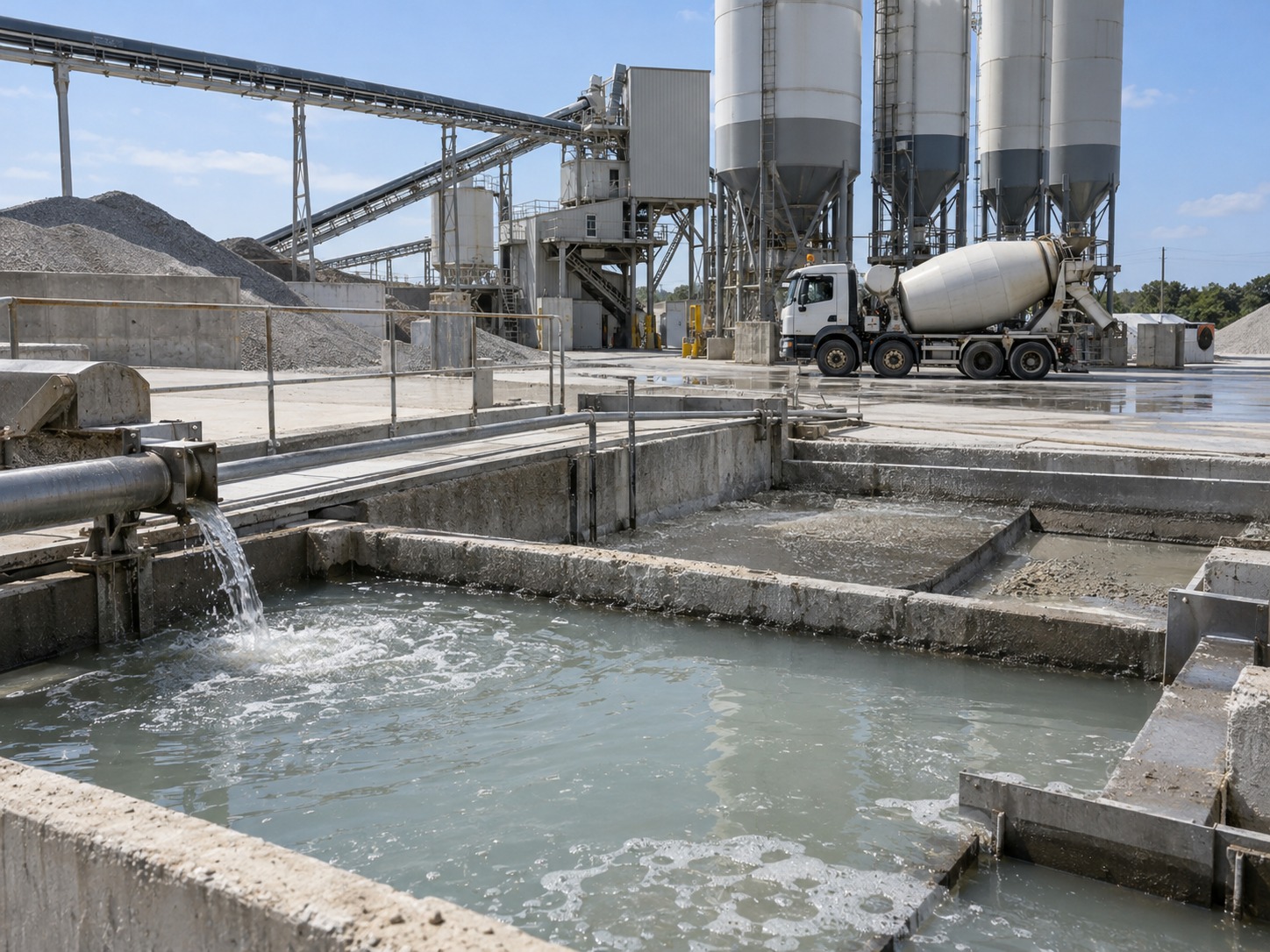
Water generated from washing transit mixers, cleaning production equipment and separating concrete residues within the plant can be reused in certain concrete production applications after undergoing appropriate treatment.

However, using recycled water in ready-mixed concrete production does not simply mean collecting water and adding it back into the mixture.

Fine materials, dissolved components, suspended solids and traces of chemical admixtures from previous production processes may affect concrete workability, setting behavior and strength development.

For this reason, recycled water use requires the integrated management of water quality, concrete mix design, water/cement ratio, chemical concrete admixtures and quality control processes.

What Is Recycled Water in Ready-Mixed Concrete Production?

Recycled water refers to water recovered from certain concrete production and related plant operations after suitable collection, separation and treatment processes.

One of the main sources of recycled water in ready-mixed concrete plants is the washing of transit mixers and production equipment.

The resulting wash water may contain cement paste residues, fine aggregate particles and various dissolved substances.

With appropriate recycling systems, larger solid particles can be separated, allowing the recovered water to be reused in certain production processes.

However, recycled water must meet the relevant technical standards and project specifications before it can be used in concrete mixtures.

Why Is Water Management Important in Concrete Batching Plants?

Water is not used exclusively for preparing concrete mixtures in ready-mixed concrete plants.

Cleaning mixers, washing transit mixers, maintaining production equipment and performing various plant operations also require water consumption.

Therefore, water management is an important part of both concrete production costs and the environmental performance of the facility.

Under suitable conditions, controlled water recycling systems can help reduce the demand for fresh water and improve the management of certain wastewater streams.

However, water conservation objectives should never compromise concrete quality.

The primary objective is to reduce water consumption while maintaining the required concrete strength class and consistent production performance.

Can Recycled Water Be Used Directly in Concrete?

Not all recycled water is suitable for direct use in concrete mixtures.

Suspended solids, dissolved salts, chemical residues and other substances in the water may change concrete behavior.

The source of the water and the recycling method are also important.

For this reason, quality requirements for recycled water intended for concrete production should be established and monitored through regular testing.

Using recycled water without verifying its suitability may lead to unexpected changes in concrete performance.

How Do Fine Materials in Recycled Water Affect Concrete?

Recycled water from concrete production may contain fine particles originating from cement and aggregates.

The amount of these particles can vary depending on how the water is processed within the recycling system.

Certain levels of fine materials may influence concrete mixture behavior, while excessive or inconsistent solid content may change water demand and workability.

Controlling fine material content is particularly important in high-performance concrete.

For this reason, the solid content of recycled water should be evaluated together with the total fine material balance of the concrete mix design.

Why Is the Water/Cement Ratio Important When Using Recycled Water?

The water/cement ratio is one of the fundamental parameters affecting concrete compressive strength and permeability.

If the total amount of water entering the concrete mixture is not calculated correctly, the target water/cement ratio may change.

When recycled water is used, evaluating only the volume of water added to the system may not be sufficient.

The solids contained in recycled water, aggregate moisture and other sources of mixing water should also be taken into account.

Therefore, accurately calculating the actual mixing-water content and adjusting the concrete mix design accordingly are essential in ready-mixed concrete plants.

Does Recycled Water Affect Concrete Workability?

Yes.

The composition of recycled water may influence the behavior of fresh concrete.

Fine particles and dissolved substances in the water may cause changes in water demand and concrete consistency.

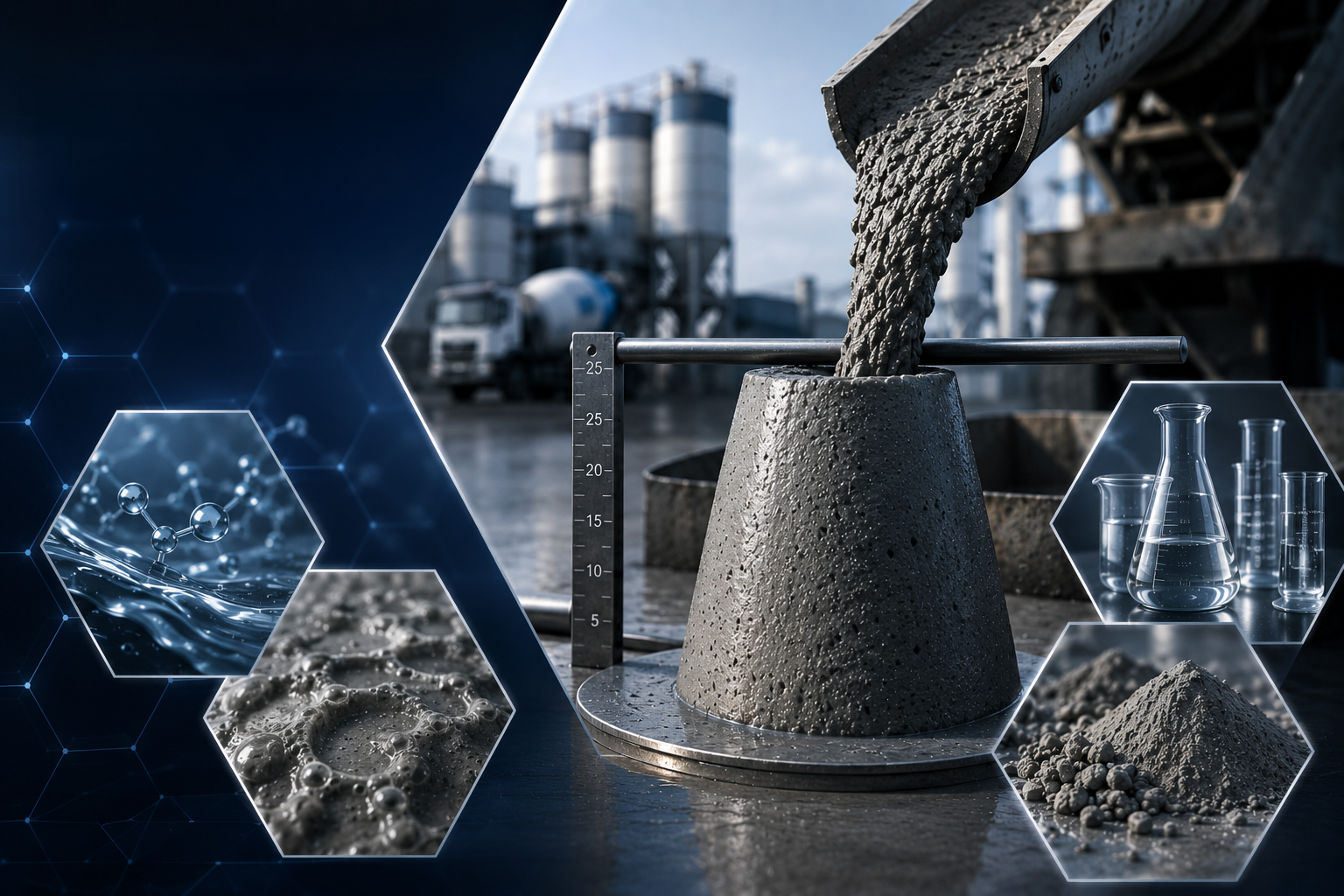
The same concrete mix may produce different slump values when prepared with clean mixing water and recycled water containing different components.

For this reason, initial workability and time-dependent consistency changes should be monitored in production processes using recycled water.

Compatibility with Superplasticizing Concrete Admixtures

Superplasticizing concrete admixtures help disperse cement particles more effectively, supporting high workability with less mixing water.

However, the performance of these admixtures does not depend solely on the cement used.

Mixing-water characteristics, fine material content and certain dissolved substances can also influence admixture performance.

When recycled water is used, the performance of superplasticizing and high-range water-reducing concrete admixtures should be reassessed using the actual concrete mix.

The objective is to maintain the required workability and concrete performance while reducing water consumption.

Can Polycarboxylate-Based Admixtures Be Used with Recycled Water?

Polycarboxylate-based concrete admixtures, also known as PCE admixtures, are high-performance water-reducing systems widely used in modern ready-mixed concrete production.

These admixtures can provide high workability and different slump-retention characteristics at low water/cement ratios.

However, the composition of recycled water may affect the performance of PCE admixtures.

In particular, variations in fine material content and certain dissolved substances may change the required admixture dosage.

For this reason, when PCE-based admixtures are used, the actual characteristics of recycled water should be considered, and the optimum dosage should be determined through laboratory trials.

Can Recycled Water Change Concrete Setting Time?

Certain components present in recycled water may influence cement hydration and setting behavior.

As a result, changes in setting time may occur in some concrete systems.

However, the direction and extent of these changes depend on water composition, cement characteristics and the chemical admixtures used.

Therefore, it is not technically correct to assume that recycled water always accelerates or delays setting.

Initial setting time, final setting time and early-age concrete performance should be evaluated through testing with actual production materials.

Does Recycled Water Affect Concrete Strength?

Concrete compressive strength can be influenced by the characteristics of the mixing water.

When recycled water meets the relevant quality requirements and the concrete mix is properly optimized, achieving the target concrete performance may be possible.

However, uncontrolled variations in water composition may lead to changes in strength development.

For this reason, evaluating only fresh concrete properties is not sufficient when using recycled water.

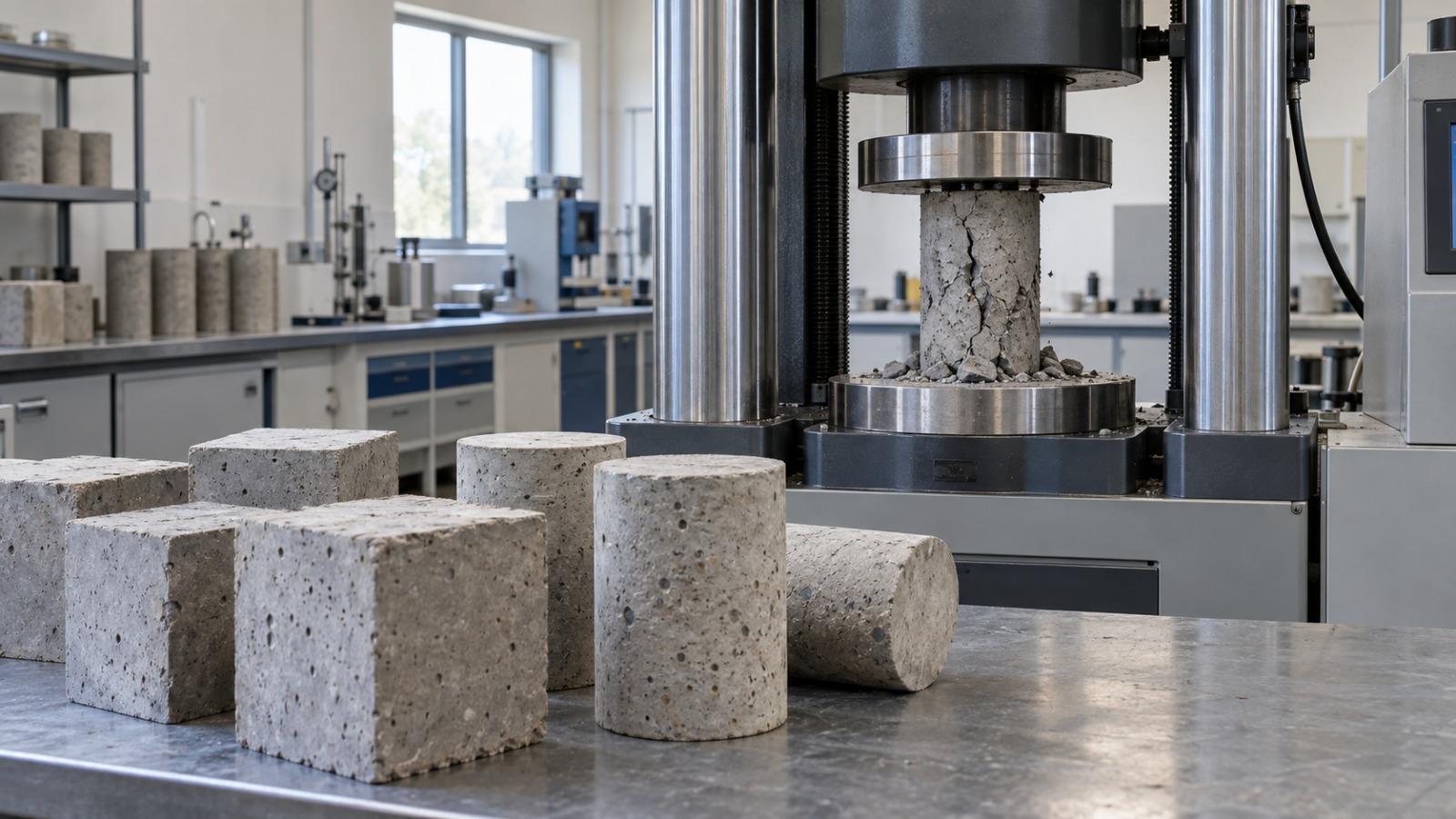
Early-age and 28-day compressive strength results should also be monitored regularly.

Can Recycled Water Affect Concrete Air Content?

The air content of fresh concrete can be influenced by raw materials and chemical admixtures.

Certain components or residual admixtures present in recycled water may also change the air content in some concrete systems.

This is particularly important in applications requiring controlled air entrainment.

Therefore, the effect of recycled water should be tested separately in concrete containing air-entraining admixtures.

The total air content should remain within the specified target range.

Why Should Solid Content Be Measured Regularly?

The amount of suspended solids in recycled water may change throughout the day.

For example, intensive transit mixer washing can introduce larger quantities of cement and aggregate fines into the water recycling system.

If the water inside the tank is not sufficiently homogeneous, samples collected at different times may also have different characteristics.

This can cause variations between production batches using the same concrete mix design.

For this reason, the solid content and density of recycled water should be checked regularly using appropriate testing methods.

Why Is Homogeneity Important in Recycling Tanks?

When recycled water contains suspended solids, these particles may gradually settle over time.

Different solid concentrations may develop between the upper and lower sections of the tank.

As a result, the characteristics of the water supplied to concrete production may not remain consistent.

Therefore, the recycling system design, mixing method and water transfer process are important.

Where necessary, suitable technical measures should be implemented to maintain water homogeneity.

Does Recycled Water Change Concrete Admixture Dosage?

Yes, admixture demand may change in certain concrete mix designs.

Fine particles and dissolved substances in recycled water can influence the amount of chemical admixture required to achieve the target workability.

However, increasing admixture dosage based only on slump measurements is not the correct approach.

The characteristics of the water and the complete concrete mix should be checked first.

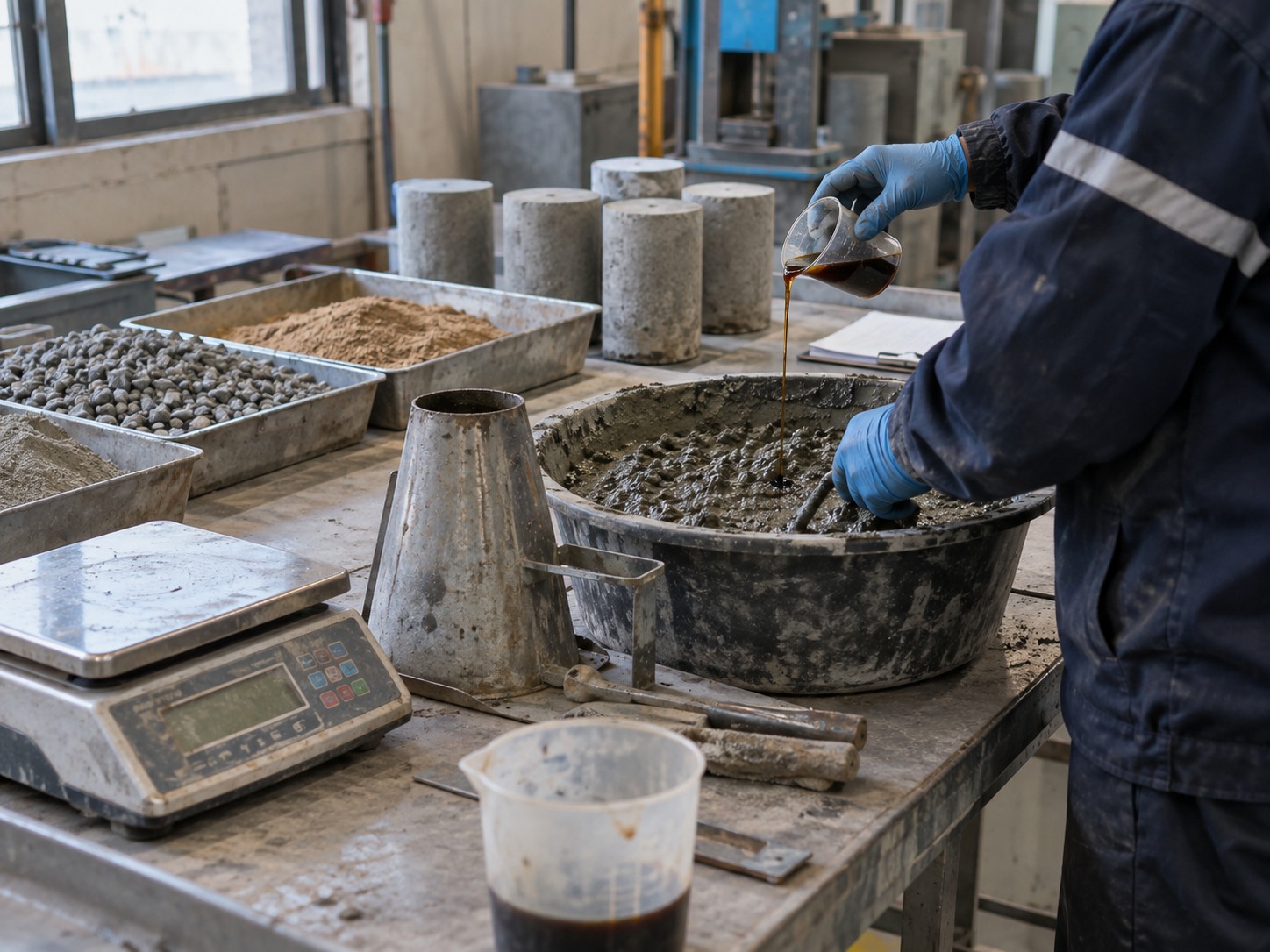
Laboratory trials should then be conducted using different admixture dosages to determine the optimum system.

How Should Slump-Retention Performance Be Controlled?

Maintaining concrete workability from the batching plant to the construction site is an important production requirement.

When recycled water is used, concrete may achieve suitable initial consistency while exhibiting different behavior over time.

For this reason, slump-retention performance after 30, 60 and 90 minutes should be evaluated according to the application conditions.

These controls become especially important in ready-mixed concrete plants serving projects with long transportation times.

High-range water-reducing and slump-retaining admixture systems should be optimized according to the actual water characteristics.

Can Recycled Water Be Used in Precast Concrete Production?

Surface quality, early strength and production continuity are important criteria in precast and prefabricated concrete production.

Recycled water that meets the relevant quality requirements may be suitable for use in certain production applications.

However, the effects of water composition on early strength, setting behavior and surface appearance should be evaluated separately.

Color variations and surface quality changes should also be considered, particularly in architectural concrete and exposed precast elements.

For this reason, water suitability should be verified according to the specific product and project requirements.

Does Recycled Water Affect Concrete Surface Quality?

Concrete surface quality is related to the water/cement ratio, mixture homogeneity, fine material content and placement conditions.

Variations in the solid content of recycled water may influence surface appearance in certain concrete systems.

Changes in concrete consistency and setting behavior may also affect surface finishing operations.

For this reason, the effect of recycled water on surface performance should be monitored, particularly in industrial flooring and precast concrete applications.

Chloride and Sulfate Control When Using Recycled Water

The chemical characteristics of water used in concrete production are important for long-term durability.

The concentrations of certain components, including chlorides and sulfates, are among the parameters that may require control in specific concrete applications.

Chloride content is particularly important in reinforced concrete.

For this reason, recycled water must comply with the water quality requirements specified in relevant standards and project specifications.

Water suitability should not be determined through visual inspection alone.

Does Recycled Water Affect Long-Term Concrete Durability?

Long-term concrete durability does not depend solely on compressive strength.

Permeability, cracking characteristics, environmental exposure, reinforcement protection and raw material quality are also important.

These performance criteria should be considered when evaluating the effects of recycled water in concrete.

Technical verification of water quality is particularly important in infrastructure projects and concrete exposed to demanding environmental conditions.

Can Water Recycling Reduce Ready-Mixed Concrete Production Costs?

Under suitable plant conditions, water recycling systems can help reduce fresh water consumption and improve wastewater management.

However, economic evaluations should not consider water consumption alone.

Installation costs, energy consumption, maintenance requirements, laboratory testing and quality-control processes also affect total costs.

The possible influence of recycled water on concrete admixture dosage and mix performance should also be evaluated.

Therefore, economic performance should be determined by considering overall plant water-management costs and concrete production performance together.

Should Concrete Admixture Prices and Water Management Be Evaluated Together?

Yes.

Evaluating chemical admixture costs only according to price per kilogram or ton is not sufficient in ready-mixed concrete plants.

Water characteristics, admixture dosage, slump-retention performance and target concrete strength all influence total production costs.

In a plant using recycled water, insufficient optimization of the admixture system may result in higher-than-expected product consumption or inconsistent production.

For this reason, concrete admixture selection and water management should be addressed together.

Which Parameters Should Be Evaluated in Laboratory Trials?

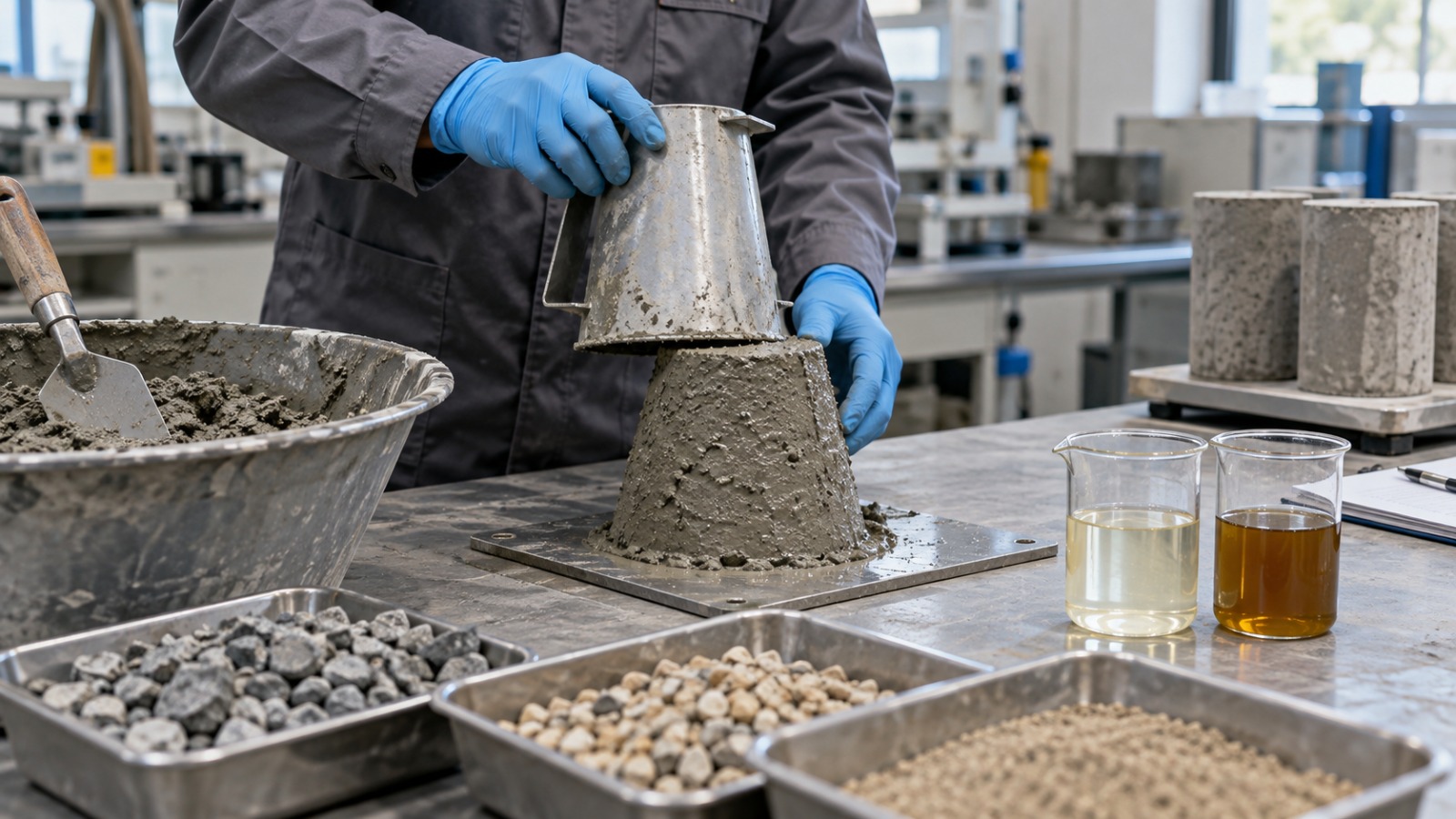
Before introducing recycled water into concrete production, laboratory trials should be conducted using actual plant materials.

Reference concrete mixtures prepared with clean water can be compared with alternative mixtures containing recycled water.

Parameters such as initial slump, time-dependent slump retention, air content, setting time, concrete temperature and compressive strength should be evaluated.

The chemical characteristics and solid content of recycled water should also be examined according to relevant standards.

These studies can help optimize the recycled water proportion and admixture system for actual production conditions.

Why Is Continuous Quality Control Necessary in Concrete Batching Plants?

A recycled water system that performs successfully in laboratory testing may produce different results when water characteristics change during actual plant operations.

Daily production volume, wash-water quantity, tank conditions and raw material variations can all affect recycled water composition.

For this reason, recycled water quality control should not be treated as a one-time process.

A monitoring program suitable for the plant's production conditions should be established, and the necessary measurements should be recorded.

This allows unexpected changes in concrete mix performance to be identified earlier.

Water Efficiency in Ready-Mixed Concrete Plants in Central Anatolia

Efficient water use is important for the environmental and operational management of ready-mixed concrete plants in Central Anatolia.

Cement, aggregate and water sources may have different characteristics in cities such as Konya, Ankara, Kayseri, Aksaray, Karaman, Niğde, Nevşehir, Kırşehir, Eskişehir, Sivas and Yozgat.

For this reason, the same standard admixture formulation should not be expected to provide identical results under all production conditions when recycled water is used.

Laboratory and batching-plant trials using local raw materials can help determine the appropriate ready-mixed concrete admixture and water-management system.

EMA Kimya Ready-Mixed Concrete Admixtures and Production Optimization Solutions

EMA Kimya develops professional concrete and cement admixture technologies for ready-mixed concrete plants, batching plants, precast and prefabricated concrete manufacturers, cement plants and large-scale infrastructure projects.

In concrete mix designs incorporating recycled water, cement characteristics, aggregate properties, water quality, solid content, water/cement ratio, target workability and strength requirements should be evaluated together.

Superplasticizers, high-range water reducers, water-reducing admixtures, slump-retaining systems and auxiliary concrete admixtures can be optimized according to actual production conditions and water characteristics.

EMA Kimya's technical approach focuses not only on improving concrete workability but also on supporting controlled water consumption, admixture compatibility, concrete strength, production consistency, cost optimization and sustainable production objectives together.

Sustainable ready-mixed concrete production is not simply about consuming less water. It means managing water quality, concrete admixtures and the entire production process in a controlled manner while consistently maintaining the required high concrete performance.

Related News

What Do Cement Grinding Aids Do? How Can Cement Performance and Production Efficiency Be Improved?

Publication Date: 09 Ekim 2026

High Flowability and Controlled Concrete Performance with Self-Compacting Concrete Admixtures

Publication Date: 09 Ekim 2026

How to Improve Concrete Pumpability? Choosing the Right Admixture for Pumped Concrete

Publication Date: 09 Ekim 2026

The Importance of Set-Retarding Concrete Admixtures in Hot Weather and Long Transportation Times

Publication Date: 09 Ekim 2026

What Are Concrete Strength-Enhancing Admixtures? How Can Concrete Compressive Strength Be Increased?

Publication Date: 09 Ekim 2026

How Can Concrete Workability Be Improved?

Publication Date: 09 Ekim 2026

The Importance of Concrete Admixtures in the Construction Industry

Publication Date: 09 Ekim 2026

What Is the Difference Between Superplasticizers and High-Range Water-Reducing Concrete Admixtures?

Publication Date: 09 Ekim 2026

What Causes Efflorescence in Concrete? How Can White Stains on Concrete Surfaces Be Prevented?

Publication Date: 09 Ekim 2026

How Much Concrete Admixture Should Be Used? How Does the Correct Dosage Affect Concrete Performance?

Publication Date: 09 Ekim 2026

How Can Concrete Strength Be Increased?

Publication Date: 09 Ekim 2026

Shotcrete Admixtures for Fast and Controlled Application in Tunnel and Underground Projects

Publication Date: 09 Ekim 2026

The Importance of the Right Admixture Technology for Shrinkage and Crack Control in Concrete

Publication Date: 09 Ekim 2026

What Is a Superplasticizer and What Does It Do?

Publication Date: 09 Ekim 2026

What Are Construction Chemicals and Where Are They Used?

Publication Date: 09 Ekim 2026

Web Design & Software | COUR Media