English
×
All rights reserved. All content and images used on this website
belong to EMA Kimya and may not be used without permission.
cour
 EMA Kimya | Concrete Admixtures, Cement Additives, Construction Chemicals, Superplasticizers, High-Range Water Reducers, Concrete Performance Solutions, Ready-Mix and Precast Concrete Technologies, Infrastructure, Industrial Projects, Technical Support, Production and Cost Consulting  EMA Kimya | Concrete Admixtures, Cement Additives, Construction Chemicals, Superplasticizers, High-Range Water Reducers, Concrete Performance Solutions, Ready-Mix and Precast Concrete Technologies, Infrastructure, Industrial Projects, Technical Support, Production and Cost Consulting
EMA Kimya | Concrete Admixtures, Cement Additives, Construction Chemicals, Superplasticizers, High-Range Water Reducers, Concrete Performance Solutions, Ready-Mix and Precast Concrete Technologies, Infrastructure, Industrial Projects, Technical Support, Production and Cost Consulting

"Strength in Every Mix,
Quality in Every Drop"

×

Quality, reliability, and a commitment to sustainable production.

We provide professional solutions in concrete admixtures and construction chemicals.

Menu

Quality, reliability, and a commitment to sustainable production.

We provide professional solutions in concrete admixtures and construction chemicals.

19 September 2026

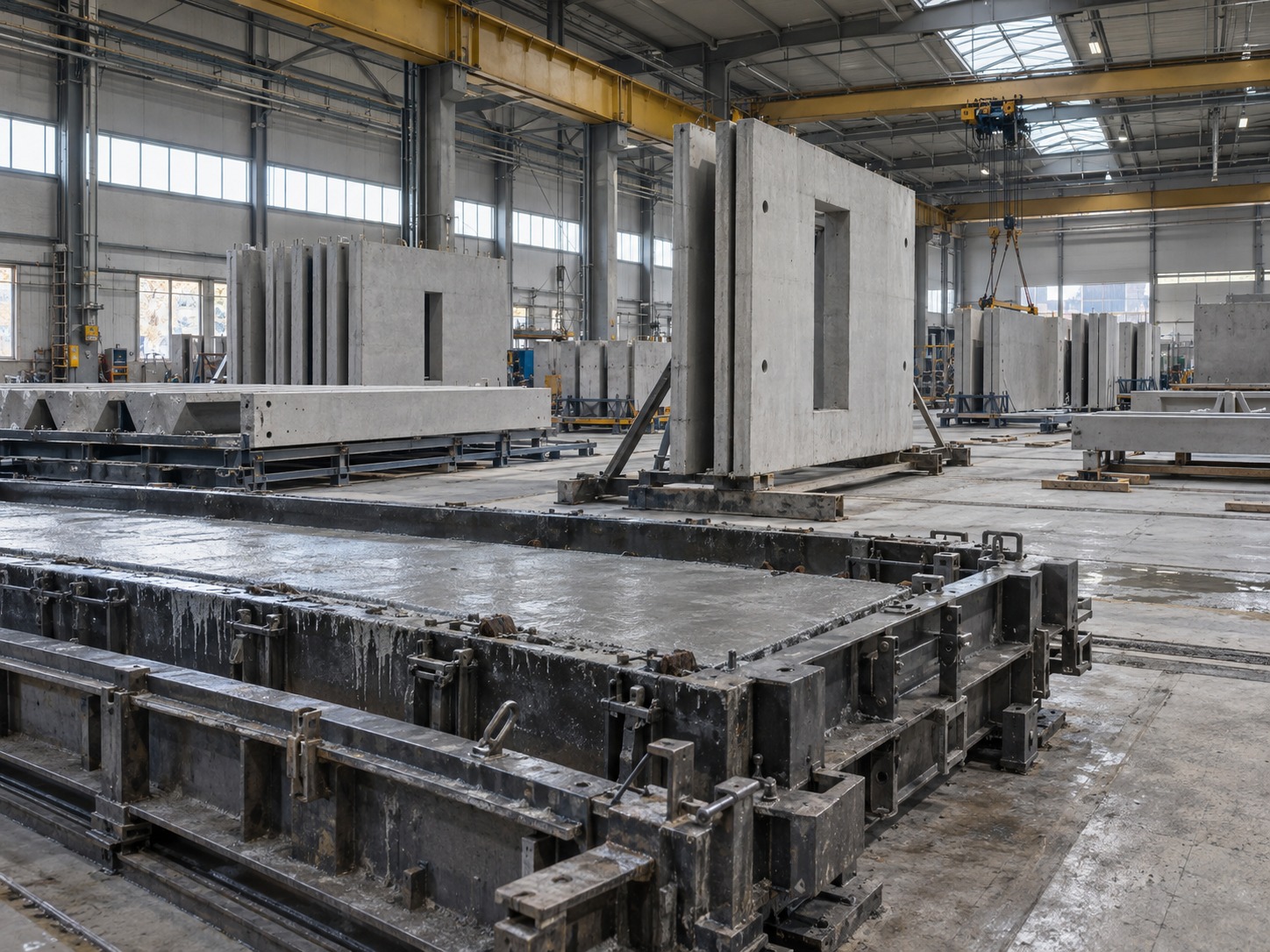
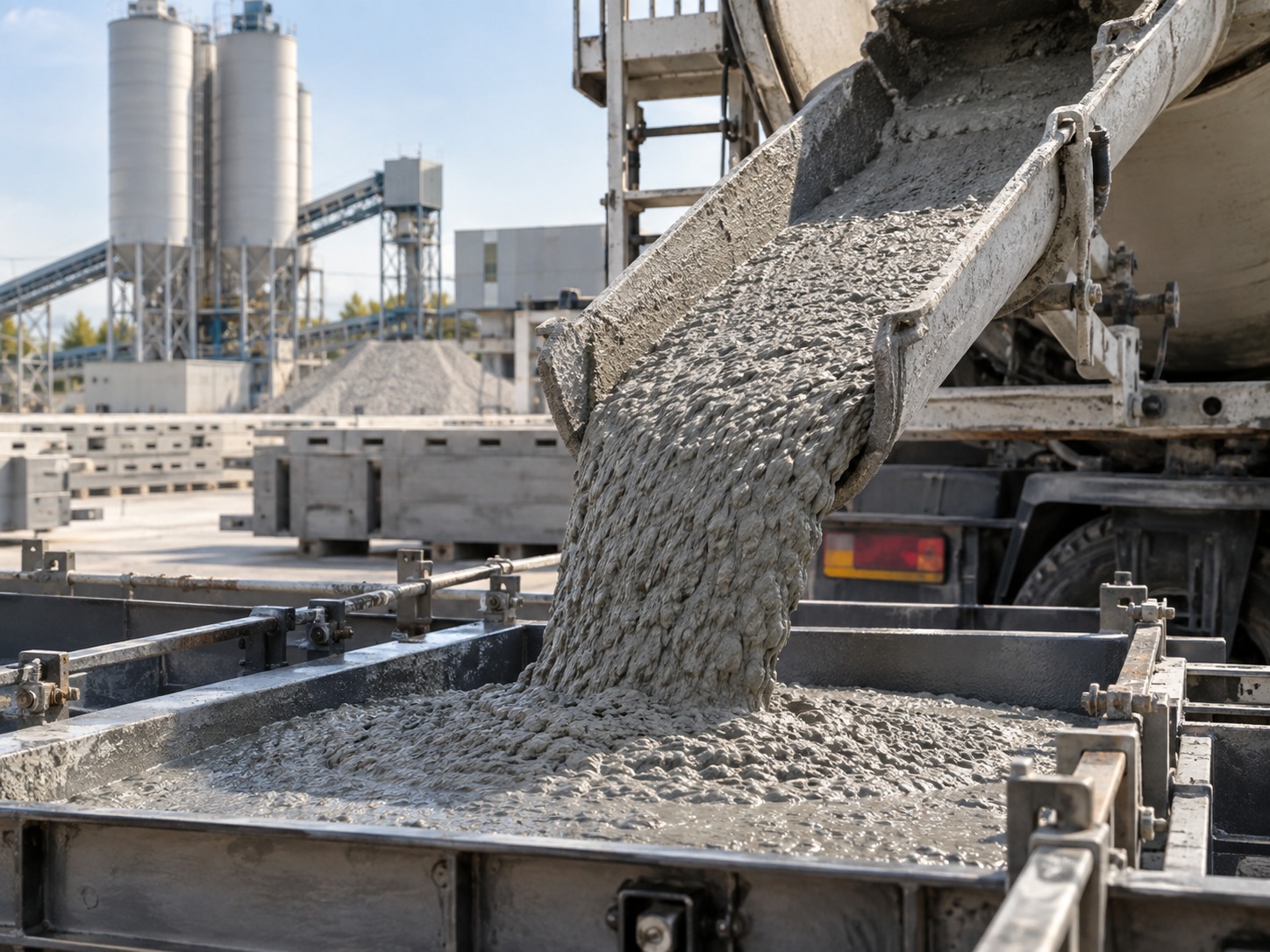
In precast and prefabricated concrete production, production speed is just as important as concrete quality. Reaching the required early strength in a shorter time can help reduce demolding time and allow production molds to be reused more efficiently.

For this reason, concrete mix designs used in precast production should be developed by evaluating early strength, workability, surface quality and final strength together.

Properly selected precast concrete admixtures can help provide high workability at a low water/cement ratio, support early strength development and improve production cycle efficiency.

Why Is Early Strength Important in Precast Concrete Production?

In precast production, the same molds may be reused several times during the production cycle.

If concrete reaches the required strength too slowly, demolding time is extended and daily production capacity may be reduced.

When concrete develops sufficient early strength in a controlled manner, elements can be removed from molds more safely and the next production cycle can begin sooner.

This can directly improve efficiency, especially in high-volume precast concrete plants.

How Do Early Strength Concrete Admixtures Work?

Early strength performance does not depend on a single chemical product.

Cement type, cement dosage, water/cement ratio, concrete temperature, aggregate characteristics and the admixture system all influence early strength development.

Suitable concrete admixture technologies can help reduce water demand and support the formation of a denser concrete structure.

As a result, the mechanical performance of concrete at early ages can be improved.

The Importance of a Low Water/Cement Ratio in Precast Concrete

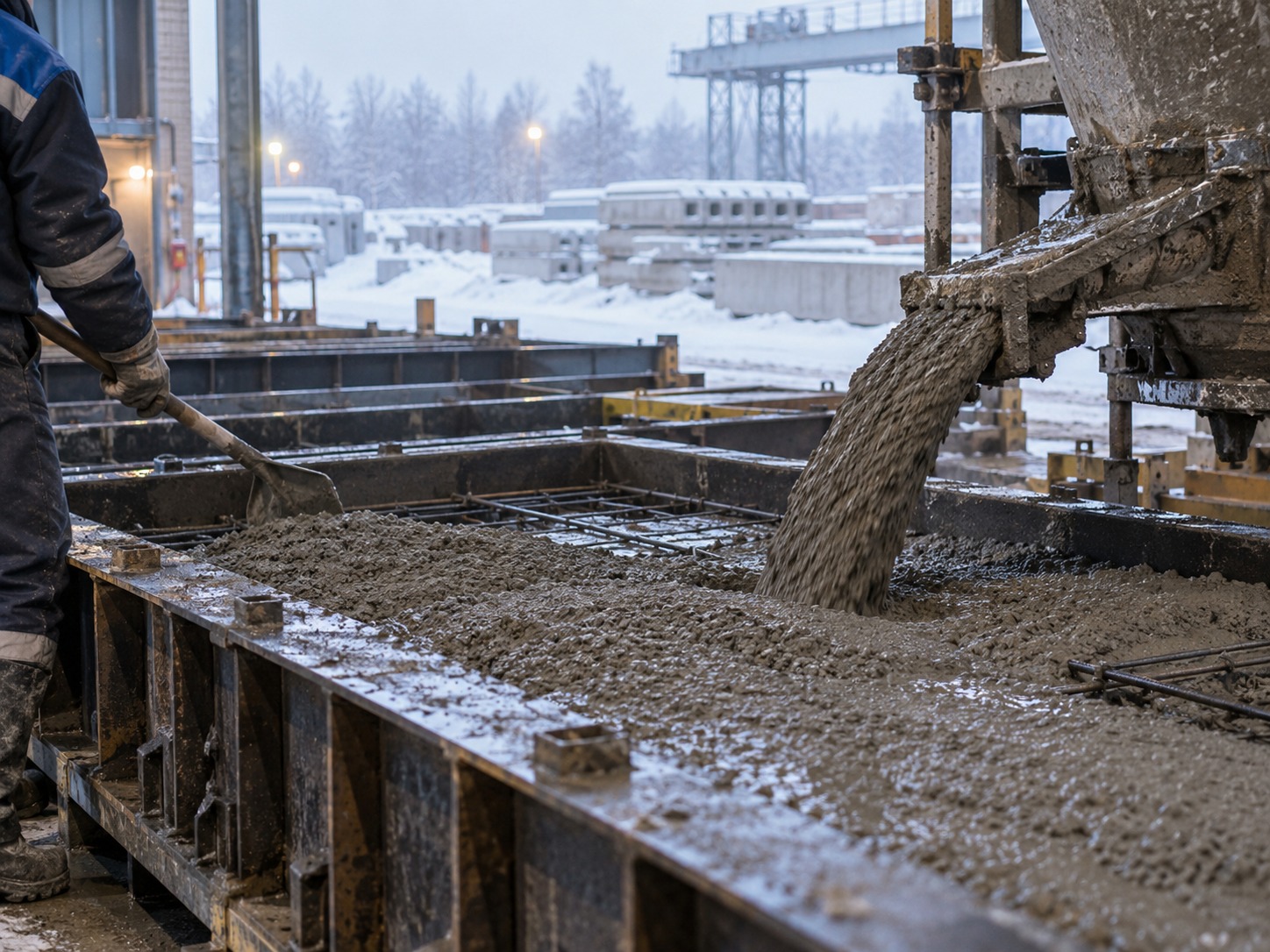
In precast production, the amount of water in the mix must be carefully controlled to achieve high strength.

Excess water may initially make concrete easier to place, but it can also create more pores in the hardened concrete.

This can negatively affect both strength and surface quality.

High-range water-reducing admixtures and superplasticizers help achieve the required workability with less water and support the production of high-performance concrete at a lower water/cement ratio.

How Can Demolding Time Be Reduced?

Reducing demolding time does not simply mean making concrete set faster.

The concrete element must reach the required mechanical strength before it can be safely removed from the mold.

For this reason, setting time and early strength should be evaluated separately.

When the correct cement, optimized concrete mix design, controlled temperature conditions and suitable admixture system are used together, early strength development can be managed more efficiently.

Surface Quality in Precast Concrete

Surface appearance is one of the important quality indicators of precast concrete elements.

Poor concrete placement can cause voids, pinholes and surface defects.

Concrete admixtures that provide high workability can help the mix move more easily within the mold and fill complex geometries more effectively.

A more homogeneous concrete structure can contribute to smoother surfaces and help reduce the need for additional finishing or repair work.

Concrete Placement in Heavily Reinforced Elements

Columns, beams, facade elements and special precast components may contain heavily reinforced areas.

In these areas, concrete must have sufficient flowability to fill the space without leaving voids.

However, while high flowability is important, segregation must also be controlled.

The right admixture system helps create a balanced performance between flowability and mix stability.

Production Capacity and Mold Cycle Efficiency

Molds are an important production resource in precast concrete plants.

How quickly a mold can be reused directly affects daily production capacity.

By optimizing early strength performance, mold cycle times can be shortened and better efficiency can be achieved from the existing production line.

For this reason, concrete admixture selection should not be evaluated only by product price. The overall contribution of the admixture to production efficiency should also be considered.

Steam Curing and Early Strength

Some precast concrete plants use controlled heat or steam curing to accelerate early strength development.

In such systems, the concrete mix design must be compatible with the curing conditions.

Excessive temperature or an unsuitable curing program may negatively affect long-term concrete performance.

Therefore, curing temperature, curing duration, cement type and the admixture system should be evaluated together.

What Should Be Considered When Choosing Precast Concrete Admixtures?

Not every precast concrete plant uses the same raw materials or production methods.

Cement type, aggregate grading, production temperature, target concrete class, mold system and required demolding time are all important factors in admixture selection.

For this reason, choosing a product based only on technical data may not always be sufficient.

Laboratory trials using the actual raw materials intended for production can help determine the most suitable product and dosage.

EMA Kimya Precast and Prefabricated Concrete Admixture Solutions

EMA Kimya develops professional concrete admixture technologies for precast concrete plants, prefabricated concrete manufacturers, ready-mixed concrete facilities and high-performance concrete applications.

High-range water-reducing, superplasticizing, early-strength-supporting and auxiliary concrete admixture systems can be optimized according to cement type, aggregate characteristics and production conditions.

EMA Kimya's technical approach focuses not only on supplying concrete admixtures, but also on achieving faster, more controlled and more efficient production through laboratory testing, production trials and field evaluations.

The right concrete admixture system is an important production advantage for faster demolding, higher early strength, improved surface quality and more efficient precast concrete production.

Related News

What Are Cement Grinding Aids? How Can Grinding Efficiency, Energy Savings and Cement Performance Be Improved in Cement Plants?

Publication Date: 19 Eylül 2026

How Can Reinforcement Corrosion Be Prevented in Reinforced Concrete Structures? The Importance of Concrete Protection Products

Publication Date: 19 Eylül 2026

How to Improve Water Resistance in Concrete? The Right Admixture Technology for Low-Permeability Concrete

Publication Date: 19 Eylül 2026

What Are Concrete Admixtures? Types and Applications

Publication Date: 19 Eylül 2026

What Is a Set-Accelerating Concrete Admixture? How Can Setting Time and Early Strength Be Controlled in Cold Weather?

Publication Date: 19 Eylül 2026

Why Are Cement Additives Used?

Publication Date: 19 Eylül 2026

How Can Concrete Workability Be Improved?

Publication Date: 19 Eylül 2026

How Is Low-Carbon Concrete Produced?

Publication Date: 19 Eylül 2026

Concrete Protection Products and Their Advantages

Publication Date: 19 Eylül 2026

What Are Construction Chemicals and Where Are They Used?

Publication Date: 19 Eylül 2026

What Do Cement Grinding Aids Do? How Can Cement Performance and Production Efficiency Be Improved?

Publication Date: 19 Eylül 2026

What Is Cement-Admixture Incompatibility? How Can Rapid Slump Loss, Setting Problems and Admixture Performance Be Controlled in Ready-Mixed Concrete?

Publication Date: 19 Eylül 2026

Higher Performance with Less Water Using High-Range Water-Reducing Concrete Admixtures

Publication Date: 19 Eylül 2026

Support Surface Strength and Long-Term Performance with Concrete Curing and Protection Products

Publication Date: 19 Eylül 2026

The Importance of Concrete Admixtures in the Construction Industry

Publication Date: 19 Eylül 2026

Web Design & Software | COUR Media