English
×
All rights reserved. All content and images used on this website
belong to EMA Kimya and may not be used without permission.
cour
 EMA Kimya | Concrete Admixtures, Cement Additives, Construction Chemicals, Superplasticizers, High-Range Water Reducers, Concrete Performance Solutions, Ready-Mix and Precast Concrete Technologies, Infrastructure, Industrial Projects, Technical Support, Production and Cost Consulting  EMA Kimya | Concrete Admixtures, Cement Additives, Construction Chemicals, Superplasticizers, High-Range Water Reducers, Concrete Performance Solutions, Ready-Mix and Precast Concrete Technologies, Infrastructure, Industrial Projects, Technical Support, Production and Cost Consulting
EMA Kimya | Concrete Admixtures, Cement Additives, Construction Chemicals, Superplasticizers, High-Range Water Reducers, Concrete Performance Solutions, Ready-Mix and Precast Concrete Technologies, Infrastructure, Industrial Projects, Technical Support, Production and Cost Consulting

"Strength in Every Mix,
Quality in Every Drop"

×

Quality, reliability, and a commitment to sustainable production.

We provide professional solutions in concrete admixtures and construction chemicals.

Menu

Quality, reliability, and a commitment to sustainable production.

We provide professional solutions in concrete admixtures and construction chemicals.

10 October 2026

The long-term durability of concrete is not determined solely by the compressive strength achieved during production. Chemical reactions that may develop within concrete over time can significantly affect the service life, maintenance requirements and overall performance of structures.

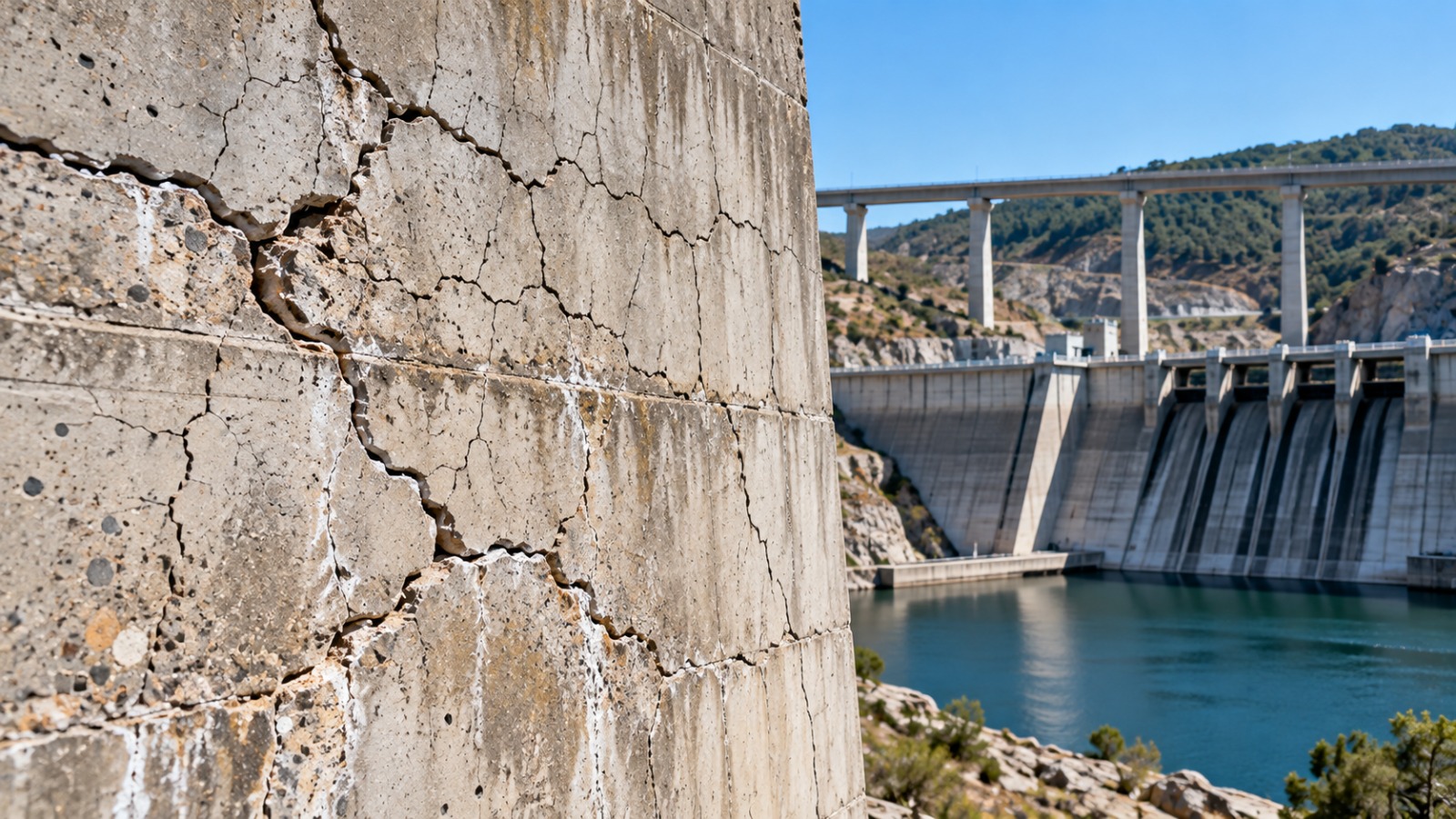
Alkali-silica reaction (ASR) is an important concrete durability problem that can cause internal expansion and cracking, particularly in concrete containing certain types of aggregates and exposed to sufficient moisture.

This problem should be carefully considered in bridges, dams, viaducts, concrete roads, foundations, hydraulic structures and large-scale infrastructure projects designed for long service life.

Alkali-silica reaction may develop when alkali components within concrete react with certain reactive forms of silica present in aggregates under suitable conditions.

The reaction products can absorb moisture and expand, generating internal stresses within the concrete structure.

For this reason, high-performance concrete production requires the combined evaluation of aggregate selection, binder composition, suitable concrete admixtures, water-to-binder ratio and environmental conditions.

However, preventing alkali-silica reaction cannot be guaranteed simply by using a concrete admixture. Identifying and controlling ASR risks requires raw material analysis, appropriate laboratory testing and a comprehensive concrete mix design approach.

What Is Alkali-Silica Reaction (ASR)?

Alkali-silica reaction is a chemical reaction that may occur between alkali components in the concrete pore solution and certain reactive forms of silica present in aggregates.

This process can result in the formation of alkali-silica reaction products.

Under suitable moisture conditions, these products may absorb water and expand.

The resulting internal expansion stresses can cause microcracks to develop over time and, in some cases, lead to more extensive cracking patterns.

The rate of reaction development and the severity of damage depend on the raw materials used and the environmental conditions.

What Causes Alkali-Silica Reaction in Concrete?

Several conditions must be present for alkali-silica reaction to develop.

The main factors include aggregates containing sufficient reactive silica, alkali components within the concrete and moisture conditions that support the progression of the reaction.

Effectively controlling one or more of these factors can help reduce ASR risk.

However, evaluating the actual reaction potential of concrete requires more than examining aggregate appearance or cement characteristics.

The aggregate and binder system should be evaluated together using appropriate testing methods.

Why Are Aggregates Containing Reactive Silica Important?

Aggregates, which make up a significant proportion of concrete volume, play a critical role in the mechanical properties and chemical durability of concrete.

Some natural aggregates may contain forms of silica capable of reacting with alkali components under certain conditions.

Using these aggregates may increase the risk of alkali-silica reaction when the other necessary conditions are also present.

However, not all silica-containing aggregates have the same reaction potential.

The mineralogical composition of the aggregate and the type and quantity of reactive components are important.

Therefore, aggregate suitability should be evaluated through mineralogical examinations and, where necessary, expansion testing.

Where Do Alkali Components in Concrete Come From?

Cement is one of the main sources of alkali components in concrete.

Sodium and potassium compounds present in cement can influence the chemical characteristics of the concrete pore solution.

In addition, certain supplementary cementitious materials, chemical admixtures and other raw materials may contribute to the total alkali loading of the concrete system.

For this reason, ASR risk assessment should consider not only the alkali content of cement but also the total alkali contribution from all components of the concrete mix.

An appropriate binder system should be selected by evaluating total alkali content together with the characteristics of potentially reactive aggregates.

How Does Moisture Affect Alkali-Silica Reaction?

Moisture plays an important role in both the development of alkali-silica reaction and the expansion of its reaction products.

Conditions that support continued reaction may develop when concrete remains continuously moist or is repeatedly exposed to water.

Dams, water reservoirs, foundations, bridge piers and outdoor infrastructure structures are examples of applications where moisture exposure must be considered.

However, a concrete surface that appears dry does not necessarily indicate that the internal concrete structure contains insufficient moisture for ASR development.

Therefore, the actual service conditions and moisture history of the structure should be considered when evaluating ASR risk.

How Does Alkali-Silica Reaction Cause Concrete Cracking?

The reaction products formed by ASR can absorb moisture and expand, generating internal stresses within the concrete.

When these stresses exceed the tensile capacity of the concrete, microcracks may develop.

Over time, individual microcracks can connect and form more visible cracks.

Irregular or map-like cracking patterns may appear in certain structural elements.

However, not every map-cracking pattern in concrete is caused by ASR.

Shrinkage, temperature variations and other durability problems may create similar surface appearances.

For this reason, the actual cause of cracking should be identified through appropriate technical investigations.

Are Alkali-Silica Reaction Cracks and Shrinkage Cracks the Same?

No.

Shrinkage cracking may be associated with moisture loss, temperature changes or other volume-change mechanisms within concrete.

Alkali-silica reaction, on the other hand, is a chemical reaction involving specific silica-bearing aggregates and alkali components.

Although both problems can cause cracking, their formation mechanisms are different.

Therefore, the presence of cracks on a concrete surface does not automatically indicate alkali-silica reaction.

Correct diagnosis is important for determining suitable repair and protection methods.

Does Alkali-Silica Reaction Affect Concrete Strength?

Cracking caused by ASR can negatively affect the mechanical properties and durability of concrete.

Depending on the severity of the damage, changes may occur in concrete stiffness, tensile properties and other performance characteristics.

However, ASR does not affect every concrete system in the same way.

The degree of reaction progression, aggregate characteristics, moisture conditions and structural element properties all influence the results.

Therefore, when ASR is suspected, evaluations should include not only compressive strength but also crack development and structural behavior.

Does the Water/Cement Ratio Affect ASR Risk?

The water/cement ratio is an important parameter affecting the internal pore structure and permeability of concrete.

Controlled water content and proper curing can support the development of a denser internal concrete structure.

This may help limit water penetration from the surrounding environment.

However, a low water/cement ratio alone does not eliminate ASR risk in every concrete system containing reactive aggregates and significant alkali availability.

Therefore, controlling the water/cement ratio should be considered part of the overall durability design rather than a substitute for specific ASR mitigation methods.

Can Superplasticizing Concrete Admixtures Prevent ASR?

Superplasticizing and high-range water-reducing concrete admixtures help achieve the required workability with less mixing water.

These admixtures can support controlled water/cement ratios and the development of a denser concrete structure.

However, conventional superplasticizing admixtures should not be considered products specifically designed to prevent alkali-silica reaction.

Reducing ASR risk requires separate consideration of aggregate reactivity, binder composition, total alkali loading and suitable supplementary cementitious material systems.

Using high-performance water-reducing admixtures does not replace proper raw material selection or the testing required to verify ASR resistance.

Can Supplementary Cementitious Materials Reduce Alkali-Silica Reaction?

Certain supplementary cementitious materials, when used in suitable proportions, can help limit expansion caused by alkali-silica reaction.

Fly ash, ground granulated blast-furnace slag, silica fume and certain other pozzolanic materials may be considered for ASR mitigation, depending on the characteristics of the concrete system.

These materials can influence the chemistry of the concrete pore solution, hydration products and the behavior of certain reactive components.

However, not all supplementary cementitious materials provide the same level of performance.

Their chemical composition, replacement level and compatibility with cement and aggregates are important.

For this reason, the effectiveness of supplementary cementitious materials in controlling ASR should be verified through appropriate laboratory testing.

Is Using Low-Alkali Cement Sufficient?

Cements with low alkali content may help reduce ASR risk in certain concrete systems.

However, using low-alkali cement alone does not guarantee sufficient protection under all conditions.

The aggregate type, other alkali sources, total binder content and environmental conditions can also affect the outcome.

Therefore, cement selection should not be evaluated independently from the other components of the concrete mix.

The entire raw material system should be considered together, particularly for structures designed for long service life.

What Is the Difference Between Chemical Concrete Admixtures and Supplementary Cementitious Materials?

Chemical concrete admixtures are products generally used at relatively low dosages to modify the fresh or hardened properties of concrete.

Superplasticizers, set accelerators, set retarders and air-entraining admixtures belong to this group.

Supplementary cementitious materials, on the other hand, may be used in larger proportions as part of the concrete binder system.

These two groups of materials can serve different technical purposes.

For this reason, their roles should be clearly distinguished when evaluating ASR control, workability, strength and production cost objectives.

Why Is Concrete Permeability Important for ASR?

Concrete permeability influences the movement of environmental water and certain dissolved substances within concrete.

Lower permeability may help reduce water penetration from the surrounding environment.

However, external water is not the only factor relevant to ASR.

Existing internal moisture and the chemical components involved in the reaction are also important.

Therefore, reducing permeability can contribute to general concrete durability, but it should not be considered a complete ASR mitigation method on its own.

Can Concrete Protection Products Reduce ASR Risk?

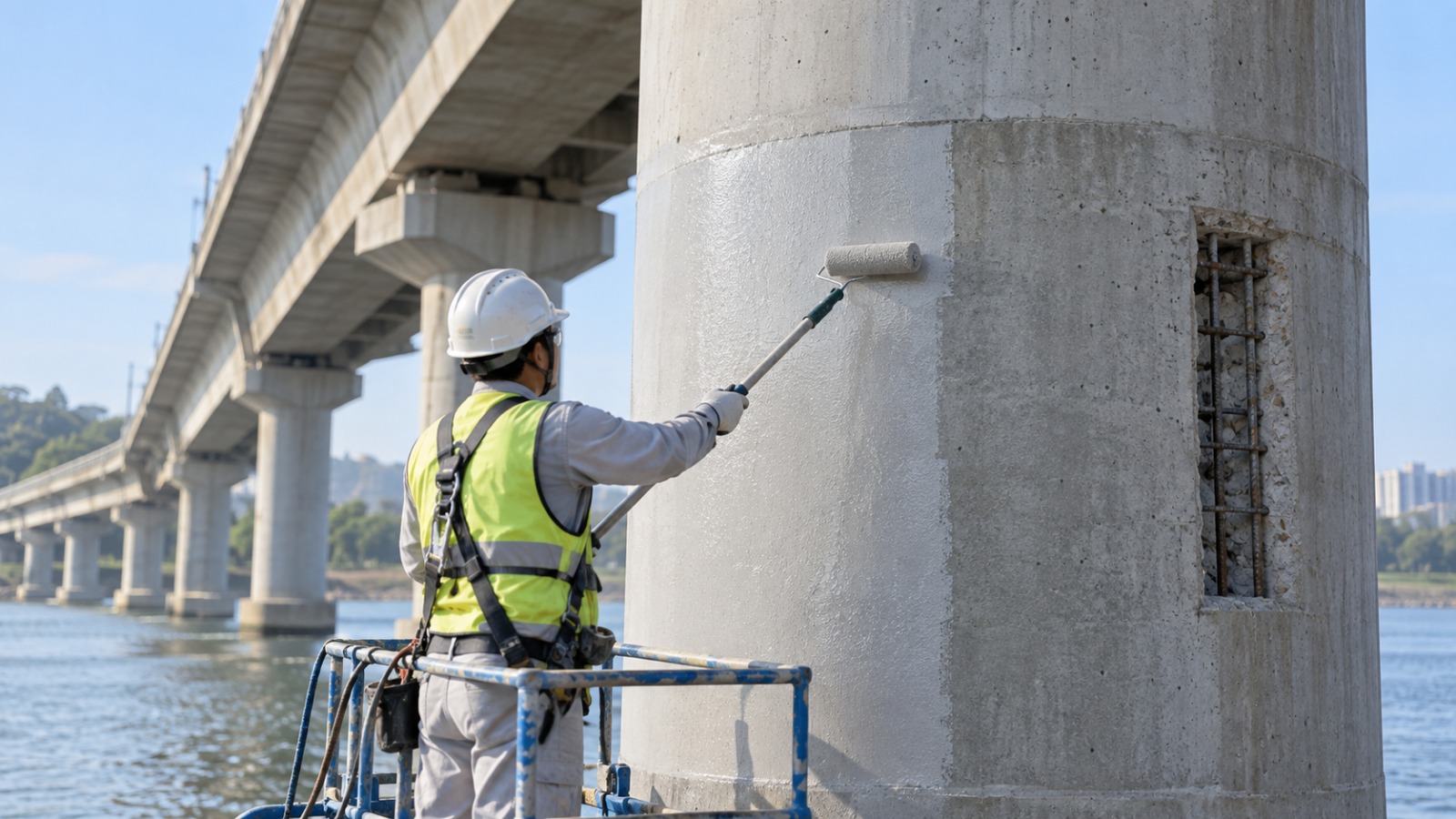
Certain concrete surface protection systems can help reduce water absorption from the external environment under suitable conditions.

This approach may support moisture management in specific structural elements.

However, an alkali-silica reaction that has already begun within concrete should not be assumed to stop completely simply because a surface protection product is applied.

The effectiveness of surface protection depends on crack conditions, internal concrete moisture and environmental exposure.

Therefore, surface protection applications in structures suspected of ASR should be selected following a technical evaluation.

Why Is Alkali-Silica Reaction Important in Dam Concrete?

Dams and large hydraulic structures are projects that use substantial quantities of concrete and are generally designed for long service life.

These structures may be exposed to continuous or prolonged moisture conditions.

When reactive aggregates are used and the other necessary conditions are present, expansion caused by ASR can become a significant durability concern.

Therefore, aggregate suitability, binder composition and long-term performance requirements must be carefully evaluated in dam concrete applications.

Appropriate laboratory testing and project-specific technical specifications are essential components of durable concrete production.

ASR Damage in Bridges and Viaducts

Bridges and viaducts are exposed to various influences, including temperature changes, precipitation, moisture and traffic loads.

ASR-related expansion and cracking in these structures may affect the service performance of concrete elements.

Under certain conditions, cracking may also facilitate the penetration of water and harmful substances into the concrete.

Therefore, long-term durability is just as important as initial concrete strength in bridge and viaduct projects.

Aggregate reactivity assessment and suitable binder system selection should be considered during the design stage.

Alkali-Silica Reaction in Concrete Roads

Concrete roads may be directly exposed to precipitation, moisture and temperature changes because of their extensive surface areas.

When ASR develops, cracking, expansion and certain deformations may occur.

However, not every crack observed in concrete pavement is related to alkali-silica reaction.

Traffic loads, shrinkage, temperature effects, base conditions and other factors can also cause cracking.

For this reason, durability problems in concrete roads should be evaluated through technical investigations and appropriate testing methods.

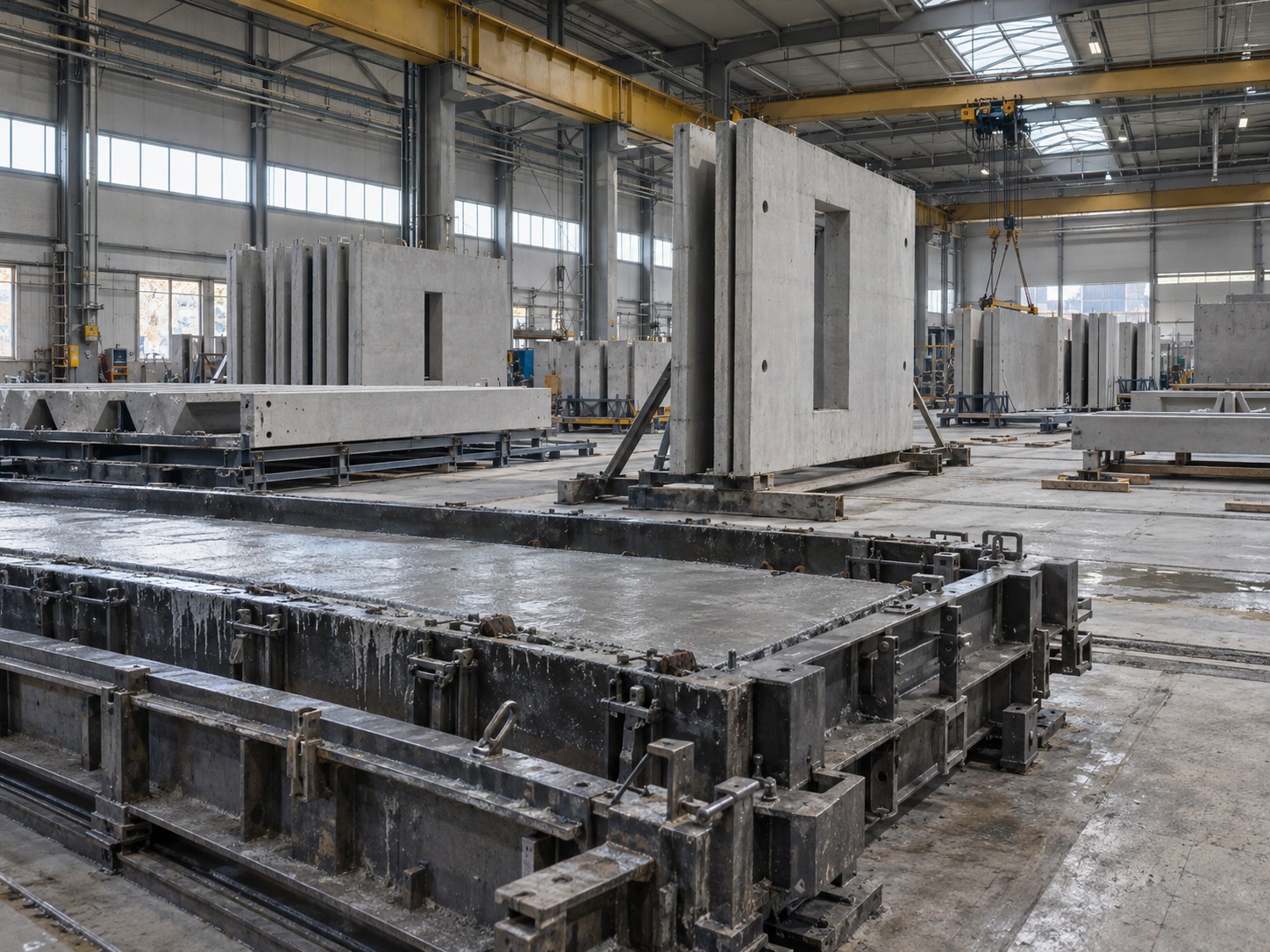
ASR Risk in Precast Concrete Production

High quality, consistent production and long service life are important requirements in precast and prefabricated concrete manufacturing.

If reactive aggregates are used and the necessary environmental and chemical conditions are present, ASR risk may also develop in precast products.

Raw material selection is particularly important for precast elements intended for outdoor use or continuous moisture exposure.

Therefore, long-term durability should be evaluated alongside early strength and surface quality in precast concrete production.

Where necessary, aggregate and binder systems should be tested for ASR potential.

Can Concrete Cracking Increase the Risk of Reinforcement Corrosion?

Cracks within concrete may, under certain conditions, make it easier for water and harmful substances such as chlorides to reach the reinforcement.

This may influence the risk of reinforcement corrosion under suitable environmental conditions.

However, ASR and reinforcement corrosion are not the same chemical or physical problem.

ASR involves reactions between certain alkali and silica components within concrete.

Reinforcement corrosion, on the other hand, involves the electrochemical deterioration of steel reinforcement.

Therefore, these two durability problems should be evaluated separately.

How Is Alkali-Silica Reaction Detected in the Laboratory?

Different laboratory methods can be used to evaluate ASR potential.

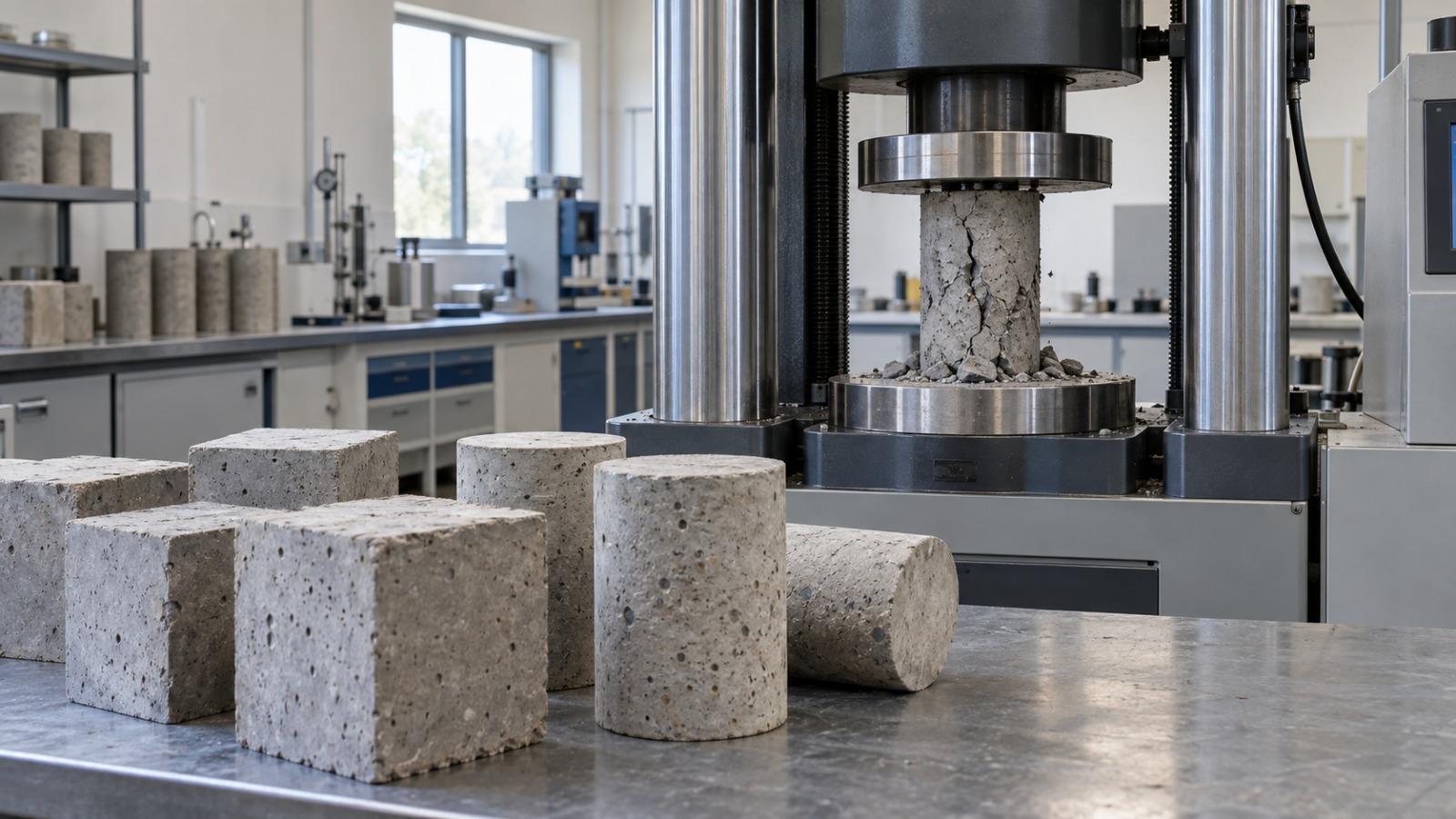
These may include examining the mineralogical characteristics of aggregates, conducting expansion tests under specified conditions and evaluating the chemical properties of the concrete system.

The selection of testing methods depends on aggregate type, project requirements and relevant technical standards.

Accelerated tests may provide preliminary assessments under certain conditions, but they may not always fully represent behavior under actual service conditions.

For this reason, testing programs for critical projects should be determined by qualified specialists.

Which Investigations Are Performed When ASR Is Suspected?

When ASR is suspected in an existing concrete structure, examining surface cracks alone may not be sufficient.

Crack distribution, width, progression, moisture conditions and the overall condition of the concrete should be evaluated.

Where necessary, concrete samples may be collected for petrographic and other laboratory investigations.

These examinations can help determine whether cracking is caused by alkali-silica reaction or other mechanisms.

Applying superficial treatments without a proper diagnosis may fail to address the underlying cause of the problem.

Can Concrete Damaged by ASR Be Repaired?

The appropriate treatment method for concrete elements affected by ASR depends on the severity of damage and structural conditions.

Crack characteristics, potential for continued expansion, the function of the structural element and environmental exposure should be evaluated.

In certain projects, moisture management, crack monitoring, surface protection or other engineering interventions may be considered.

However, all proposed interventions require technical assessment.

Damage caused by ASR should not be assumed to be fully resolved simply by sealing visible cracks.

How Should a Concrete Mix Be Designed to Reduce ASR Risk?

When designing a concrete mix, the potential reactivity of the aggregates should first be evaluated.

Where necessary, alternative aggregate sources or suitable binder compositions may be selected.

Total alkali loading, supplementary cementitious material characteristics and target concrete durability should be considered together.

The water/cement or water-to-binder ratio should be controlled in relation to workability and permeability requirements.

Superplasticizing and high-range water-reducing admixtures can help achieve suitable workability with lower water content.

However, the effectiveness of the selected ASR mitigation measures must be verified through appropriate laboratory tests.

Why Is ASR Control Important in Cement Plants?

The chemical composition of cement is one of the factors influencing the alkaline environment within concrete.

For this reason, quality control and consistent cement composition are important for meeting the durability requirements of different concrete applications.

When evaluating clinker, supplementary cementitious materials and performance-enhancing admixtures used in cement manufacturing, the technical characteristics of the final product should be considered.

However, ASR risk does not depend solely on cement.

Aggregate reactivity and environmental exposure conditions are equally important.

Therefore, technical coordination between cement manufacturers, ready-mixed concrete producers and project teams can be beneficial.

How Does ASR Risk Management Affect Concrete Costs?

The cost of durability measures in concrete projects designed for long service life should be evaluated comprehensively.

Selecting suitable aggregate sources, optimizing binder systems and conducting the required tests may generate certain costs during production.

However, long-term durability problems can increase maintenance, repair and structural intervention requirements.

For this reason, economic evaluation should consider not only initial concrete production costs but also the intended service life and future maintenance requirements.

The objective is to achieve technically compliant, durable concrete with a balanced total life-cycle cost.

Aggregate Quality and ASR Control in Central Anatolia

Aggregate sources used by ready-mixed concrete plants in Central Anatolia may differ in their geological characteristics.

The properties of cement and aggregate systems used in Konya, Ankara, Kayseri, Aksaray, Karaman, Niğde, Nevşehir, Kırşehir, Eskişehir, Sivas and Yozgat may vary between production facilities.

Therefore, the location of an aggregate source within a particular city or region is not sufficient to classify it as reactive or non-reactive in terms of ASR.

Aggregate reactivity should be determined using appropriate testing methods.

Laboratory and batching-plant studies using local raw materials can support the selection of suitable ready-mixed concrete admixtures and binder systems for individual projects.

ASR Control in High-Performance Concrete

Low water-to-binder ratios, suitable particle size distribution and controlled workability are important criteria in high-performance concrete production.

However, achieving high compressive strength does not mean that concrete is automatically protected against all chemical durability risks.

Therefore, aggregate and binder systems used in high-performance concrete should also be evaluated for ASR suitability.

When chemical and supplementary cementitious materials are used together, interactions between the different components should be tested.

This approach can help support both the required mechanical performance and long-term durability characteristics.

EMA Kimya Concrete Admixtures and Long-Term Durability Solutions

EMA Kimya develops professional concrete and cement admixture technologies for ready-mixed concrete plants, batching plants, precast and prefabricated concrete manufacturers, cement plants, bridges, viaducts, dams, roads, metro systems and large-scale infrastructure projects.

In concrete applications designed for long service life, cement characteristics, aggregate properties, water/cement ratio, binder composition, environmental conditions and target concrete performance should be evaluated together.

Superplasticizers, high-range water reducers, water-reducing admixtures and suitable auxiliary concrete admixtures can help improve concrete workability and support the development of a denser internal structure.

However, specific durability risks such as alkali-silica reaction require additional measures, including appropriate aggregate selection, binder systems verified for ASR mitigation and relevant technical testing.

EMA Kimya's technical approach focuses not only on initial concrete strength but also on supporting controlled water consumption, concrete homogeneity, low permeability, production consistency, correct admixture optimization and long-term concrete durability together.

Durable concrete is not simply concrete that achieves high compressive strength. It is a controlled and reliable concrete system in which raw material compatibility, environmental conditions and long-term chemical reaction risks are properly evaluated.

Related News

How to Choose Ready-Mix Concrete Admixtures? Key Factors That Determine Concrete Performance

Publication Date: 10 Ekim 2026

Why Are Cement Additives Used?

Publication Date: 10 Ekim 2026

What Do Cement Grinding Aids Do? How Can Cement Performance and Production Efficiency Be Improved?

Publication Date: 10 Ekim 2026

Support Surface Strength and Long-Term Performance with Concrete Curing and Protection Products

Publication Date: 10 Ekim 2026

Why Does Concrete Lose Slump? How Can Workability Be Maintained in Ready-Mixed Concrete?

Publication Date: 10 Ekim 2026

How Can Concrete Workability Be Improved?

Publication Date: 10 Ekim 2026

What Are Concrete Strength-Enhancing Admixtures? How Can Concrete Compressive Strength Be Increased?

Publication Date: 10 Ekim 2026

The Right Admixture Technology for Early Strength and Faster Demolding in Precast Concrete Production

Publication Date: 10 Ekim 2026

How Can Reinforcement Corrosion Be Prevented in Reinforced Concrete Structures? The Importance of Concrete Protection Products

Publication Date: 10 Ekim 2026

Higher Performance with Less Water Using High-Range Water-Reducing Concrete Admixtures

Publication Date: 10 Ekim 2026

What Are Polycarboxylate-Based Concrete Admixtures? Next-Generation Superplasticizer Technology

Publication Date: 10 Ekim 2026

What Is an Air-Entraining Concrete Admixture? How Is Freeze-Thaw Resistant Concrete Produced?

Publication Date: 10 Ekim 2026

Why Do Honeycombing and Voids Occur in Concrete? The Right Application and Admixture Technology for More Homogeneous Concrete

Publication Date: 10 Ekim 2026

What Is an Air-Entraining Concrete Admixture? How Can Freeze-Thaw Resistance and Long-Term Concrete Durability Be Improved?

Publication Date: 10 Ekim 2026

What Is Cement-Admixture Incompatibility? How Can Rapid Slump Loss, Setting Problems and Admixture Performance Be Controlled in Ready-Mixed Concrete?

Publication Date: 10 Ekim 2026

Web Design & Software | COUR Media