English
×
All rights reserved. All content and images used on this website
belong to EMA Kimya and may not be used without permission.
cour
 EMA Kimya | Concrete Admixtures, Cement Additives, Construction Chemicals, Superplasticizers, High-Range Water Reducers, Concrete Performance Solutions, Ready-Mix and Precast Concrete Technologies, Infrastructure, Industrial Projects, Technical Support, Production and Cost Consulting  EMA Kimya | Concrete Admixtures, Cement Additives, Construction Chemicals, Superplasticizers, High-Range Water Reducers, Concrete Performance Solutions, Ready-Mix and Precast Concrete Technologies, Infrastructure, Industrial Projects, Technical Support, Production and Cost Consulting
EMA Kimya | Concrete Admixtures, Cement Additives, Construction Chemicals, Superplasticizers, High-Range Water Reducers, Concrete Performance Solutions, Ready-Mix and Precast Concrete Technologies, Infrastructure, Industrial Projects, Technical Support, Production and Cost Consulting

"Strength in Every Mix,
Quality in Every Drop"

×

Quality, reliability, and a commitment to sustainable production.

We provide professional solutions in concrete admixtures and construction chemicals.

Menu

Quality, reliability, and a commitment to sustainable production.

We provide professional solutions in concrete admixtures and construction chemicals.

07 October 2026

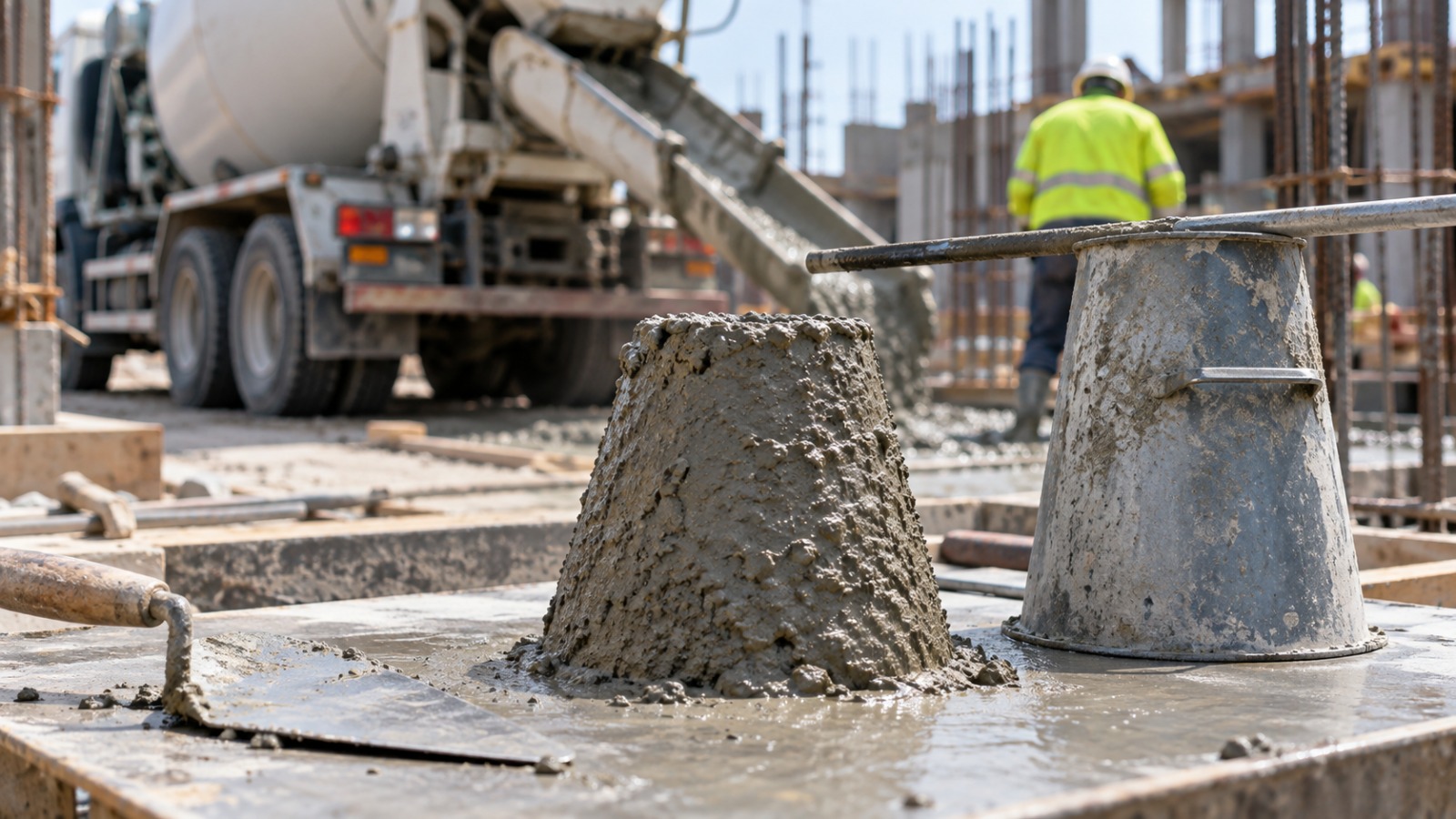
Concrete compressive strength is one of the most important performance criteria in terms of structural safety, durability, production efficiency and achieving the required concrete class.

However, producing high-strength concrete does not simply mean adding more cement to the mix.

Cement characteristics, water/cement ratio, aggregate structure, placement quality, curing conditions and the use of concrete strength-enhancing admixtures should all be evaluated together.

The right concrete admixture technology can help achieve high workability with lower water demand, support a denser internal concrete structure and contribute to more controlled development of both early and final strength.

What Is Concrete Compressive Strength?

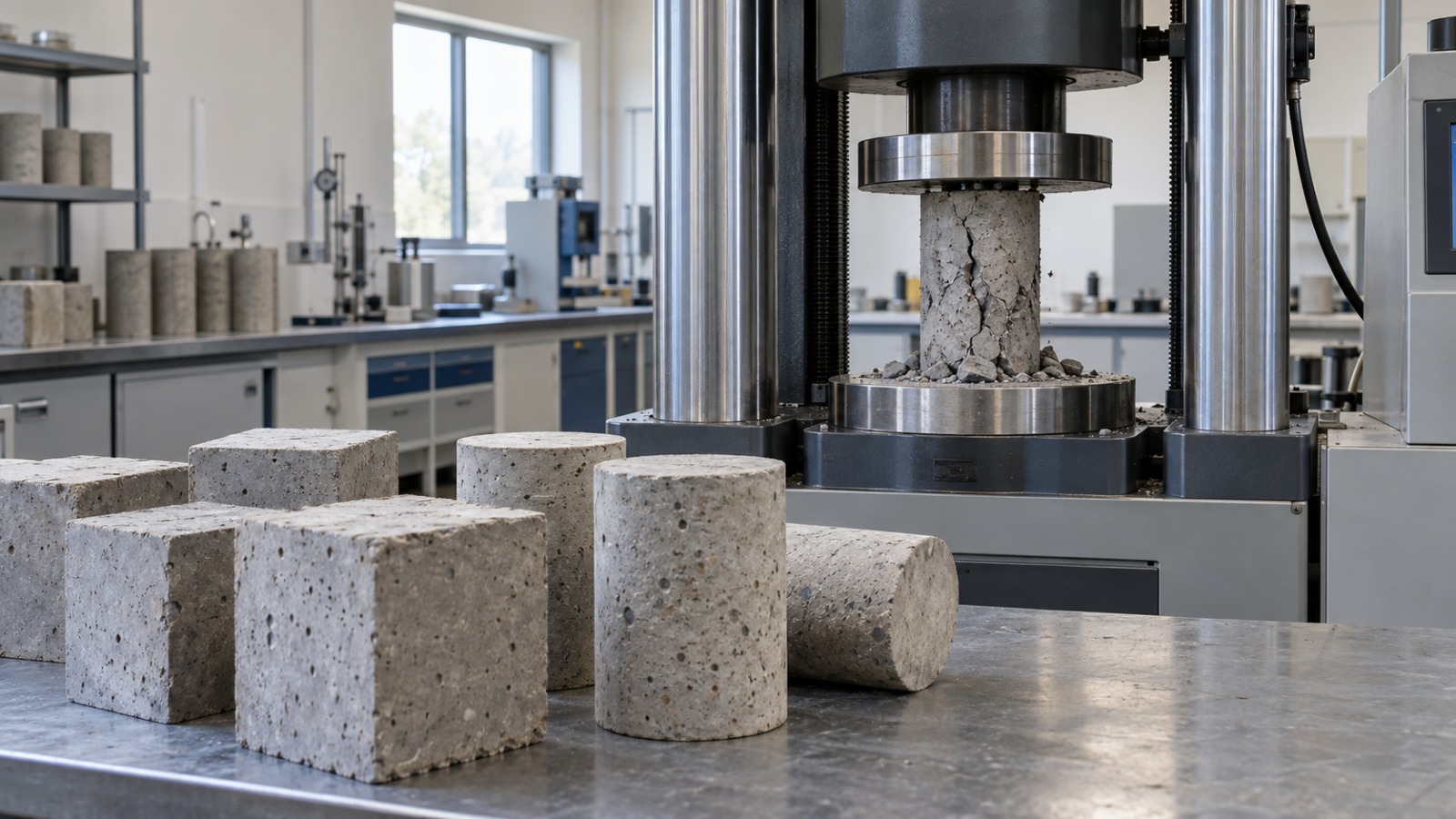
Concrete compressive strength is one of the main mechanical properties used to define how much load hardened concrete can withstand under compression.

It is also an important criterion in determining concrete strength classes.

However, high compressive strength alone is not sufficient for every application.

Workability, permeability, crack control and environmental durability also contribute to overall concrete performance.

For this reason, strength improvement should be carried out without disturbing the overall balance of the concrete mix.

What Is a Concrete Strength-Enhancing Admixture?

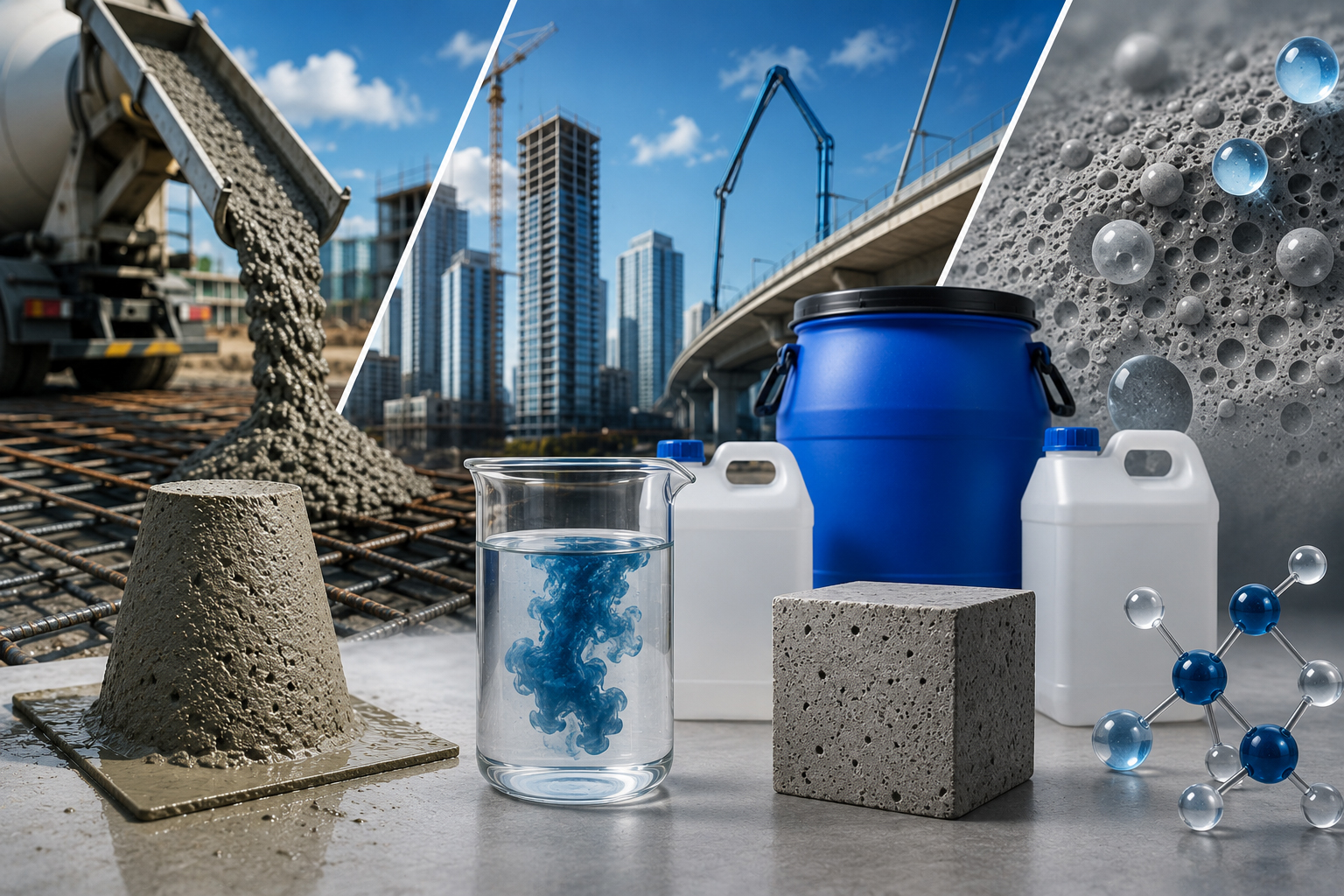
Concrete strength-enhancing admixtures are chemical systems used to support the development of mechanical performance in concrete.

Depending on the technology used, these admixtures may help:

reduce water demand, improve cement particle dispersion, optimize hydration behavior or support early and final strength development.

However, using a strength-enhancing admixture does not automatically turn an unsuitable concrete mix into high-performance concrete.

The best results are achieved by optimizing the concrete mix design and admixture system together.

How Does the Water/Cement Ratio Affect Concrete Strength?

The water/cement ratio is one of the most important parameters affecting concrete strength.

Adding excessive water may improve initial workability.

However, after hardening, unused water can leave capillary pores inside the concrete and create a more porous internal structure.

This can negatively affect compressive strength and long-term durability.

For this reason, concrete designed for high strength should maintain a controlled water/cement ratio.

How Do Superplasticizers Affect Concrete Strength?

Superplasticizing and high-range water-reducing concrete admixtures can help concrete achieve the required workability with less mixing water.

A lower water/cement ratio can support the formation of a denser hardened concrete structure.

For this reason, superplasticizing concrete admixtures can play an important direct or indirect role in improving concrete strength.

However, simply increasing the admixture dosage does not guarantee maximum strength.

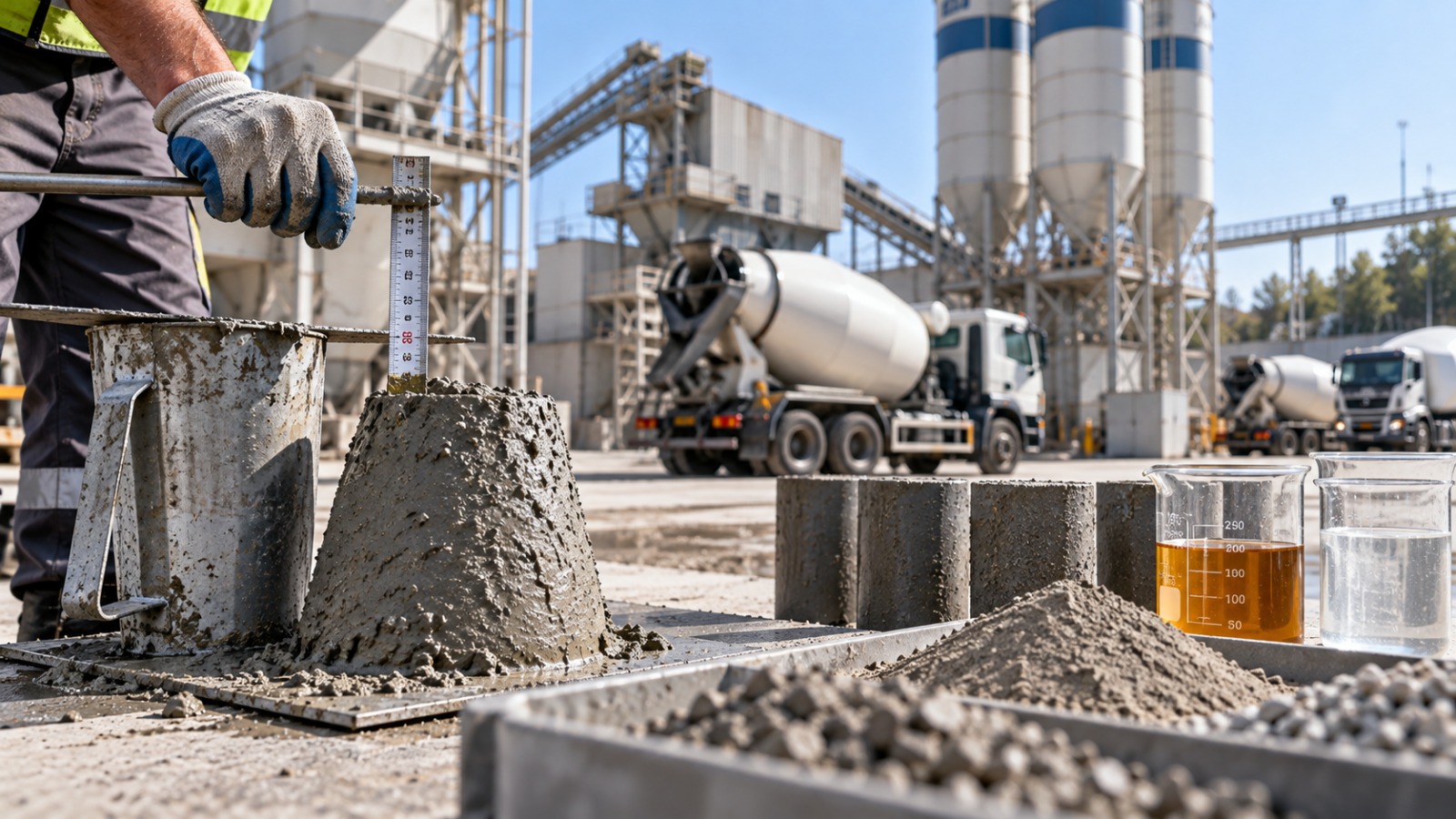
The optimum dosage should be determined through laboratory testing.

What Is the Difference Between Early Strength and Final Strength?

Early strength refers to the mechanical performance developed during the first hours or days after concrete placement.

Final strength refers to the performance achieved after a longer hydration period.

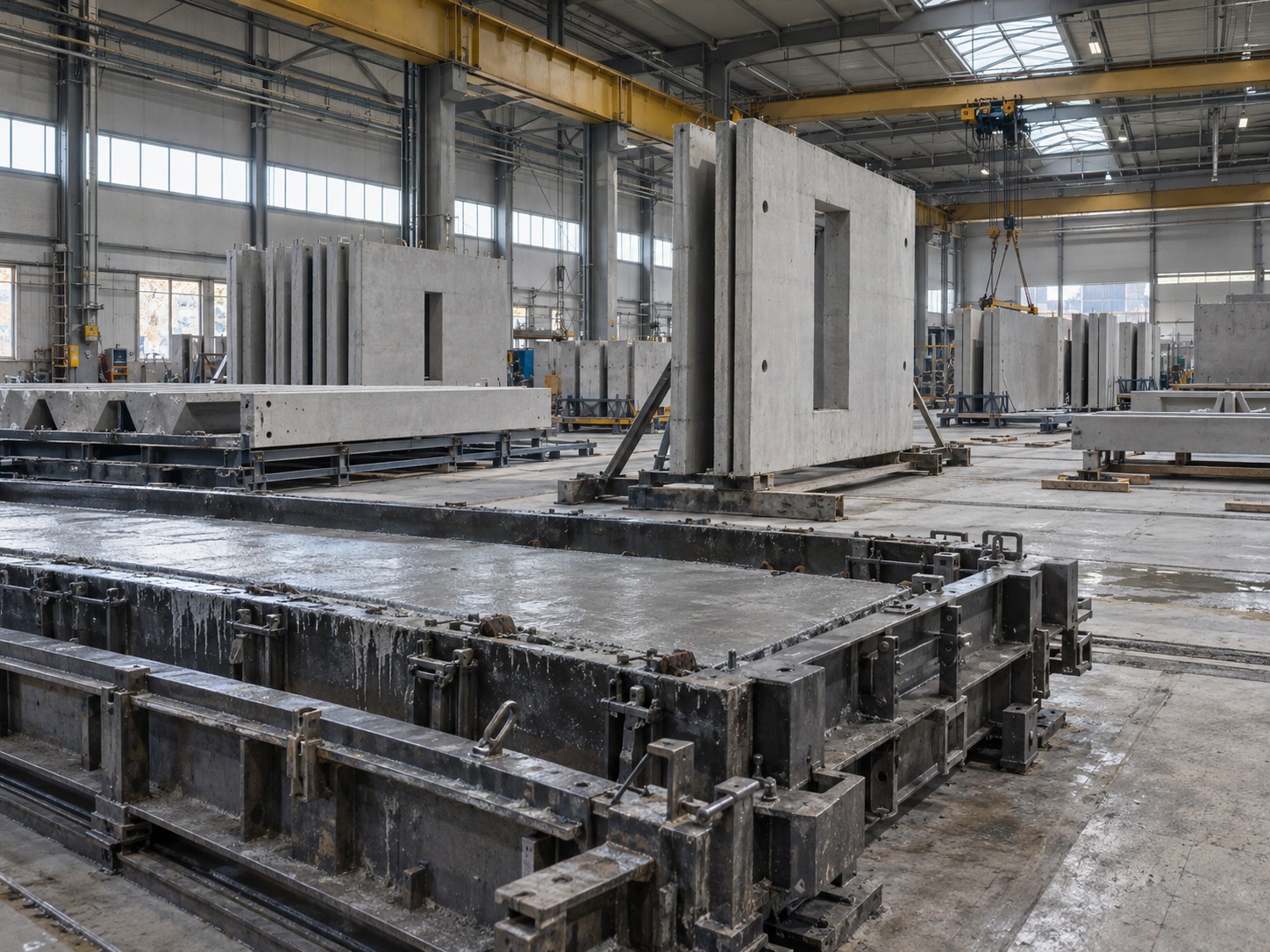
Early strength can be especially important in precast and prefabricated concrete production.

In ready-mixed concrete and infrastructure projects, 7-day and 28-day strength results are also important.

For this reason, the concrete admixture system should be selected according to the required strength development at specific ages.

Why Is Early Strength Important in Precast Concrete Production?

In precast production, the ability to reuse molds quickly has a direct effect on production capacity.

If concrete reaches the required demolding strength in a shorter period, mold-cycle time can be reduced.

The right concrete mix design and suitable strength-enhancing admixture system can support this process.

However, while rapid strength development is targeted, workability, surface quality and long-term strength should also be maintained.

How Can Strength Be Made More Consistent in Ready-Mixed Concrete Production?

In ready-mixed concrete plants, achieving high average strength alone is not sufficient.

Strength should also remain as consistent as possible between different production batches.

Changes in cement characteristics, aggregate moisture, actual water content, admixture dosage and concrete temperature can cause variations in strength results.

Regular quality control and a properly optimized admixture system can help reduce these variations.

More consistent production also allows the concrete mix to be optimized with less unnecessary safety margin.

Does Using More Cement Always Increase Strength?

No.

Increasing cement content in an uncontrolled way is not always the most effective method for improving concrete strength.

Higher binder content may increase production cost and can also affect hydration heat and shrinkage behavior.

Concrete performance is also strongly influenced by the water/cement ratio and placement quality.

For this reason, the objective should not be to use more cement, but to obtain more efficient performance from the existing binder system.

Does Aggregate Quality Affect Concrete Strength?

Yes.

Because aggregates make up a large proportion of concrete volume, their properties play an important role in concrete performance.

Aggregate strength, particle-size distribution, shape, surface texture and fine material content can affect both fresh and hardened concrete properties.

Poor aggregate grading may create more internal voids and increase the amount of cement paste required.

For this reason, high-strength concrete design should evaluate the aggregate system together with cement and admixtures.

Does Placement Quality Affect Concrete Strength?

A concrete mix may achieve high strength in the laboratory, but the same performance may not be achieved on site if the concrete is not properly placed.

Insufficient compaction can leave air voids inside the concrete.

Excessive or improper vibration may increase the risk of segregation.

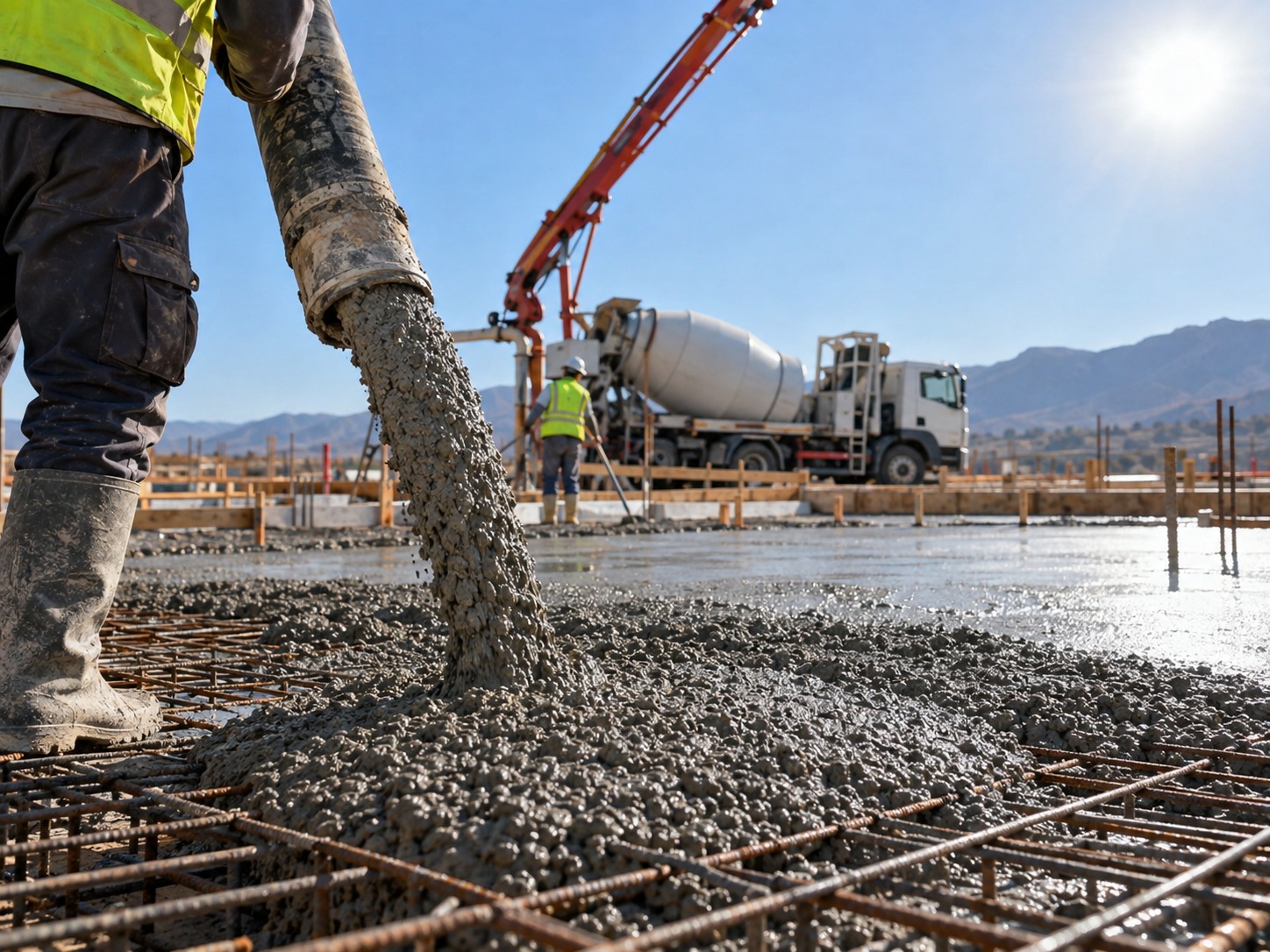
For this reason, concrete should have suitable workability and be placed homogeneously within the formwork.

Proper concrete admixtures can help achieve the required workability with a controlled water content.

How Does Curing Affect Concrete Strength?

Concrete strength is not determined only by the mix inside the mixer.

After placement, proper curing conditions are required for cement hydration to continue effectively.

Insufficient curing may cause early moisture loss and negatively affect hydration.

This can reduce early strength development and long-term durability.

For this reason, correct curing is just as important as admixture technology in high-performance concrete production.

Does Concrete Temperature Affect Strength Development?

Yes.

Concrete temperature directly affects the rate of hydration.

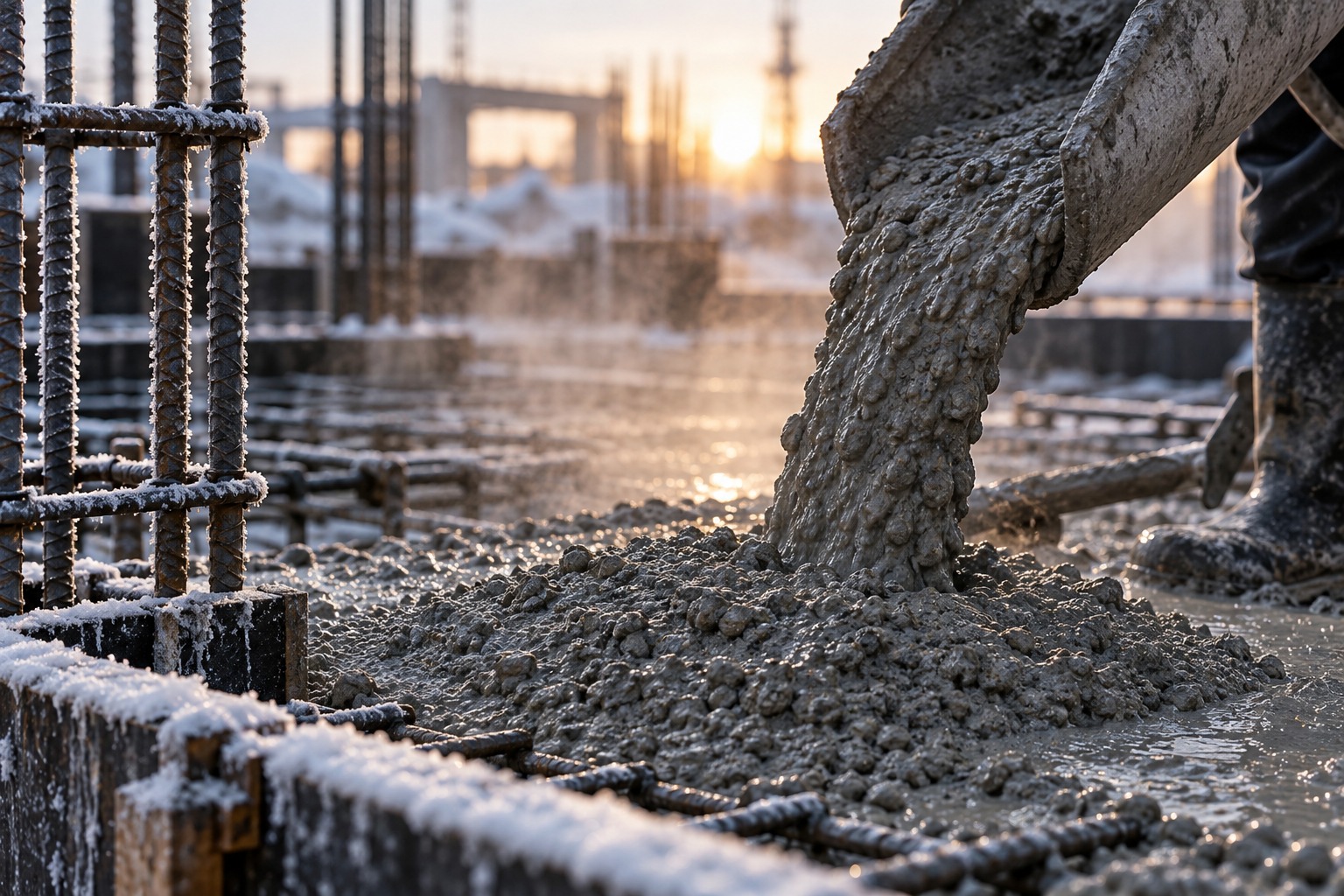
High temperatures may accelerate early reactions, while low temperatures can slow hydration and early strength development.

For this reason, the same concrete mix may not behave identically in summer and winter.

Seasonal mix and admixture optimization can help achieve more consistent strength performance.

Are Strength-Enhancing Admixtures and Set Accelerators the Same?

No.

Setting time and concrete strength are related, but they are not the same thing.

Set-accelerating admixtures are used to accelerate the transition of concrete from a plastic to a hardened state.

Strength-enhancing systems focus on improving mechanical performance.

Faster setting does not automatically mean higher compressive strength.

For this reason, the desired performance target should be clearly defined before selecting an admixture.

Can Strength-Enhancing Admixtures Help Reduce Cement Consumption?

In some optimized concrete mix designs, admixture systems that provide strong water reduction and performance improvement can help the binder system work more efficiently.

This may allow cement content to be re-evaluated in certain applications.

However, it is not technically correct to define a fixed cement reduction percentage for every concrete mix.

Any reduction in cement content should be verified through laboratory and production testing.

The objective should not simply be lower cement consumption, but reliable achievement of the target concrete class.

How Is High-Strength Concrete Produced?

High-strength concrete production does not depend on a single raw material or admixture.

A low and controlled water/cement ratio, suitable binder system, quality aggregates, high-performance concrete admixtures, correct mixing and effective curing must work together.

If high workability is required, it should not be achieved through uncontrolled water addition.

Superplasticizing and high-range water-reducing admixtures provide an important solution in this regard.

Pumpable High-Strength Concrete

When high-strength concrete also needs to be pumped, both mechanical performance and fresh concrete behavior must be controlled together.

Very low water/cement ratios can increase concrete viscosity.

For this reason, aggregate grading, fine material content and the admixture system should be optimized for pumpability.

Concrete should maintain homogeneity inside the pump line and resist segregation.

Field applicability should not be sacrificed in the pursuit of higher strength.

Strength Requirements in Bridges, Tunnels, Dams and Infrastructure Projects

In large-scale infrastructure projects, concrete performance should not be evaluated only by 28-day compressive strength.

In bridges, tunnels, dams, metro systems, viaducts and airports, permeability, environmental durability, crack control and long service life are also important.

For this reason, high strength should be evaluated together with long-term durability.

A project-specific concrete admixture system can help balance these performance requirements.

How Should Concrete Strength-Enhancing Admixture Prices Be Evaluated?

Admixtures should not be compared only by price per kilogram or ton.

Optimum dosage, water-reduction performance, strength development and the effect on other components of the concrete mix should all be considered.

A higher-priced admixture may work at a lower dosage or help improve binder efficiency.

For this reason, the correct economic comparison is based on total cost per cubic meter of concrete and the performance achieved.

Which Strength Values Should Be Measured in Laboratory Trials?

Concrete strength development should be monitored at different ages according to project requirements.

1-day or 2-day strength may be important in precast applications.

7-day results can help monitor early strength development.

28-day compressive strength is one of the main reference values used to evaluate concrete class.

For certain projects, longer-term strength results may also be examined.

Admixture performance should not be judged based on only one testing age.

Why Are Plant and Field Trials Important?

A concrete mix that performs successfully in the laboratory may behave differently under actual production conditions.

Batching plant mixers, transit mixer waiting time, transportation duration, concrete temperature and pumping can all affect fresh concrete properties.

For this reason, critical concrete applications should be supported by plant and field trials after laboratory testing.

Actual production data helps optimize admixture type and dosage more accurately.

EMA Kimya Concrete Strength-Enhancing Admixture Solutions

EMA Kimya develops professional concrete and cement admixture technologies for ready-mixed concrete plants, batching plants, precast and prefabricated manufacturers, cement plants, high-performance concrete and bridge, tunnel, dam, metro, road, airport and viaduct projects.

Cement characteristics, aggregate structure, water/cement ratio, target concrete class, early and final strength requirements and production conditions can be evaluated together to optimize the appropriate admixture system.

Superplasticizers, high-range water reducers, water-reducing admixtures, strength-enhancing admixtures and auxiliary concrete admixtures can be evaluated together to develop project-specific solutions.

EMA Kimya's technical approach focuses not only on maximum compressive strength, but on optimizing strength, workability, low water/cement ratio, production consistency, cost and long-term concrete performance together.

High-strength concrete is not simply concrete containing more cement; it is concrete in which water, binder, aggregates, admixtures and curing conditions are correctly optimized together.

Related News

What Is a Superplasticizer and What Does It Do?

Publication Date: 07 Ekim 2026

Shotcrete Admixtures for Fast and Controlled Application in Tunnel and Underground Projects

Publication Date: 07 Ekim 2026

What Should Be Considered When Choosing a Ready-Mixed Concrete Admixture? How Does the Right Admixture Affect Concrete Performance?

Publication Date: 07 Ekim 2026

What Is an Air-Entraining Concrete Admixture? How Can Freeze-Thaw Resistance and Long-Term Concrete Durability Be Improved?

Publication Date: 07 Ekim 2026

What Causes Plastic Shrinkage Cracks in Concrete? How Can Early Surface Cracking Be Prevented?

Publication Date: 07 Ekim 2026

The Importance of Set-Retarding Concrete Admixtures in Hot Weather and Long Transportation Times

Publication Date: 07 Ekim 2026

What Causes Segregation and Bleeding in Concrete? How Can Homogeneous Concrete Be Achieved?

Publication Date: 07 Ekim 2026

How Can Concrete Strength Be Increased?

Publication Date: 07 Ekim 2026

What Is Cement-Admixture Incompatibility? How Can Rapid Slump Loss, Setting Problems and Admixture Performance Be Controlled in Ready-Mixed Concrete?

Publication Date: 07 Ekim 2026

The Importance of Set-Accelerating Admixtures in Cold Weather Concrete Applications

Publication Date: 07 Ekim 2026

What Is a Set-Retarding Concrete Admixture? How Can Concrete Setting Time Be Controlled in Hot Weather?

Publication Date: 07 Ekim 2026

The Right Admixture Technology for Early Strength and Faster Demolding in Precast Concrete Production

Publication Date: 07 Ekim 2026

Why Does Concrete Lose Slump? How Can Workability Be Maintained in Ready-Mixed Concrete?

Publication Date: 07 Ekim 2026

Concrete Protection Products and Their Advantages

Publication Date: 07 Ekim 2026

How to Choose Ready-Mix Concrete Admixtures? Key Factors That Determine Concrete Performance

Publication Date: 07 Ekim 2026

Web Design & Software | COUR Media