English
×
All rights reserved. All content and images used on this website
belong to EMA Kimya and may not be used without permission.
cour
 EMA Kimya | Concrete Admixtures, Cement Additives, Construction Chemicals, Superplasticizers, High-Range Water Reducers, Concrete Performance Solutions, Ready-Mix and Precast Concrete Technologies, Infrastructure, Industrial Projects, Technical Support, Production and Cost Consulting  EMA Kimya | Concrete Admixtures, Cement Additives, Construction Chemicals, Superplasticizers, High-Range Water Reducers, Concrete Performance Solutions, Ready-Mix and Precast Concrete Technologies, Infrastructure, Industrial Projects, Technical Support, Production and Cost Consulting
EMA Kimya | Concrete Admixtures, Cement Additives, Construction Chemicals, Superplasticizers, High-Range Water Reducers, Concrete Performance Solutions, Ready-Mix and Precast Concrete Technologies, Infrastructure, Industrial Projects, Technical Support, Production and Cost Consulting

"Strength in Every Mix,
Quality in Every Drop"

×

Quality, reliability, and a commitment to sustainable production.

We provide professional solutions in concrete admixtures and construction chemicals.

Menu

Quality, reliability, and a commitment to sustainable production.

We provide professional solutions in concrete admixtures and construction chemicals.

08 October 2026

In concrete production, achieving high compressive strength and suitable workability is important. However, the behavior of concrete during the first hours after placement can also directly affect its long-term performance.

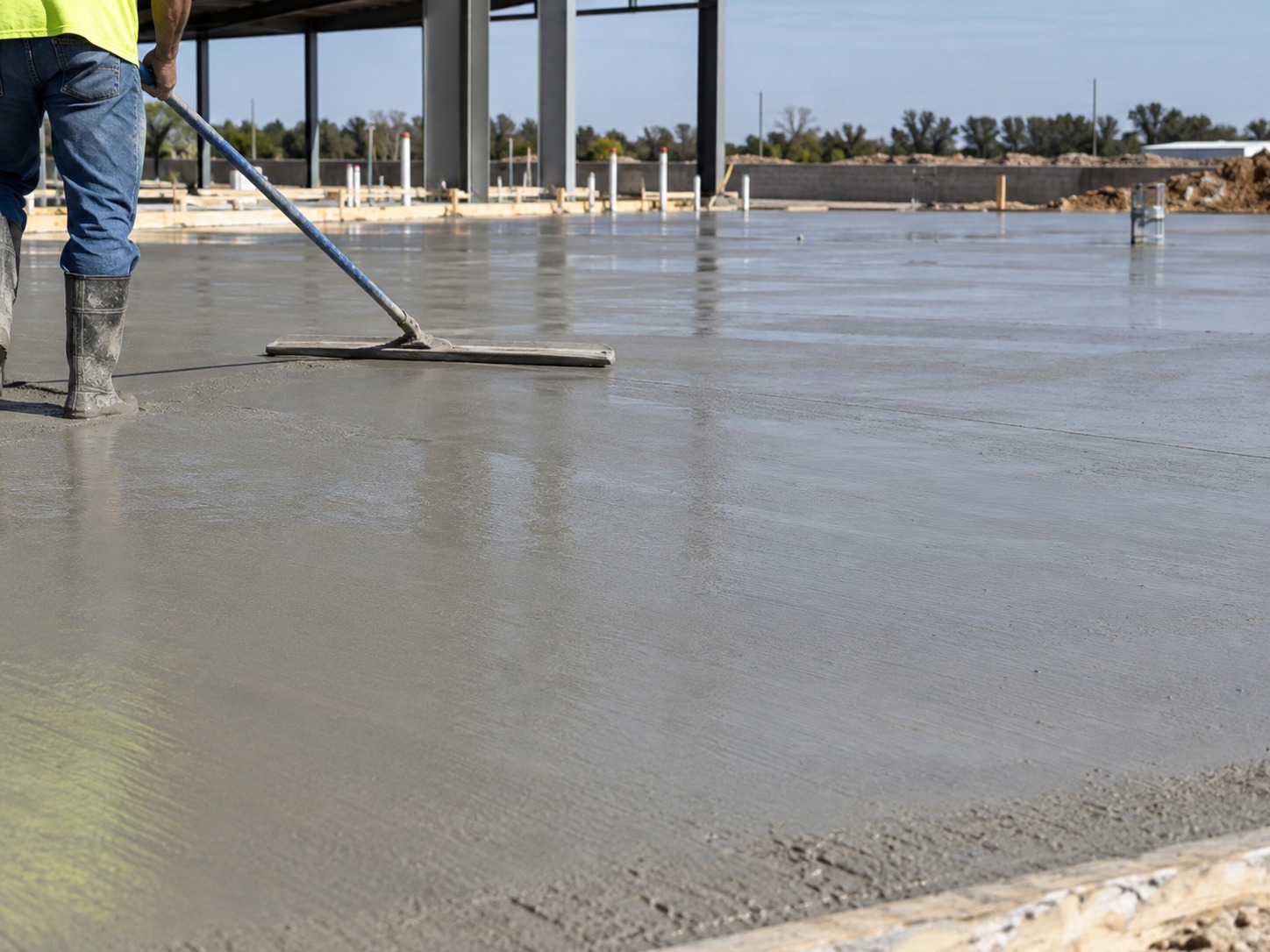
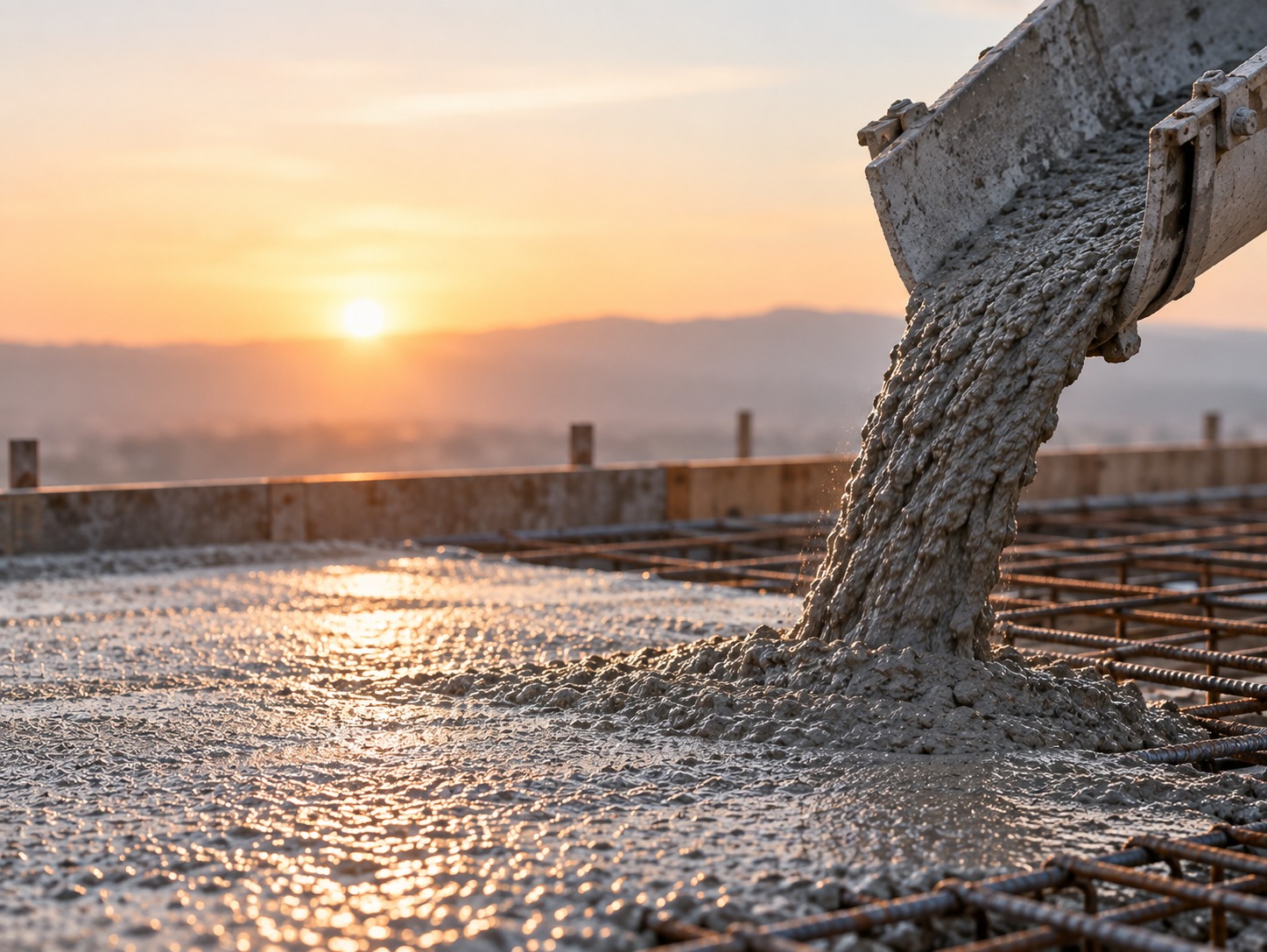
Especially under hot weather, low relative humidity, windy conditions and rapid surface evaporation, cracks may develop on the surface of fresh concrete. These cracks are known as plastic shrinkage cracks.

This problem can occur in ready-mixed concrete applications, industrial floors, large concrete slabs, roads and outdoor concrete structures. It can be reduced through proper concrete mix design, suitable concrete admixtures, controlled placement conditions and effective curing practices.

However, preventing plastic shrinkage cracks cannot be achieved through concrete admixtures alone. The entire process, from concrete production to surface protection, should be evaluated together.

What Is Plastic Shrinkage in Concrete?

Plastic shrinkage is the volume reduction that occurs when fresh concrete loses moisture from its surface before it has hardened.

When the evaporation rate from the concrete surface exceeds the rate at which bleed water reaches the surface, drying may begin.

Because fresh concrete has not yet developed sufficient tensile strength, it may be unable to resist the stresses associated with this volume change.

As a result, cracks of different lengths and orientations may develop on the concrete surface.

Plastic shrinkage is particularly important during the first hours after concrete placement.

How Do Plastic Shrinkage Cracks Form in Concrete?

Rapid evaporation of water from the concrete surface can generate capillary stresses.

As the upper layer of the concrete loses moisture and begins to shrink, the lower layers may retain a higher moisture content.

This can create differences in stress within the concrete.

When the early-age tensile strength of the concrete is insufficient to resist these stresses, cracks may develop.

The risk may be particularly significant in large concrete elements with extensive surfaces exposed to evaporation.

Are Plastic Shrinkage Cracks and Drying Shrinkage Cracks the Same?

No.

Plastic shrinkage cracks develop while concrete is still in its plastic state, generally during the first hours after placement.

Drying shrinkage cracks, on the other hand, are associated with moisture loss and resulting volume changes after the concrete has hardened.

These two types of cracking have different formation periods and mechanisms.

Therefore, correctly identifying the cause of cracks on a concrete surface is important when selecting suitable preventive measures.

Does Hot Weather Increase the Risk of Concrete Cracking?

High ambient temperatures can accelerate water evaporation from the surface of fresh concrete.

When concrete temperature is also high, surface moisture loss may become even faster.

For this reason, temperature control becomes particularly important during large concrete pours in summer.

However, plastic shrinkage does not occur only in hot weather.

Significant evaporation can also occur in relatively cool weather when humidity is low and wind speeds are high.

Therefore, risk assessments should consider all environmental conditions rather than ambient temperature alone.

How Does Wind Affect Concrete Surfaces?

Wind can accelerate the removal of the humid air layer immediately above the concrete surface.

This increases the rate of water evaporation from the concrete into the atmosphere.

Wind effects can be particularly important in open construction sites, concrete road applications, large industrial floors and concrete pours at elevated locations.

Using suitable windbreaks or protecting the surface through appropriate methods can help reduce evaporation during concrete placement.

Why Is Low Humidity Important for Concrete?

The relative humidity of the surrounding air affects evaporation from the concrete surface.

Under low relative humidity conditions, moisture can transfer more rapidly from the concrete surface into the atmosphere.

For this reason, dry weather may increase the risk of plastic shrinkage even when ambient temperatures are not extremely high.

In ready-mixed concrete applications, air temperature, concrete temperature, wind speed and relative humidity should be evaluated together.

Does the Water/Cement Ratio Affect Plastic Shrinkage?

The water/cement ratio is one of the main parameters determining the properties of fresh and hardened concrete.

Concrete with a low water/cement ratio may have a reduced amount of bleed water reaching the surface.

This can increase the risk of surface drying under conditions of rapid evaporation.

However, adding uncontrolled amounts of water to the concrete mix to prevent plastic shrinkage is not the correct solution.

Excess water can negatively affect concrete strength and long-term durability.

Therefore, the objective should not be to increase water content randomly, but to control surface moisture loss while maintaining a suitable concrete mix design.

Can Superplasticizing Admixtures Prevent Plastic Shrinkage?

Superplasticizing and high-range water-reducing concrete admixtures help achieve the required workability with less mixing water.

These admixtures can support controlled water/cement ratios, concrete homogeneity and placement performance.

However, superplasticizers should not be considered products that independently prevent plastic shrinkage cracking.

Even concrete with low water content may experience plastic shrinkage due to rapid surface evaporation.

For this reason, concrete admixture technology should be planned together with appropriate curing and surface protection practices.

What Do Concrete Protection Products Do?

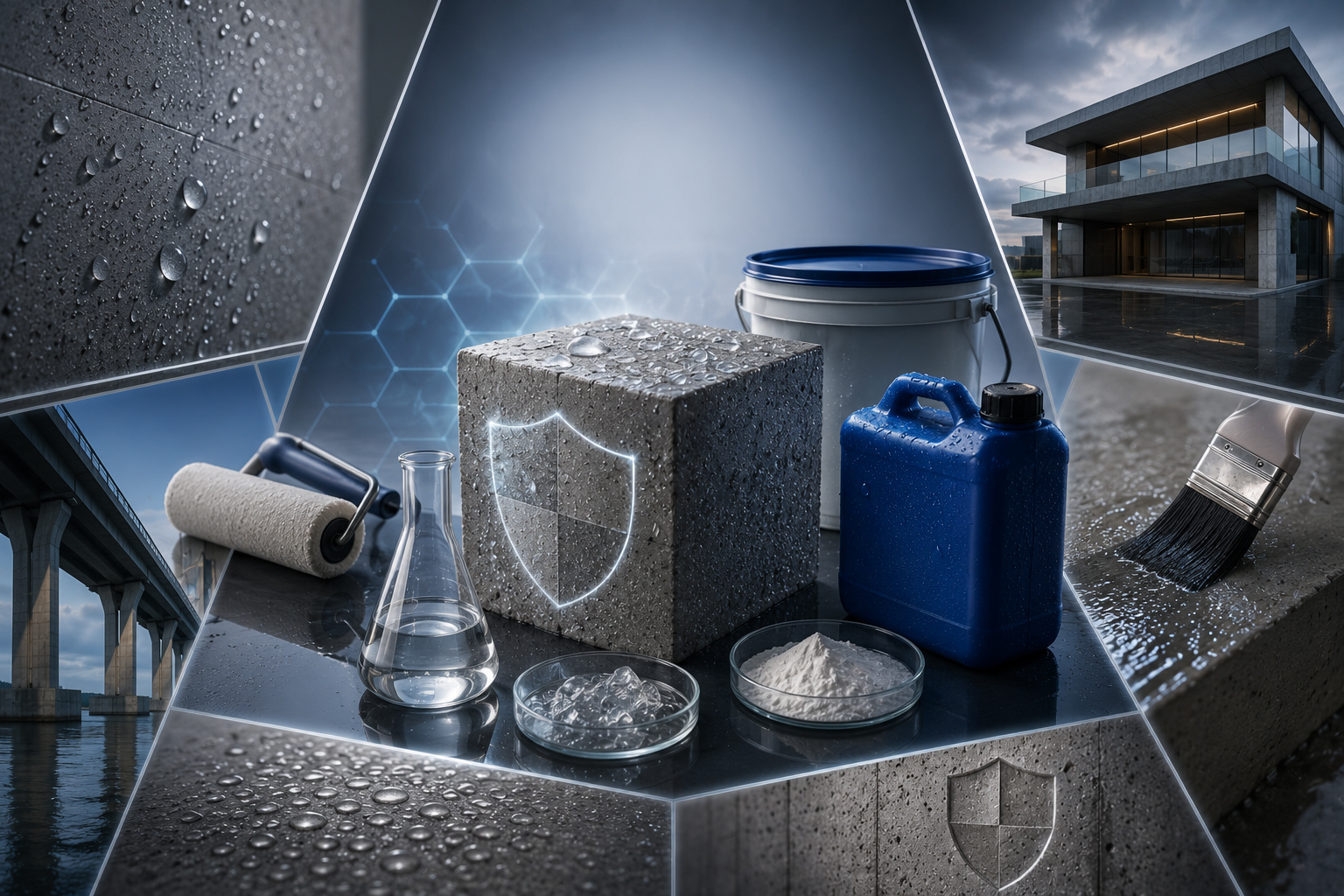
Concrete protection products can help protect concrete surfaces against moisture loss or certain environmental effects, depending on the product type.

In particular, suitable concrete curing compounds can help reduce water loss from the concrete surface when applied correctly.

This can support the preservation of moisture conditions required during early-age concrete development.

However, not all concrete protection products perform the same function.

Product selection should consider concrete age, surface conditions, application requirements and any subsequent coating operations.

Why Is Concrete Curing Important?

Curing refers to the practices used to maintain suitable moisture and temperature conditions so that concrete can develop the required strength and durability.

Adequate moisture conditions are important for cement hydration reactions to continue effectively.

Insufficient curing can increase the risk of early surface drying and cracking.

It may also negatively affect the mechanical and durability performance of the surface layer.

For this reason, proper protection after placement is just as important as correct concrete production.

When Should Concrete Curing Begin?

Curing and evaporation control should be planned according to the condition of the concrete surface and the application method.

Under conditions where plastic shrinkage is a risk, measures may be required to prevent excessive moisture loss while the concrete is still fresh.

After surface finishing operations are completed, an appropriate curing method should be implemented.

However, the correct timing for applying a particular surface treatment depends on the technical characteristics of the product and the application conditions.

For this reason, the manufacturer's application instructions should always be followed.

Why Is Plastic Shrinkage Important in Industrial Concrete Floors?

Industrial floors generally consist of large, continuous concrete surfaces.

During placement, these surfaces may be exposed to high temperatures, wind and low humidity.

Controlling moisture loss is particularly important during the period between concrete placement and completion of surface finishing operations.

Plastic shrinkage cracks can negatively affect the appearance of the floor and, depending on their characteristics, may require further performance evaluation.

For this reason, concrete mix design, placement schedule and curing methods should be determined together in industrial flooring applications.

Surface Protection in Concrete Roads

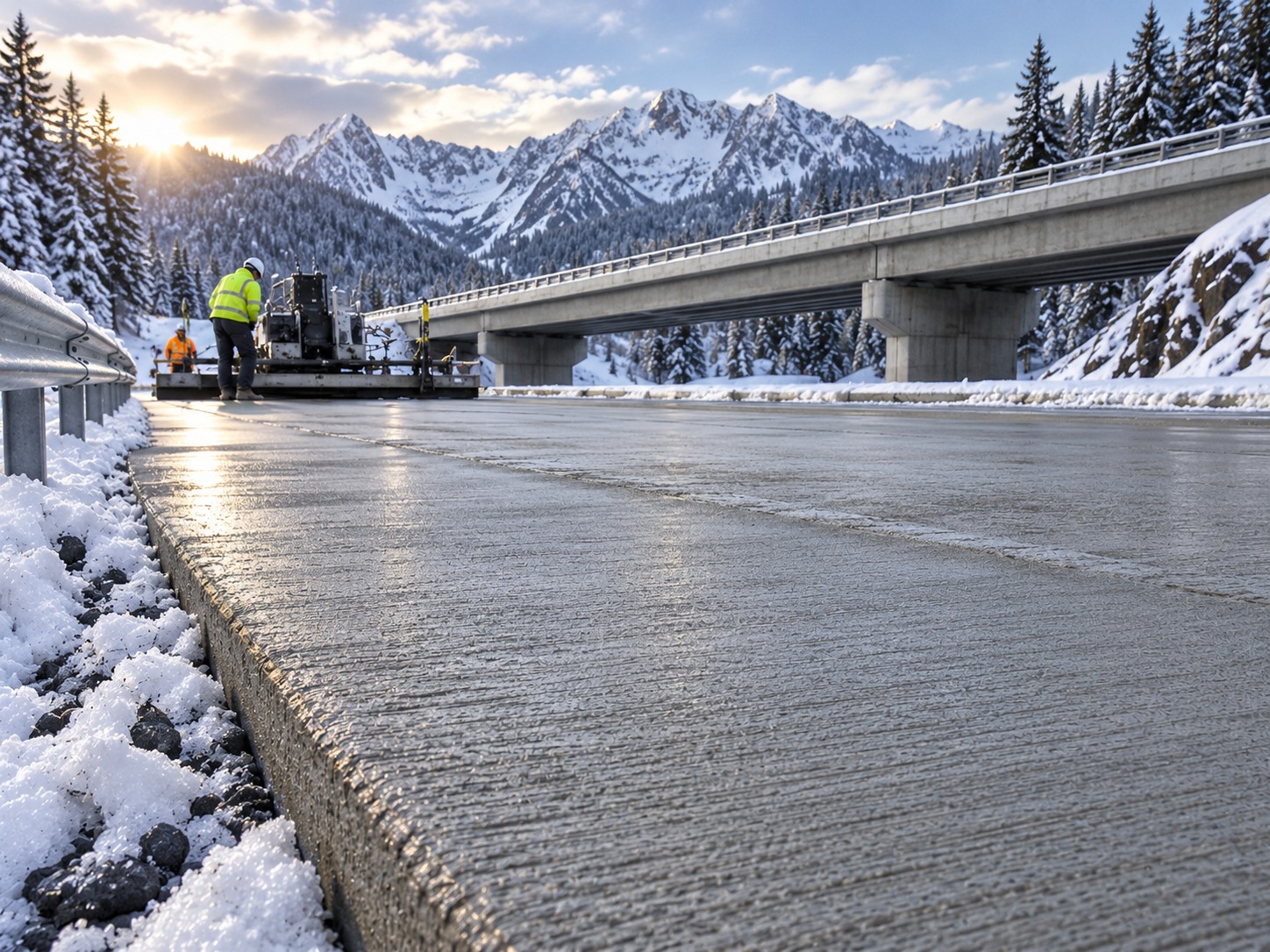
Concrete roads are directly exposed to environmental conditions because of their large surface areas.

Rapid surface evaporation can become a significant risk during road construction in hot and windy weather.

Suitable concrete consistency, controlled placement, proper surface finishing and effective curing can help improve concrete road quality.

Joint design, crack control and environmental durability requirements should also be evaluated together in concrete pavement projects.

Early-Age Cracking in Precast Concrete Production

In precast and prefabricated concrete production, mold-cycle time and early strength are important production criteria.

However, while targeting faster production, surface moisture loss and temperature changes must also be controlled.

Insufficient curing conditions may increase the risk of early-age cracking, particularly in precast elements with large exposed surfaces.

For this reason, admixture systems, concrete temperature, mold conditions and curing schedules should be optimized together.

The Relationship Between Concrete Bleeding and Plastic Shrinkage

Concrete bleeding is the upward movement of mixing water toward the surface of fresh concrete.

Bleed water may temporarily compensate for evaporation from the concrete surface.

However, when the evaporation rate exceeds the rate at which bleed water reaches the surface, the risk of plastic shrinkage increases.

This can be particularly important in concrete mixtures with low bleeding tendencies.

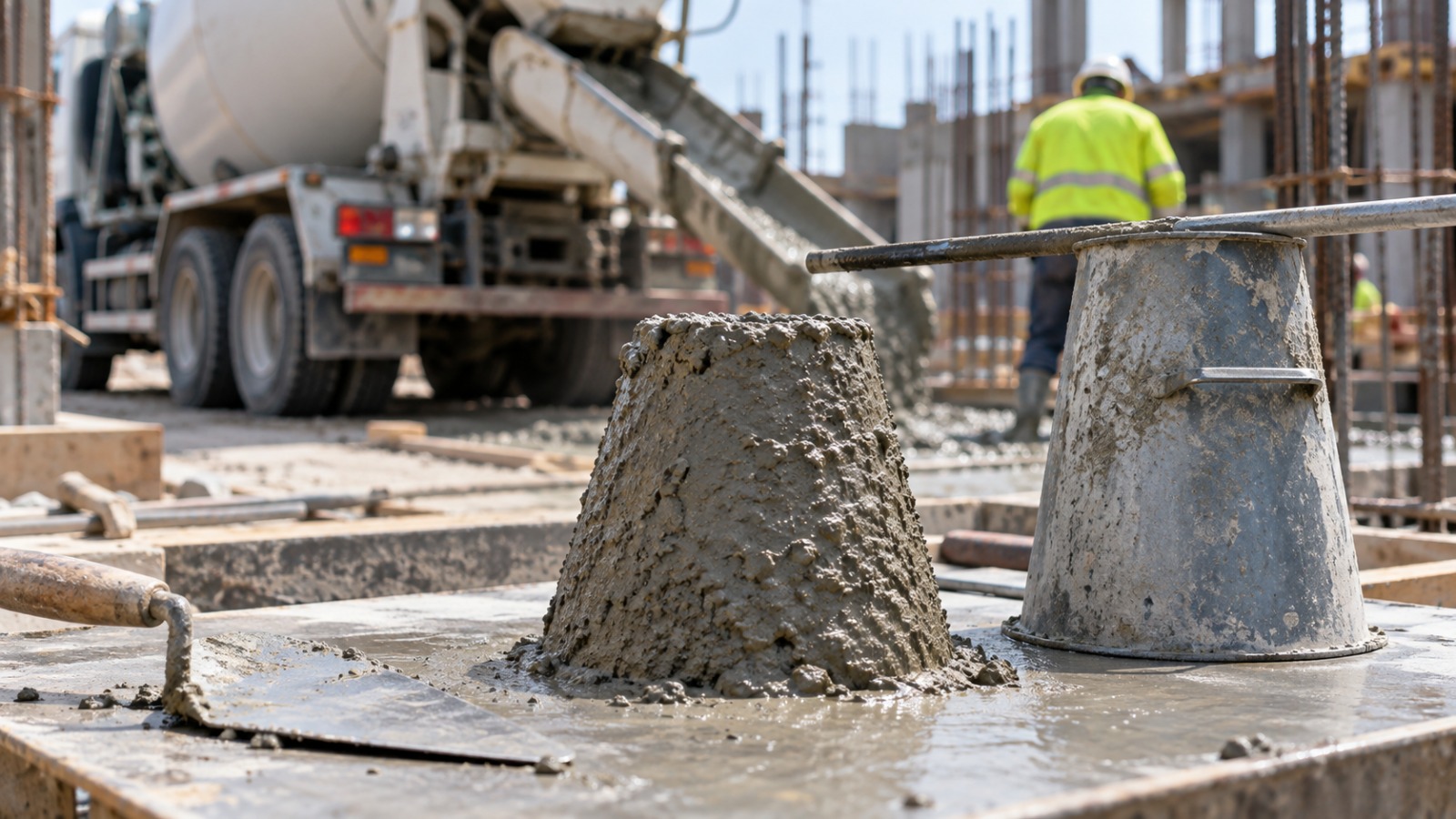
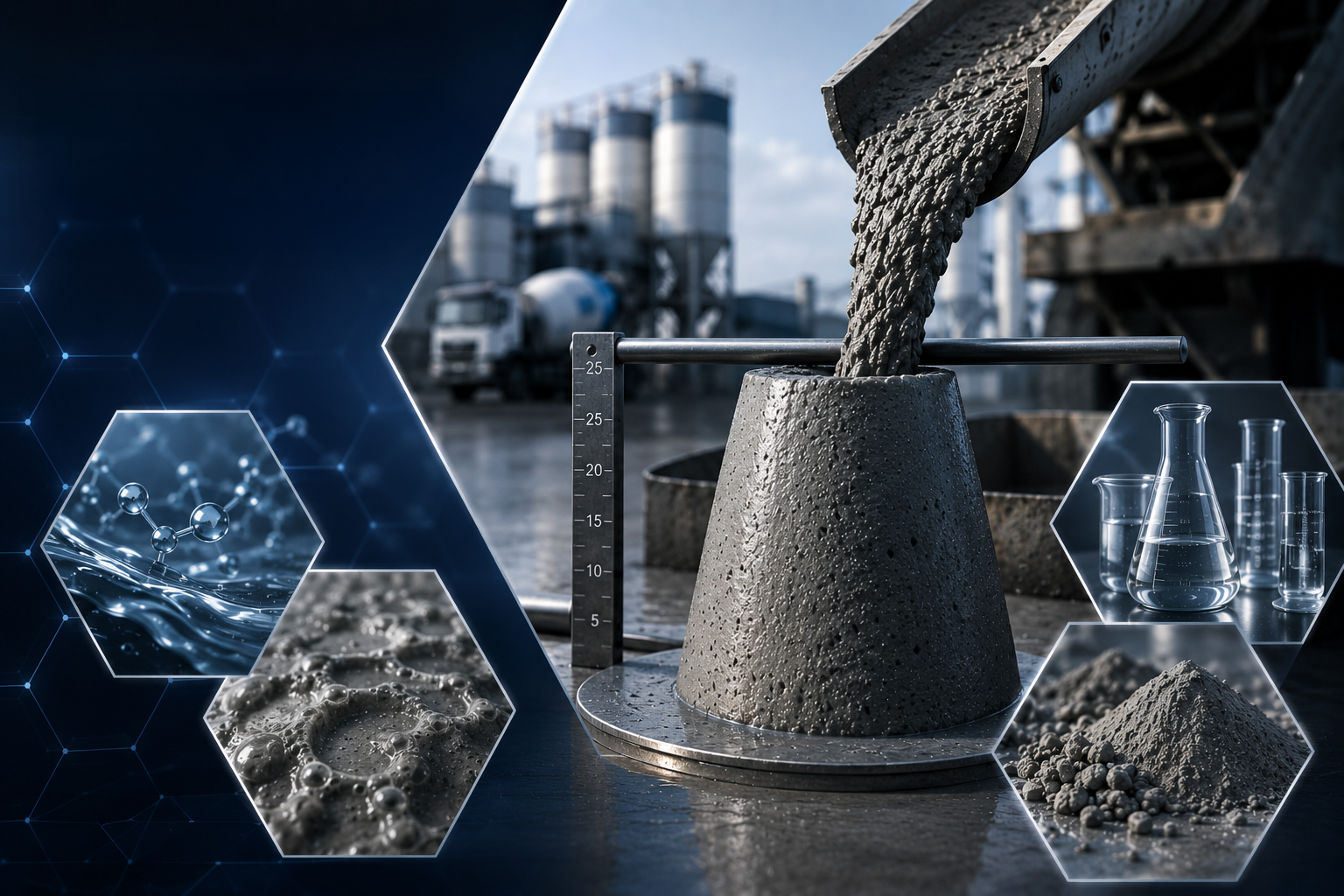
For this reason, evaluating fresh concrete behavior should include not only slump but also bleeding and surface drying characteristics.

Is Sprinkling Excess Water on the Concrete Surface Correct?

Adding uncontrolled amounts of water during concrete surface finishing is not an appropriate practice.

Excess water applied to the surface can increase the water/cement ratio of the upper layer and negatively affect surface quality.

For this reason, uncontrolled water addition should be avoided as a method of correcting premature surface drying.

Where necessary, suitable evaporation-control measures and curing systems should be used instead.

How Can Plastic Shrinkage Cracks Be Prevented?

Concrete production and placement conditions should be evaluated together to reduce plastic shrinkage risk.

First, concrete temperature, ambient temperature, wind speed and relative humidity should be monitored.

A suitable concrete mix design and workability should be maintained, and the concrete should not remain unprotected for extended periods.

Where necessary, windbreaks, appropriate evaporation-control measures and project-specific curing methods can be used.

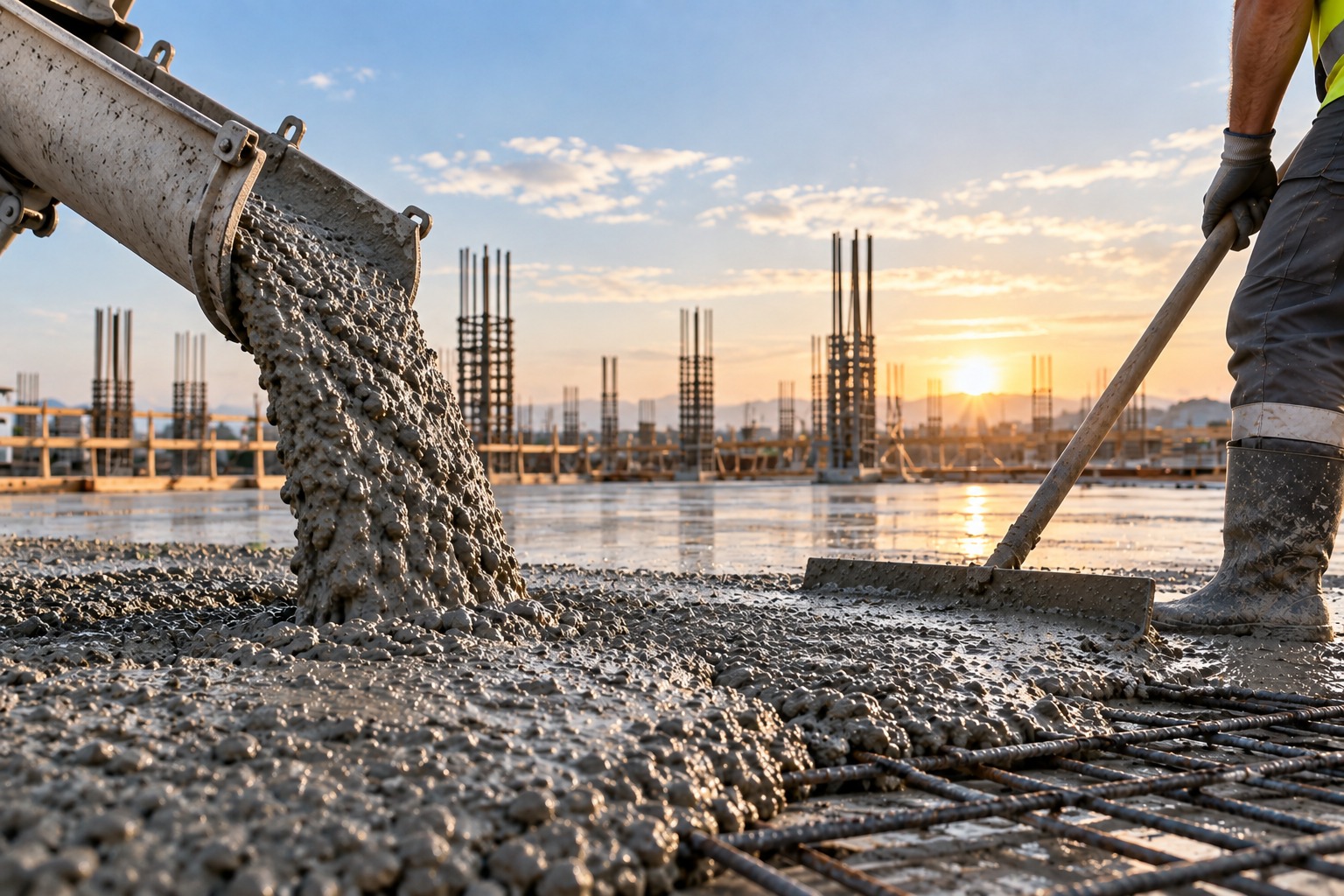
Coordinating concrete placement, surface finishing and curing operations is essential.

Can Plastic Shrinkage Cracks Be Repaired?

The appropriate repair method depends on the depth, width and location of the cracks.

Not all surface cracks should be evaluated in the same way.

Superficial cracks and cracks that may affect structural performance require different levels of technical investigation.

For this reason, concrete showing signs of cracking should be evaluated by qualified specialists where necessary, and the appropriate repair method should be selected according to the findings.

The preferred approach is to reduce the risk of cracking before it occurs rather than relying on repairs afterward.

Managing Plastic Shrinkage Risk in Ready-Mixed Concrete Plants

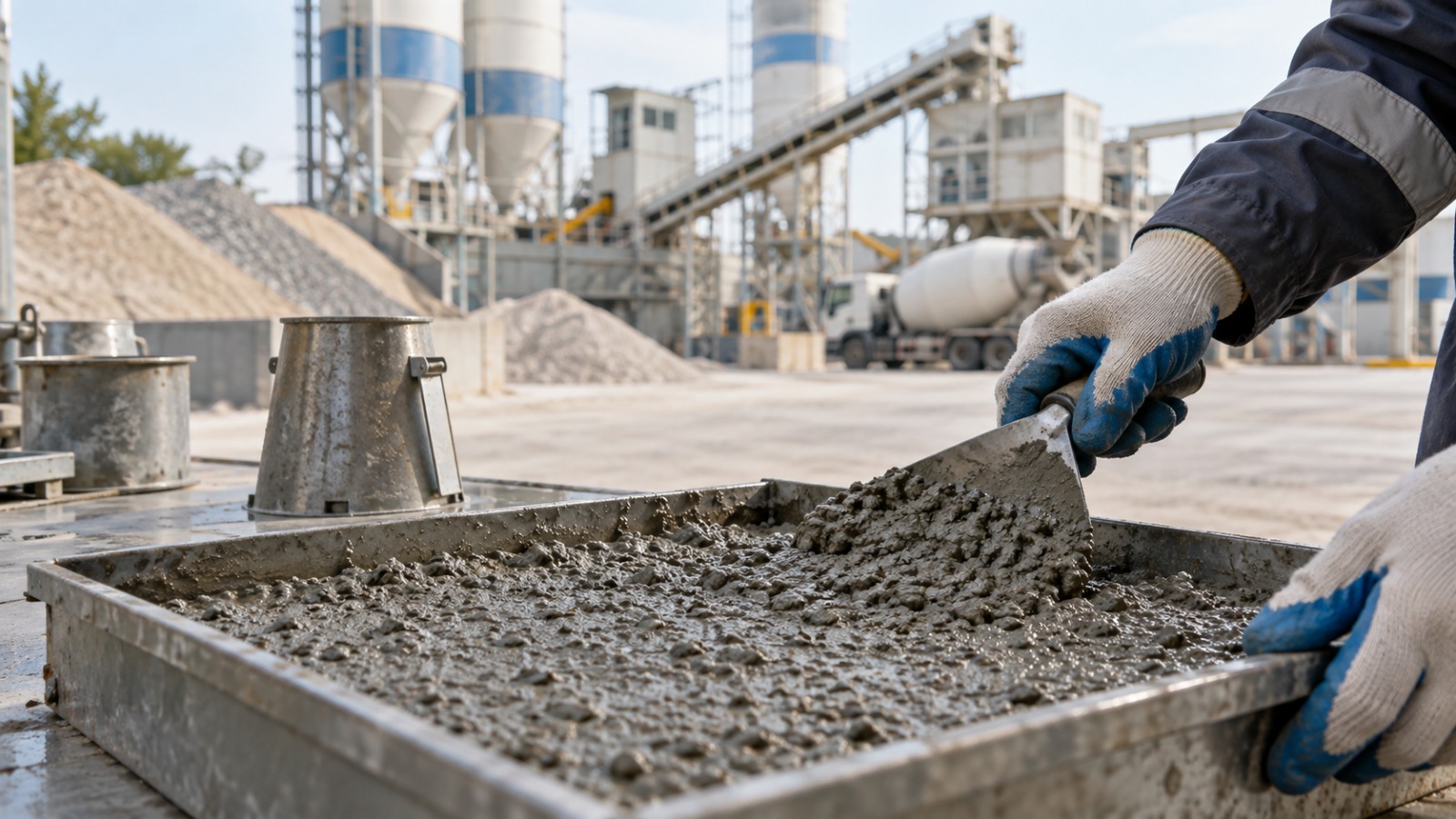
Ready-mixed concrete plants should monitor initial concrete temperature, water/cement ratio, cement and aggregate characteristics, and the chemical admixture system.

However, plastic shrinkage risk is not limited to production conditions at the batching plant.

Transportation, waiting time at the construction site, placement and surface finishing are also important parts of the process.

For this reason, technical coordination between the ready-mixed concrete producer and the application team can help achieve more reliable results.

Moisture Loss Control in Concrete Applications in Central Anatolia

Hot and dry summer conditions in Central Anatolia can make surface evaporation a significant concern, particularly in outdoor concrete applications.

Local weather conditions and concrete raw materials may vary between cities such as Konya, Ankara, Kayseri, Aksaray, Karaman, Niğde, Nevşehir, Kırşehir, Eskişehir, Sivas and Yozgat.

For this reason, concrete mix design should be evaluated together with placement and curing conditions in regional ready-mixed concrete, industrial flooring, road and infrastructure applications.

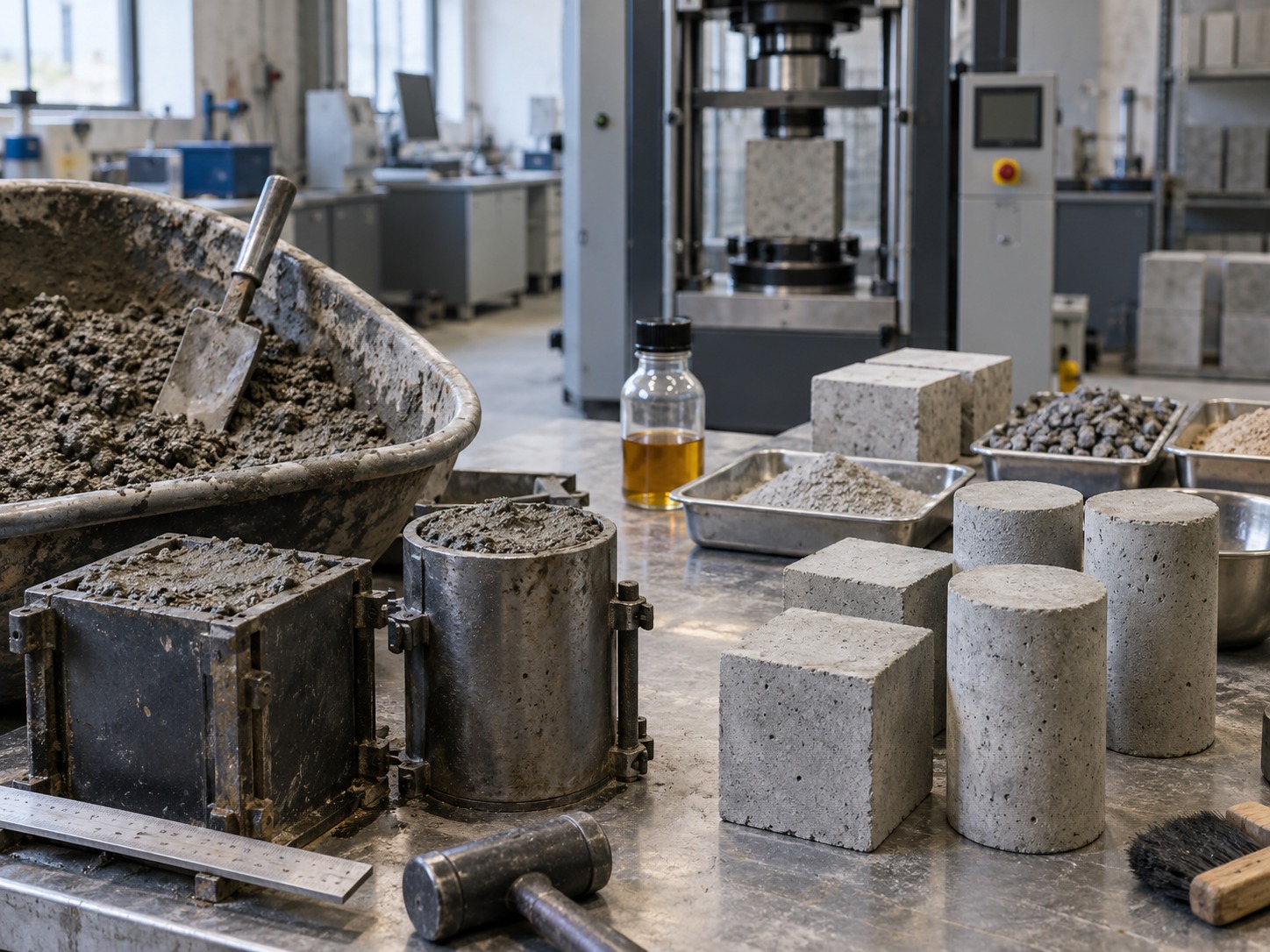
Laboratory and batching-plant trials using local raw materials can support more controlled achievement of the required concrete performance.

EMA Kimya Concrete Protection and Ready-Mixed Concrete Admixture Solutions

EMA Kimya develops professional concrete admixtures, concrete protection products and construction chemical solutions for ready-mixed concrete plants, batching plants, precast and prefabricated concrete manufacturers, industrial floors, concrete roads and large-scale infrastructure projects.

Suitable superplasticizing, high-range water-reducing and auxiliary concrete admixture systems can be optimized by evaluating cement characteristics, aggregate properties, water/cement ratio, concrete temperature, target workability and application conditions.

EMA Kimya's technical approach focuses not only on achieving high workability or compressive strength, but also on improving homogeneous concrete production, controlled water consumption, suitable surface protection, production efficiency and long-term concrete durability together.

Durable concrete is not achieved through proper mix design alone; it also requires concrete that is protected against moisture loss, maintained under suitable conditions and correctly cured from the first hours after placement.

Related News

Higher and More Consistent Concrete Performance with Strength-Enhancing Admixtures

Publication Date: 08 Ekim 2026

What Are Auxiliary Concrete Admixtures? How Can Stability and Performance Be Controlled in Ready-Mixed Concrete?

Publication Date: 08 Ekim 2026

Why Does Concrete Lose Slump? How Can Workability Be Maintained in Ready-Mixed Concrete?

Publication Date: 08 Ekim 2026

The Importance of the Right Admixture Technology for Shrinkage and Crack Control in Concrete

Publication Date: 08 Ekim 2026

What Are Cement Grinding Aids? How Can Grinding Efficiency, Energy Savings and Cement Performance Be Improved in Cement Plants?

Publication Date: 08 Ekim 2026

The Importance of Set-Retarding Concrete Admixtures in Hot Weather and Long Transportation Times

Publication Date: 08 Ekim 2026

What Do Cement Grinding Aids Do? How Can Cement Performance and Production Efficiency Be Improved?

Publication Date: 08 Ekim 2026

How Can Reinforcement Corrosion Be Prevented in Reinforced Concrete Structures? The Importance of Concrete Protection Products

Publication Date: 08 Ekim 2026

Concrete Protection Products and Their Advantages

Publication Date: 08 Ekim 2026

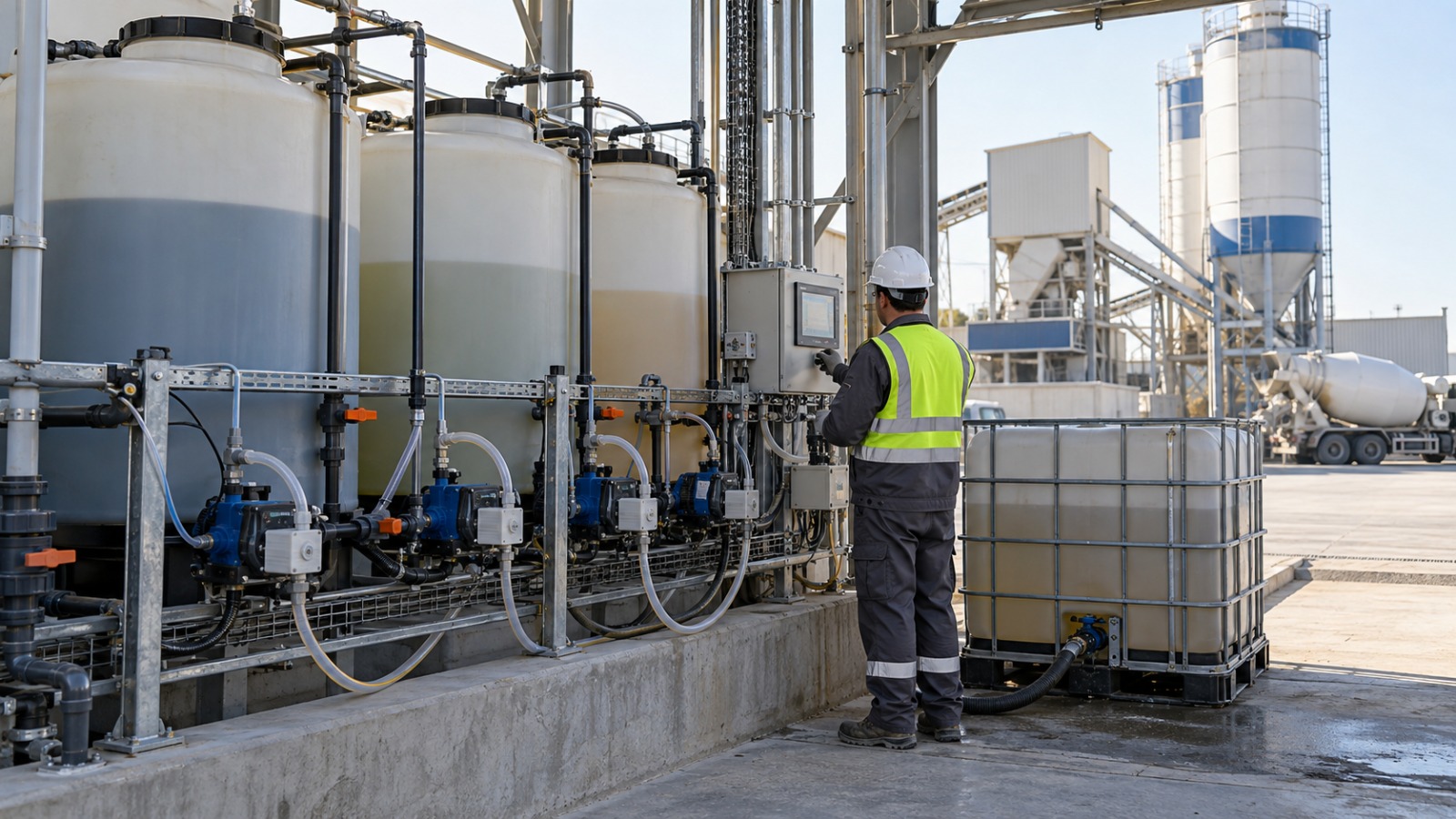
What Are Concrete Admixture Dosing Errors? Correct Storage and Use in Ready-Mixed Concrete Plants

Publication Date: 08 Ekim 2026

What Is High-Performance Concrete? What Are Its Main Properties?

Publication Date: 08 Ekim 2026

Support Surface Strength and Long-Term Performance with Concrete Curing and Protection Products

Publication Date: 08 Ekim 2026

More Durable Concrete Against Freeze-Thaw Cycles with Air-Entraining Admixtures

Publication Date: 08 Ekim 2026

How Can Concrete Workability Be Improved?

Publication Date: 08 Ekim 2026

How to Choose Ready-Mix Concrete Admixtures? Key Factors That Determine Concrete Performance

Publication Date: 08 Ekim 2026

Web Design & Software | COUR Media