English
×
All rights reserved. All content and images used on this website
belong to EMA Kimya and may not be used without permission.
cour
 EMA Kimya | Concrete Admixtures, Cement Additives, Construction Chemicals, Superplasticizers, High-Range Water Reducers, Concrete Performance Solutions, Ready-Mix and Precast Concrete Technologies, Infrastructure, Industrial Projects, Technical Support, Production and Cost Consulting  EMA Kimya | Concrete Admixtures, Cement Additives, Construction Chemicals, Superplasticizers, High-Range Water Reducers, Concrete Performance Solutions, Ready-Mix and Precast Concrete Technologies, Infrastructure, Industrial Projects, Technical Support, Production and Cost Consulting
EMA Kimya | Concrete Admixtures, Cement Additives, Construction Chemicals, Superplasticizers, High-Range Water Reducers, Concrete Performance Solutions, Ready-Mix and Precast Concrete Technologies, Infrastructure, Industrial Projects, Technical Support, Production and Cost Consulting

"Strength in Every Mix,
Quality in Every Drop"

×

Quality, reliability, and a commitment to sustainable production.

We provide professional solutions in concrete admixtures and construction chemicals.

Menu

Quality, reliability, and a commitment to sustainable production.

We provide professional solutions in concrete admixtures and construction chemicals.

26 September 2026

Concrete structures are affected not only by the loads they carry, but also by the temperature and moisture conditions of their environment. Especially in concrete exposed to repeated freezing and thawing cycles during winter, the internal structure of the concrete must be designed to withstand these changes in order to achieve a long service life.

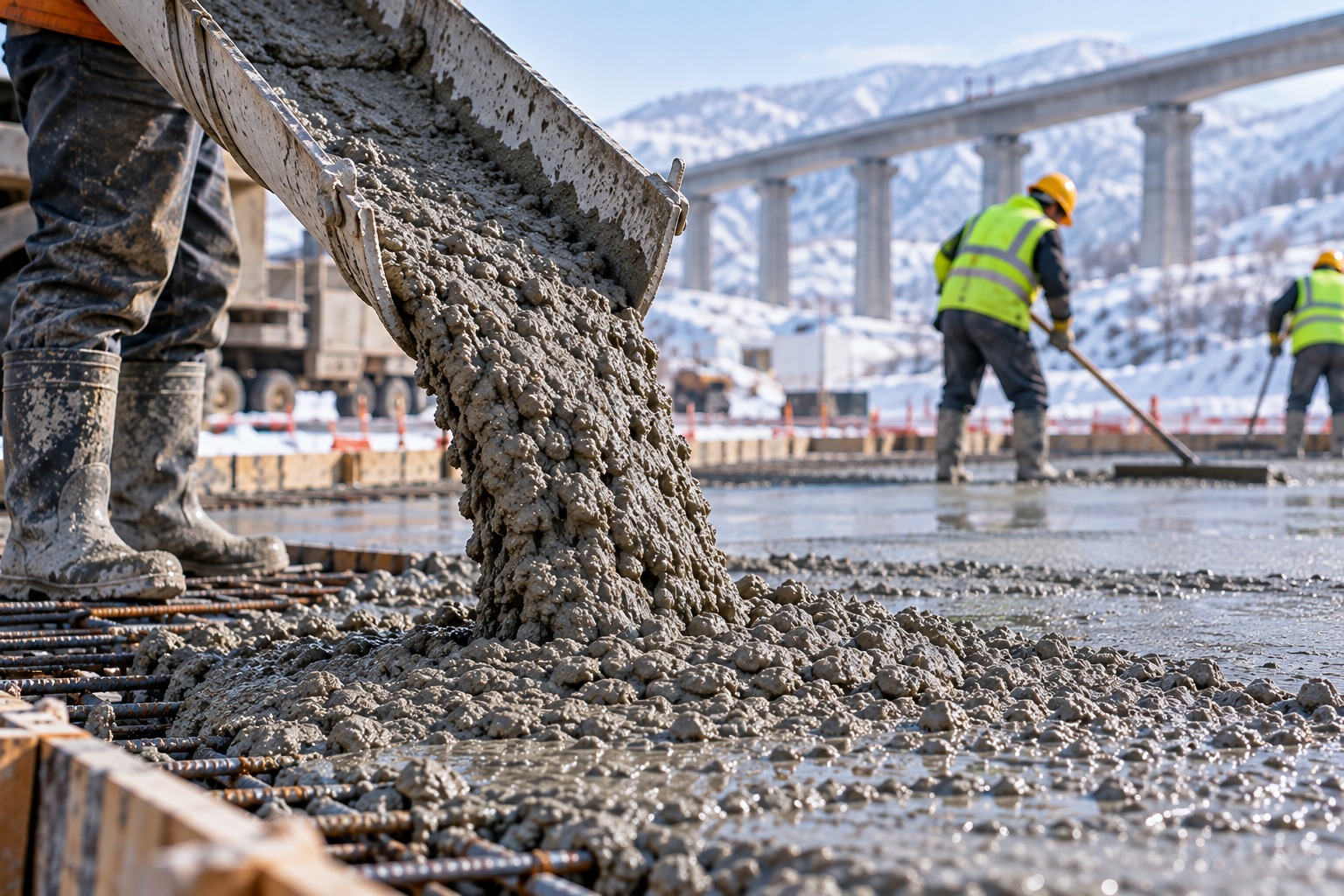
In outdoor applications such as roads, bridges, viaducts, airports, open areas and infrastructure concrete, water entering the concrete can freeze and create significant internal stresses.

At this point, air-entraining concrete admixtures can help improve concrete performance against freeze-thaw effects by creating controlled microscopic air voids within the concrete.

What Is an Air-Entraining Concrete Admixture?

Air-entraining admixtures are special chemical concrete admixtures designed to create very small and controlled air bubbles within fresh concrete.

These air voids are different from large, randomly trapped air pockets.

The objective is to create a homogeneous and controlled air-void system throughout the concrete.

A properly designed air structure can play an important role in improving the durability of concrete exposed to repeated freeze-thaw cycles, particularly under saturated conditions.

How Does Freeze-Thaw Damage Concrete?

Concrete is not a completely impermeable material.

Water from rain, snow, groundwater or environmental moisture can enter the capillary pores of concrete.

When temperatures fall below freezing, this water can freeze and undergo volumetric expansion.

If there is insufficient space within the concrete to accommodate this movement, internal pressure can develop.

Repeated freeze-thaw cycles may eventually lead to surface deterioration, cracking and reduced long-term durability.

How Do Air-Entraining Admixtures Work?

Air-entraining admixtures are designed to create a controlled air-void system within the concrete.

When water inside the concrete begins to freeze, these microscopic air spaces can provide areas where pressure can be relieved.

This can help reduce internal stresses caused by freezing water.

For this reason, not only the total air content but also the size, distribution and stability of the air voids are important.

A successful air-entrainment system should create a uniform and stable air structure throughout the concrete.

Should Air-Entraining Admixtures Be Used in Every Concrete Mix?

No.

Air-entraining concrete admixtures should be selected according to project conditions and durability requirements.

In applications where freeze-thaw exposure is not expected, a dedicated air-entrainment system may not always be necessary.

However, in concrete roads, bridge decks, viaducts, outdoor slabs and similar infrastructure exposed to winter conditions, freeze-thaw resistance may become an important design requirement.

For this reason, concrete admixture selection should always be based on the application environment.

Why Should Air Content in Concrete Be Controlled?

The objective of using an air-entraining admixture is not to introduce as much air as possible into the concrete.

Excessive air content can negatively affect concrete density and mechanical performance.

Insufficient or unstable air content may also fail to provide the required durability.

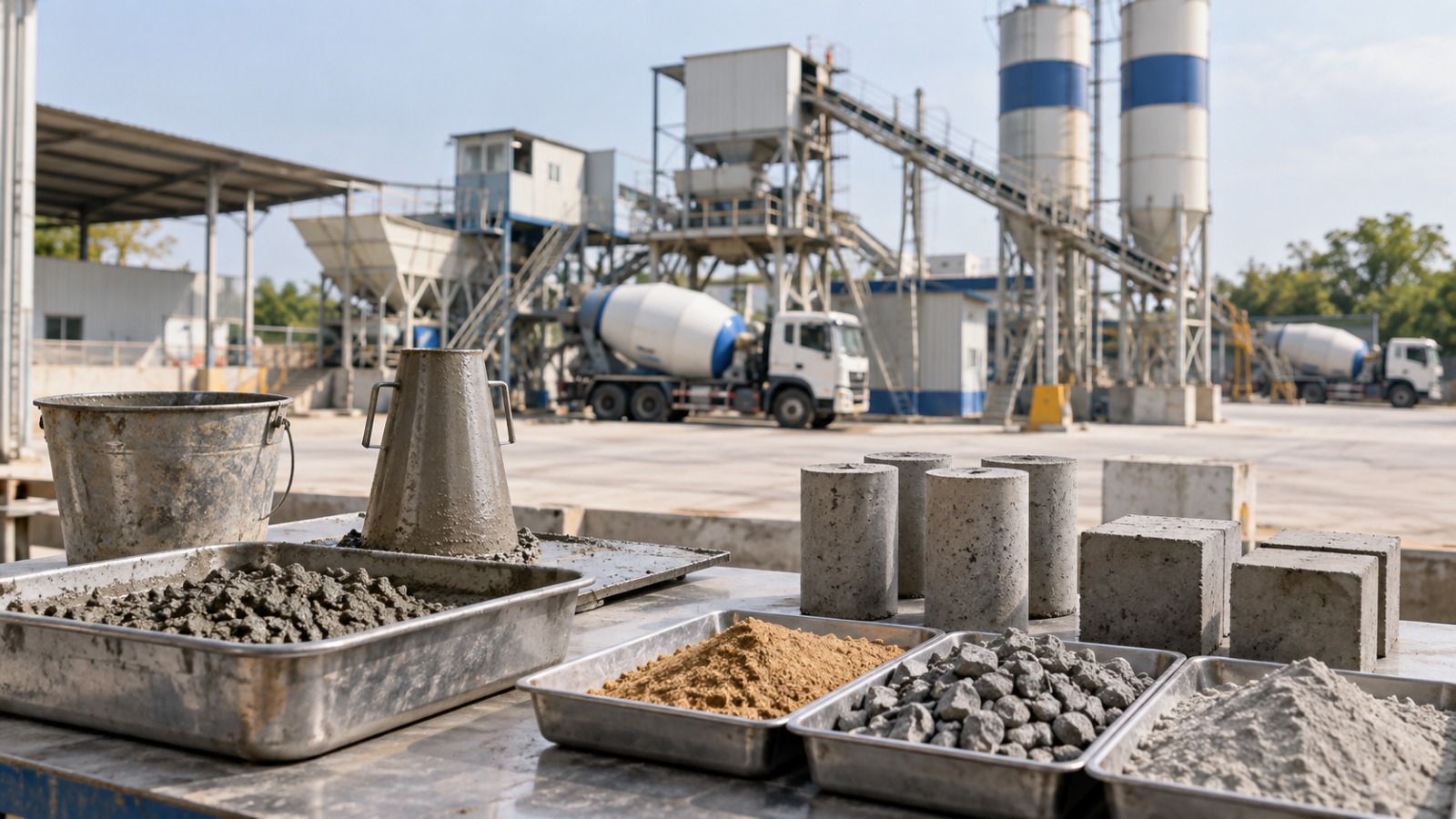
For this reason, the air content of fresh concrete should be regularly monitored during production.

The optimum level depends on the concrete mix design, maximum aggregate size, environmental exposure and project requirements.

Workability of Air-Entrained Concrete

Controlled microscopic air voids can also influence the rheological behavior of fresh concrete.

A suitable air-void system may help improve workability and mixture cohesion in certain concrete mixes.

However, it is not correct to rely only on air entrainment to achieve the required flowability.

When higher workability and water reduction are needed, air-entraining admixtures should be evaluated together with suitable high-range water-reducing or water-reducing concrete admixtures.

Does Air Entrainment Affect Concrete Strength?

An increase in total air content can influence concrete compressive strength.

For this reason, the dosage of air-entraining admixtures must be carefully controlled.

The objective is not maximum air content, but the correct balance between durability and mechanical performance.

When designing the concrete mix, air content, water/cement ratio and target concrete class should all be evaluated together.

Is the Water/Cement Ratio Important for Freeze-Thaw Resistance?

Yes.

Using an air-entraining admixture alone is not sufficient to produce freeze-thaw resistant concrete.

The water/cement ratio and permeability of the concrete are also extremely important.

A high water/cement ratio can produce a more permeable concrete structure and allow more water to enter the concrete.

For this reason, water-reducing and superplasticizing admixtures can help achieve a more controlled water/cement ratio in concrete designed for low permeability and high durability.

Air-Entraining Admixtures in Road Concrete

Concrete roads are exposed throughout the year to rainfall, temperature changes and vehicle traffic.

In regions with cold winters, road concrete may also experience repeated freeze-thaw cycles.

A suitable air-entraining admixture system can help improve the internal resistance of the concrete to these environmental conditions.

For road concrete, the complete mix design should be optimized for surface durability and long service life.

Durability in Bridge and Viaduct Concrete

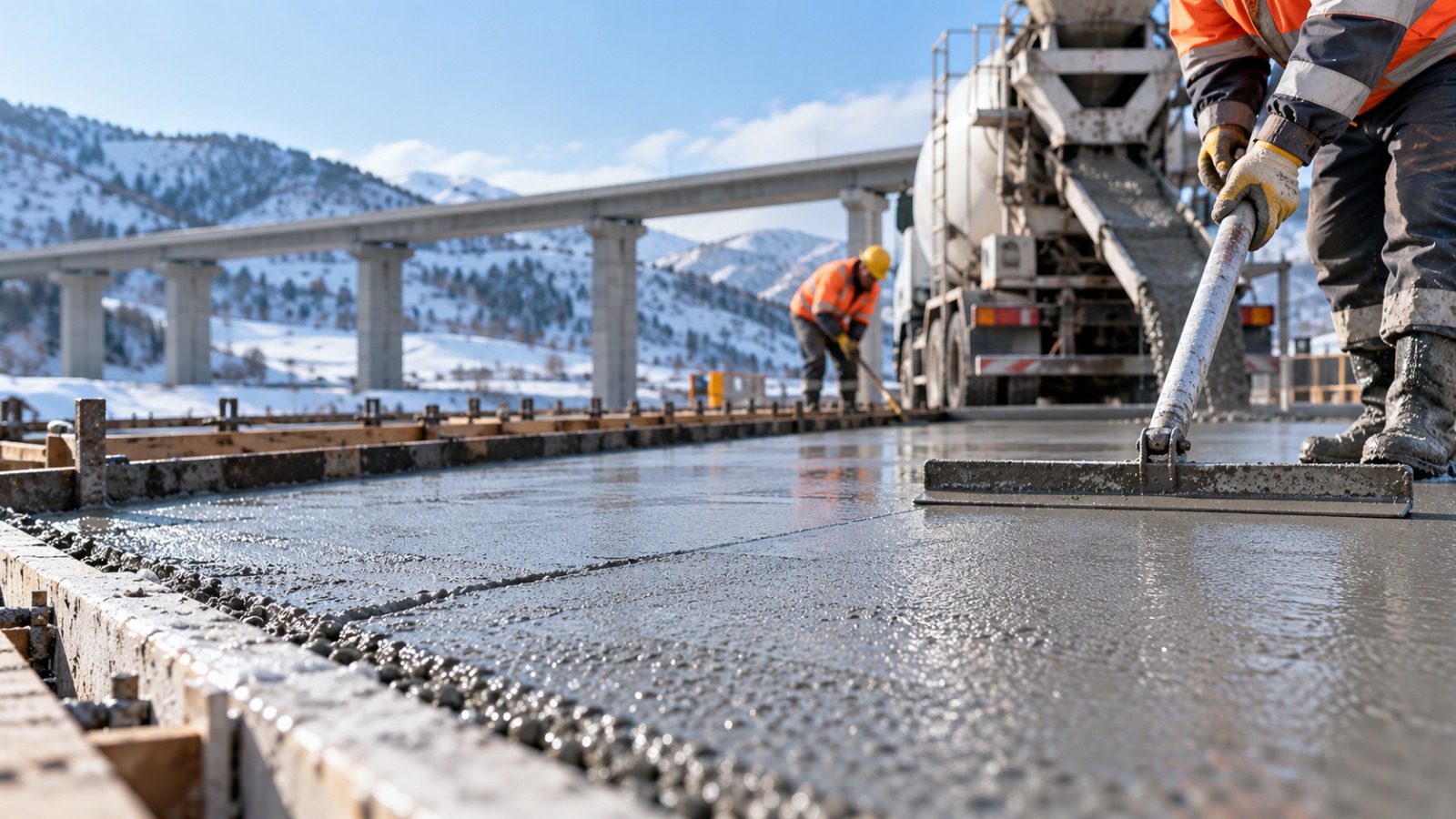
Bridges and viaducts are continuously exposed to outdoor environmental conditions.

Rain, snow, temperature changes and, in some regions, de-icing chemicals can create demanding exposure conditions for concrete.

For this reason, these structures should not be evaluated only according to compressive strength.

Permeability, crack control and freeze-thaw resistance are also important parts of the concrete design.

Air Entraining in Airport and Outdoor Concrete

Airport pavements and large outdoor concrete areas are directly exposed to environmental conditions across wide surfaces.

In addition to high mechanical loads, temperature changes and freeze-thaw effects can influence concrete performance.

For this reason, concrete class, aggregate characteristics, low water/cement ratio and a controlled air-void system should be evaluated together.

Does Mixing Time Affect Air Content?

The air-void system in concrete does not depend only on the amount of admixture used.

Mixing time, mixer type, aggregate characteristics, concrete temperature and other chemical admixtures can all affect the final air content.

Air content may also change during transportation.

For this reason, air content should be monitored not only in the laboratory but also under actual production conditions.

Do Aggregate Properties Affect Air Entrainment?

Yes.

Aggregate grading, fine material content and surface characteristics can affect the behavior of the air-void system in concrete.

When raw materials change, the same admixture dosage should not automatically be expected to provide the same air content.

Laboratory and production trials are therefore important when aggregate sources or concrete mix designs change.

Compatibility with Other Concrete Admixtures

Ready-mixed concrete mixes often contain more than one chemical admixture.

Air-entraining admixtures may be used together with high-range water reducers, slump-retaining admixtures, set-controlling admixtures or other auxiliary concrete admixtures.

However, interactions between admixtures can change air content and fresh concrete behavior.

For this reason, admixture combinations should be tested with the actual cement and aggregates used in production.

The Importance of Freeze-Thaw Resistance in Central Anatolia

Low winter temperatures in Central Anatolia can make freeze-thaw performance particularly important for outdoor concrete applications.

Project conditions and raw materials may vary across cities such as Konya, Ankara, Kayseri, Aksaray, Niğde, Nevşehir, Kırşehir, Sivas and Yozgat.

For this reason, concrete mix designs for roads, bridges, viaducts, outdoor slabs and infrastructure projects should be evaluated according to local conditions.

A single standard admixture dosage should not be expected to provide identical performance in every project.

How Is Air-Entraining Admixture Dosage Determined?

Dosage should not be determined only according to the manufacturer's recommended starting range.

Trials should be carried out at different dosage levels using the actual concrete raw materials.

Fresh concrete air content, slump, workability, slump retention and strength should be evaluated together.

Where required, the hardened concrete air-void system and durability performance can also be examined.

The objective is to determine the optimum air-entrainment level for the project conditions.

EMA Kimya Air-Entraining Concrete Admixture Solutions

EMA Kimya develops professional concrete admixture technologies for ready-mixed concrete plants, batching plants, roads, bridges, viaducts, airports, precast concrete and large-scale infrastructure projects.

Air-entraining admixture systems can be optimized according to cement type, aggregate characteristics, concrete class, water/cement ratio, environmental conditions and target air content.

EMA Kimya's technical approach focuses not only on creating air in concrete, but on improving controlled air structure, workability, concrete strength, low permeability and long-term durability together.

Freeze-thaw resistant concrete is not simply strong concrete; it is concrete with an internal structure designed and controlled according to its environmental exposure conditions.

Related News

How Can Ready-Mixed Concrete Production Costs Be Reduced? Mix Design and Cost Optimization with Concrete Admixtures

Publication Date: 26 Eylül 2026

How to Improve Water Resistance in Concrete? The Right Admixture Technology for Low-Permeability Concrete

Publication Date: 26 Eylül 2026

What Causes Efflorescence in Concrete? How Can White Stains on Concrete Surfaces Be Prevented?

Publication Date: 26 Eylül 2026

What Are Polycarboxylate-Based Concrete Admixtures? Next-Generation Superplasticizer Technology

Publication Date: 26 Eylül 2026

How Does the Use of Recycled Water in Ready-Mixed Concrete Production Affect Concrete Quality? Concrete Admixtures and Water Management

Publication Date: 26 Eylül 2026

Concrete Protection Products and Their Advantages

Publication Date: 26 Eylül 2026

What Are Concrete Admixtures? Types and Applications

Publication Date: 26 Eylül 2026

High Flowability and Controlled Concrete Performance with Self-Compacting Concrete Admixtures

Publication Date: 26 Eylül 2026

What Is High-Performance Concrete? What Are Its Main Properties?

Publication Date: 26 Eylül 2026

The Importance of the Right Admixture Technology for Shrinkage and Crack Control in Concrete

Publication Date: 26 Eylül 2026

Why Does Concrete Lose Slump? How Can Workability Be Maintained in Ready-Mixed Concrete?

Publication Date: 26 Eylül 2026

What Is an Air-Entraining Concrete Admixture? How Can Freeze-Thaw Resistance and Long-Term Concrete Durability Be Improved?

Publication Date: 26 Eylül 2026

Why Are Cement Additives Used?

Publication Date: 26 Eylül 2026

Why Do Segregation and Bleeding Occur in Concrete? The Right Admixture Technology for Homogeneous Concrete

Publication Date: 26 Eylül 2026

What Is a Set-Retarding Concrete Admixture? How Can Concrete Setting Time Be Controlled in Hot Weather?

Publication Date: 26 Eylül 2026

Web Design & Software | COUR Media