English
×
All rights reserved. All content and images used on this website
belong to EMA Kimya and may not be used without permission.
cour
 EMA Kimya | Concrete Admixtures, Cement Additives, Construction Chemicals, Superplasticizers, High-Range Water Reducers, Concrete Performance Solutions, Ready-Mix and Precast Concrete Technologies, Infrastructure, Industrial Projects, Technical Support, Production and Cost Consulting  EMA Kimya | Concrete Admixtures, Cement Additives, Construction Chemicals, Superplasticizers, High-Range Water Reducers, Concrete Performance Solutions, Ready-Mix and Precast Concrete Technologies, Infrastructure, Industrial Projects, Technical Support, Production and Cost Consulting
EMA Kimya | Concrete Admixtures, Cement Additives, Construction Chemicals, Superplasticizers, High-Range Water Reducers, Concrete Performance Solutions, Ready-Mix and Precast Concrete Technologies, Infrastructure, Industrial Projects, Technical Support, Production and Cost Consulting

"Strength in Every Mix,
Quality in Every Drop"

×

Quality, reliability, and a commitment to sustainable production.

We provide professional solutions in concrete admixtures and construction chemicals.

Menu

Quality, reliability, and a commitment to sustainable production.

We provide professional solutions in concrete admixtures and construction chemicals.

26 September 2026

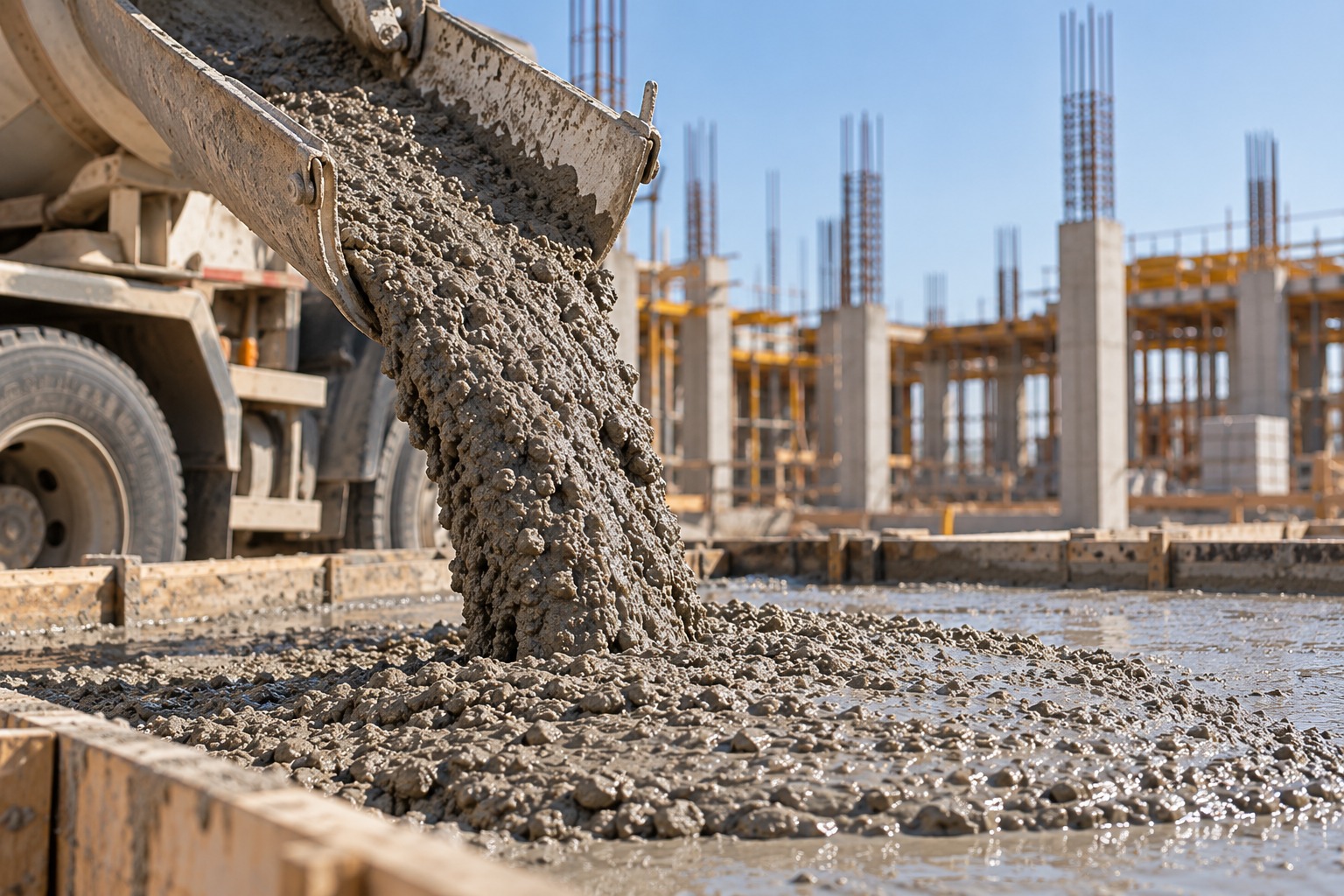
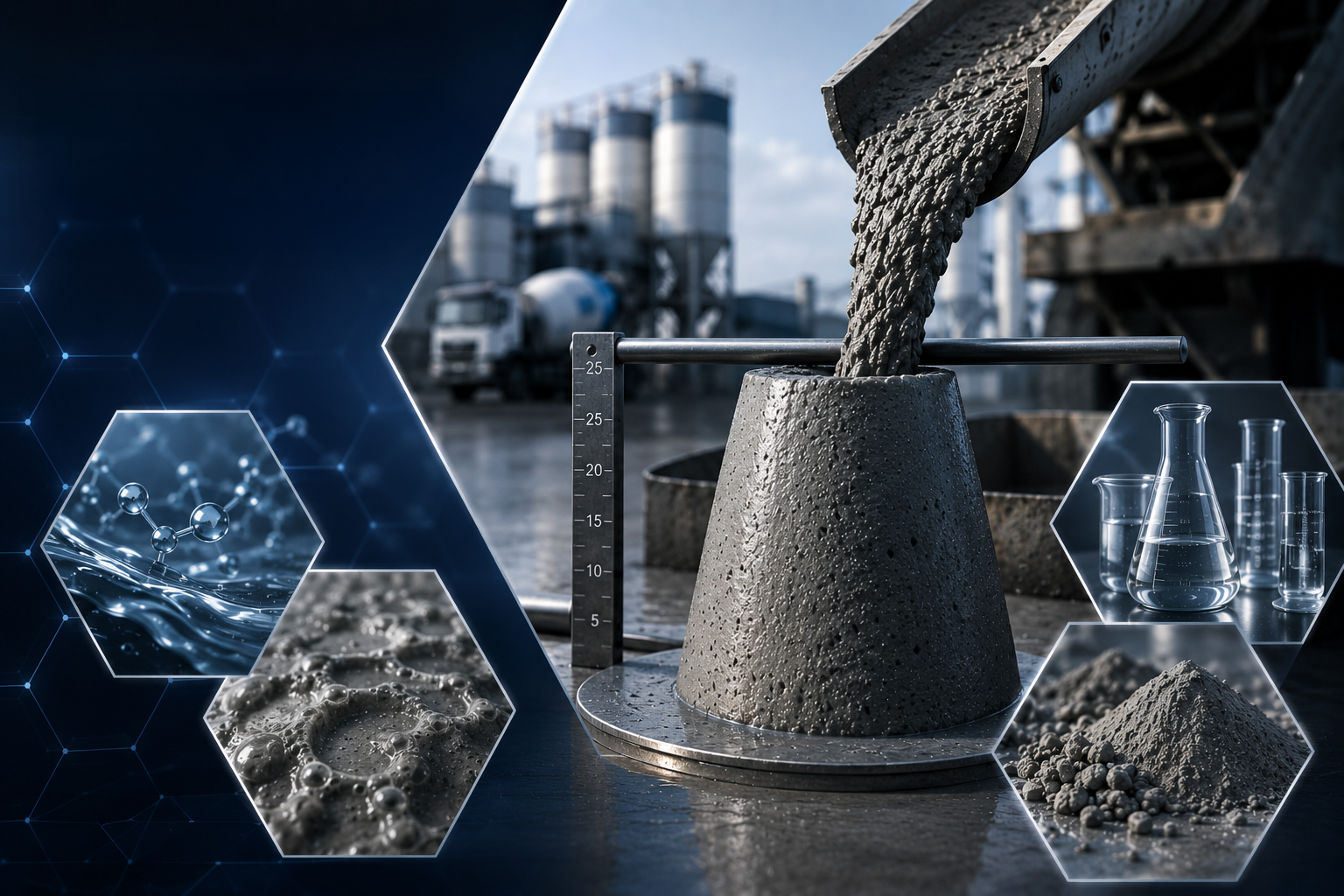
In modern ready-mixed and precast concrete production, achieving high flowability alone is not enough. Concrete must also maintain workability at a low water/cement ratio, remain stable during production and transportation, be easy to pump and reach the targeted strength values.

These requirements have played an important role in the development of concrete admixture technologies. One of the most widely used technologies in high-performance concrete applications today is polycarboxylate-based superplasticizing admixtures.

Polycarboxylate ether technology, also known as PCE, helps cement particles disperse more effectively within the concrete mixture and supports high workability at lower water contents.

What Is a PCE Concrete Admixture?

PCE concrete admixtures are high-performance chemical admixtures based on polycarboxylate polymer technology.

These admixtures are widely used in modern concrete production due to their ability to provide high water reduction, strong initial flowability and adjustable slump-retention performance for different concrete mix designs.

The main objective of PCE technology is to improve the dispersion of cement particles without adding excessive water to the concrete.

This makes it possible to increase workability while maintaining a lower water/cement ratio.

How Do Polycarboxylate Admixtures Work?

When cement comes into contact with water, cement particles tend to move closer together and form agglomerates.

This can reduce the mobility of the mixture and increase the amount of water required to achieve the desired workability.

Polycarboxylate-based admixtures help separate cement particles more effectively.

As a result, the available water in the mix can be used more efficiently and concrete flowability can be improved.

This reduces the need to increase water content simply to achieve higher workability.

Why Can PCE Admixtures Provide High Water Reduction?

A significant portion of the water used in concrete is required not only for cement hydration but also to achieve workability.

Better dispersion of cement particles can make it possible to reach the same workability level with less water.

For this reason, PCE-based high-range water-reducing admixtures can provide important advantages in concrete mixes designed with low water/cement ratios.

Lower water content can also support the formation of a denser and more compact hardened concrete structure.

The Effect of PCE Technology on Concrete Strength

The water/cement ratio is one of the key parameters affecting concrete strength.

Excessive water can lead to higher capillary porosity in hardened concrete.

By using PCE-based water-reducing admixtures, the required workability can be achieved with less water, helping to create a denser concrete microstructure.

This can support both early-age and final strength development.

However, concrete strength does not depend on the admixture alone. Cement, aggregate, water content, curing conditions and production quality should all be evaluated together.

PCE Admixtures in Ready-Mixed Concrete Production

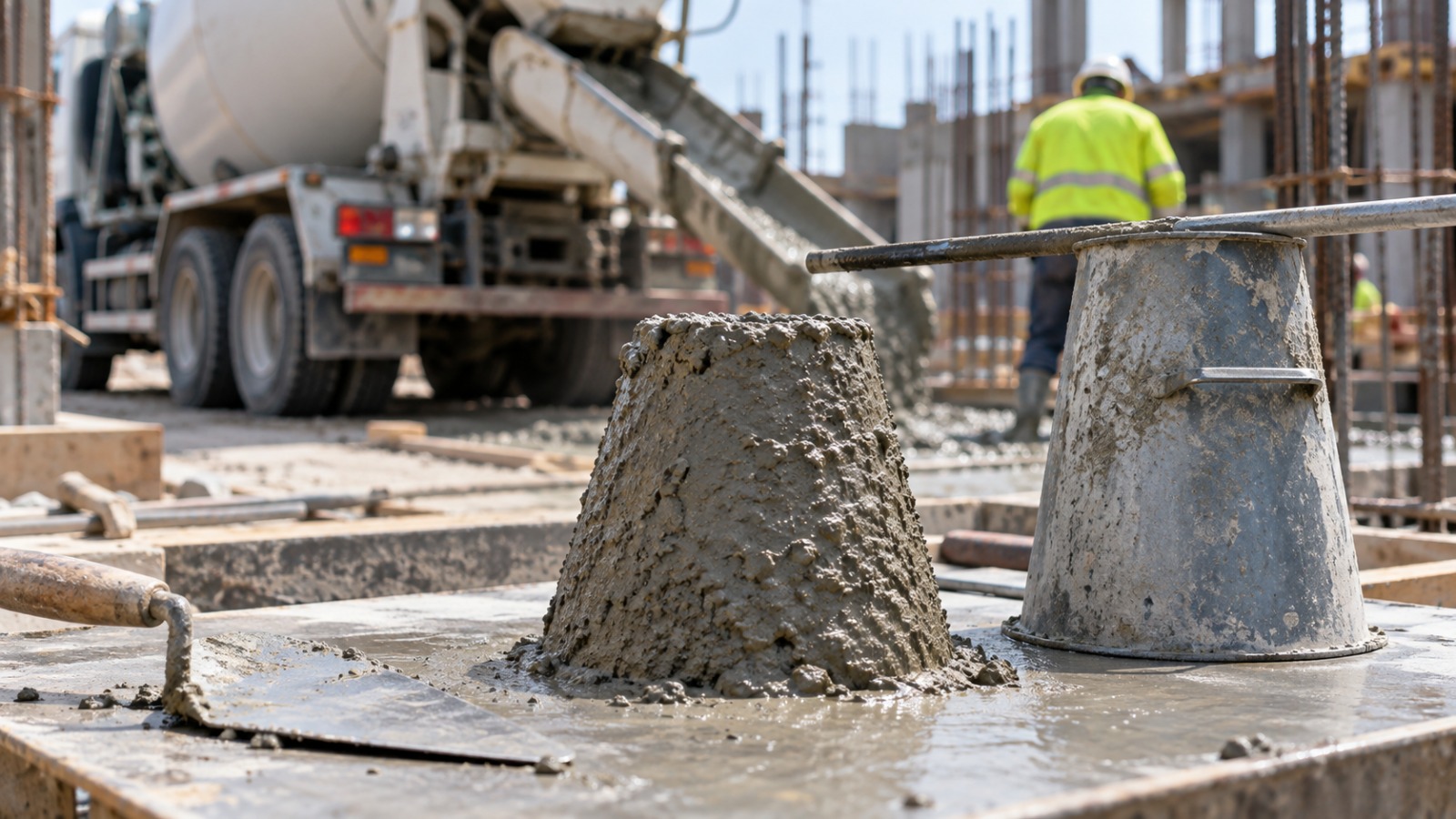
In ready-mixed concrete, performance at the batching plant is only one part of the process. Concrete behavior when it reaches the construction site is equally important.

Transportation time, concrete temperature, traffic conditions and pumping duration can all affect workability.

PCE-based admixture systems can be designed according to different performance targets.

Some systems focus on high initial flowability, while others are optimized for longer slump retention.

For this reason, ready-mix admixture selection should consider not only the initial slump value but also the time-dependent behavior of the concrete.

PCE and Slump-Retention Performance

Not every concrete application requires the same slump-retention time.

For short-distance applications, strong initial flowability may be the priority, while long-distance ready-mix deliveries may require concrete to maintain workability for 60, 90 minutes or even longer depending on project conditions.

One of the important advantages of polycarboxylate technology is that the admixture system can be developed for different performance profiles.

However, slump-retention performance is closely related to the cement and other raw materials used.

For this reason, the optimum product should be selected through laboratory and production trials.

Are PCE Admixtures Used in Pumped Concrete?

Yes.

In pumped concrete applications, achieving sufficient workability at a low water/cement ratio is an important requirement.

PCE-based high-range water-reducing admixtures can help improve the mobility of concrete within pump lines.

However, pumpability does not depend only on flowability.

Aggregate grading, fine material content, concrete viscosity and mix stability also directly affect pumping performance.

For this reason, the PCE admixture should not be evaluated independently from the overall concrete mix design.

PCE Technology in Precast and Prefabricated Concrete

In precast production, high early strength, smooth surface quality and fast mold cycles are important production criteria.

PCE-based admixtures that provide high workability at a low water/cement ratio can help concrete fill molds more effectively.

Controlled water content can also support early strength development.

These characteristics make PCE technology an important admixture option for precast and prefabricated concrete production.

PCE Admixtures in Self-Compacting Concrete

Self-compacting concrete requires high flowability and strong mixture stability at the same time.

For concrete to fill the formwork under its own weight and pass through dense reinforcement, strong plasticizing performance is required.

PCE-based superplasticizers can help achieve the high flowability needed in these applications.

Where necessary, they can be used together with viscosity-modifying or auxiliary admixtures to help improve segregation resistance.

Are All PCE Admixtures the Same?

No.

Polycarboxylate-based admixtures belong to the same technology family, but they can have very different performance characteristics.

Differences in polymer structure and formulation can affect initial flowability, slump retention, water reduction and cement compatibility.

For this reason, the term “PCE admixture” alone is not enough to define concrete performance.

The product should be selected according to the actual requirements of the concrete mix.

Why Is Cement-PCE Compatibility Important?

The performance of PCE admixtures can vary significantly depending on the cement used.

Cement mineralogy, fineness, sulfate balance and other properties can influence admixture behavior.

A PCE system that performs very well with one cement may not produce the same result with another cement of different characteristics.

For this reason, admixture performance should be retested whenever the cement source or type changes.

Can Clay in Aggregates Affect PCE Performance?

Fine materials and clay content in aggregates can influence the behavior of concrete admixtures.

High levels of certain fines and clay minerals may reduce admixture efficiency or increase dosage requirements.

This can affect both initial flowability and slump-retention performance.

For this reason, aggregate quality should be monitored regularly in ready-mixed concrete plants.

How Should PCE Admixture Dosage Be Determined?

Using more PCE admixture does not always mean better performance.

The optimum dosage can vary depending on cement type, total binder content, water/cement ratio, aggregate characteristics and target workability.

Laboratory trials at different dosage levels should be used to evaluate initial consistency, slump retention, segregation behavior and strength development.

These studies help determine the most suitable admixture dosage for the specific concrete mix.

How Does PCE Technology Affect Concrete Cost?

Concrete admixtures should not be evaluated only according to their price per kilogram.

An admixture system with strong water-reducing performance can help other components of the concrete mix be used more efficiently.

Workability, pumping performance, production consistency and strength can also affect the total cost of concrete.

For this reason, the most accurate evaluation is based on the total technical and economic performance achieved per cubic meter of concrete rather than unit product price alone.

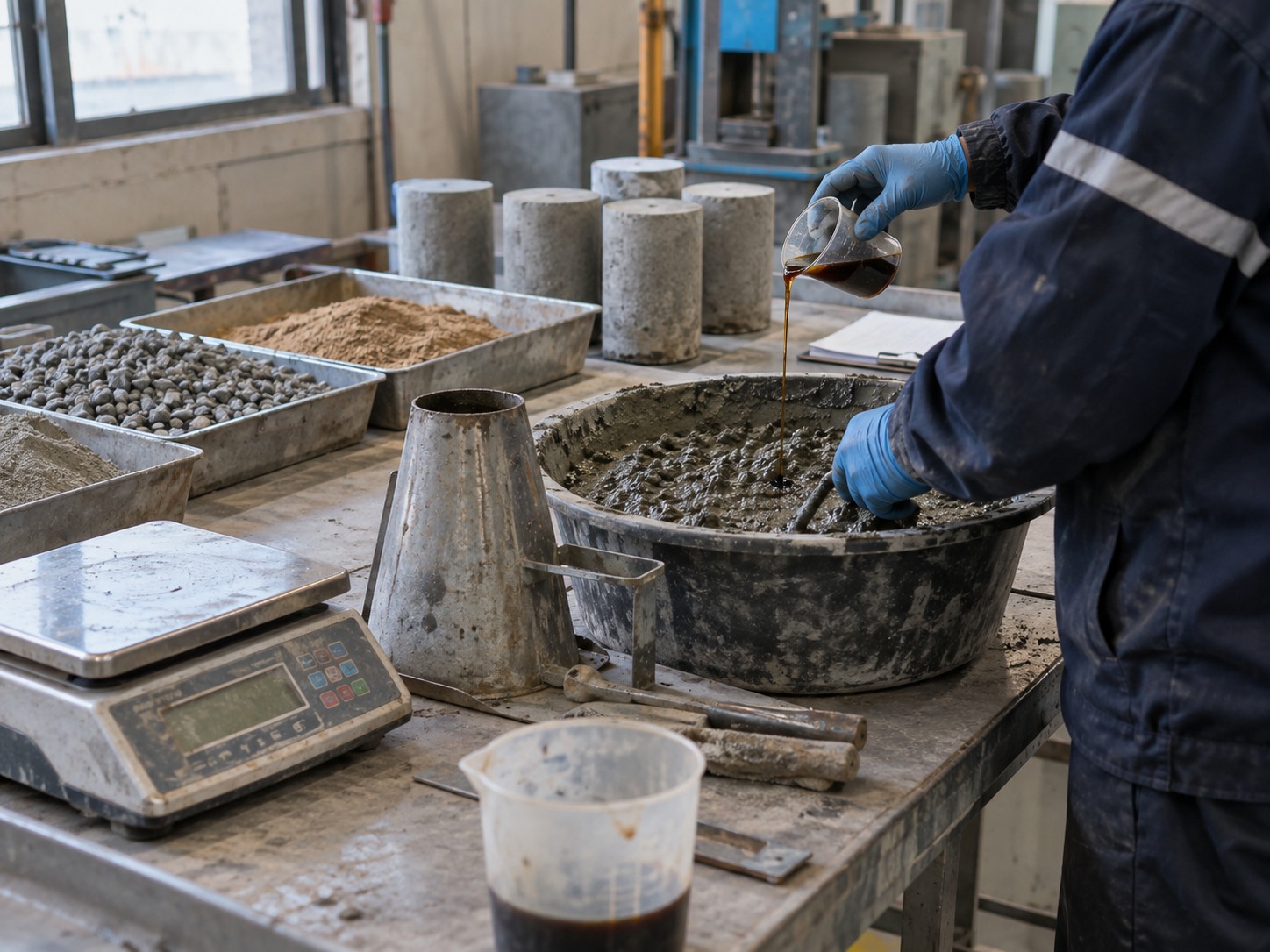
Laboratory Trials for PCE Admixture Selection

To obtain the full benefits of polycarboxylate technology, laboratory trials should be carried out using the actual raw materials intended for production.

Different products and dosage alternatives can be compared during these trials.

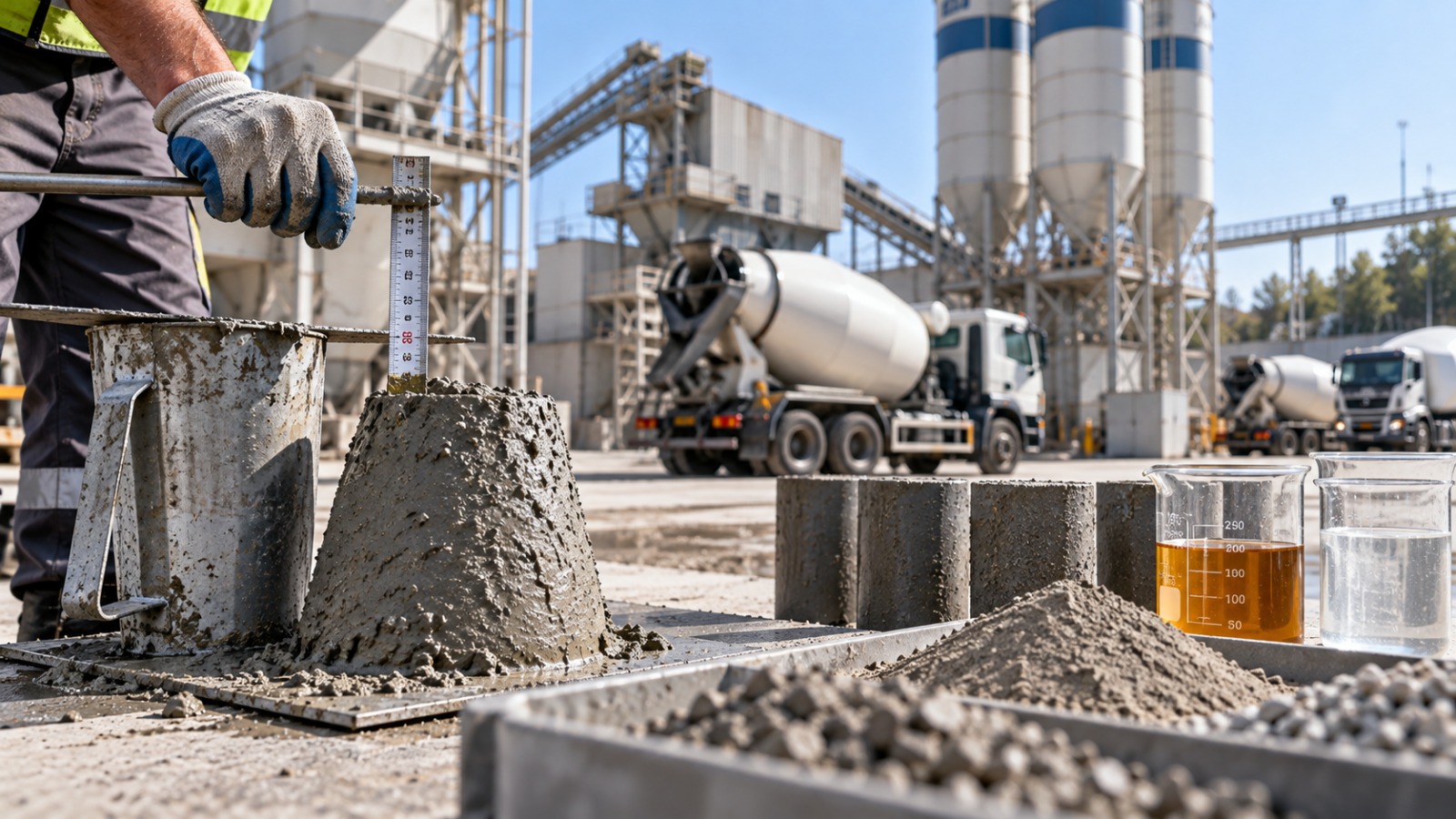
Initial slump, 30-60-90 minute slump retention, air content, concrete temperature, setting time and strength development can all be evaluated together.

This process helps identify the admixture system that is best suited to actual production conditions.

EMA Kimya Polycarboxylate-Based Concrete Admixture Solutions

EMA Kimya develops professional concrete admixture technologies for ready-mixed concrete plants, precast and prefabricated manufacturers, pumped concrete, self-compacting concrete and high-performance concrete applications.

PCE-based high-range water-reducing admixture systems can be optimized according to cement characteristics, aggregate structure, target water-reduction level, slump-retention requirements, concrete temperature and application conditions.

EMA Kimya's technical approach focuses not only on achieving high initial flowability, but also on improving water reduction, slump retention, mix stability, concrete strength and production efficiency together.

The real advantage of next-generation concrete admixture technology is not simply more fluid concrete, but the ability to produce more controlled and higher-performance concrete with less water.

Related News

What Are Polycarboxylate-Based Concrete Admixtures? Next-Generation Superplasticizer Technology

Publication Date: 26 Eylül 2026

How Can Concrete Strength Be Increased?

Publication Date: 26 Eylül 2026

What Is a Set-Accelerating Concrete Admixture? How Can Setting Time and Early Strength Be Controlled in Cold Weather?

Publication Date: 26 Eylül 2026

What Are Concrete Admixture Dosing Errors? Correct Storage and Use in Ready-Mixed Concrete Plants

Publication Date: 26 Eylül 2026

What Is Cement-Admixture Incompatibility? How Can Rapid Slump Loss, Setting Problems and Admixture Performance Be Controlled in Ready-Mixed Concrete?

Publication Date: 26 Eylül 2026

Concrete Protection Products and Their Advantages

Publication Date: 26 Eylül 2026

What Are Auxiliary Concrete Admixtures? How Can Stability and Performance Be Controlled in Ready-Mixed Concrete?

Publication Date: 26 Eylül 2026

How Can Concrete Workability Be Improved?

Publication Date: 26 Eylül 2026

What Is Alkali-Silica Reaction (ASR) in Concrete? How Can Internal Cracking and Long-Term Durability Loss Be Prevented?

Publication Date: 26 Eylül 2026

Why Does Concrete Lose Slump? How Can Workability Be Maintained in Ready-Mixed Concrete?

Publication Date: 26 Eylül 2026

How Much Concrete Admixture Should Be Used? How Does the Correct Dosage Affect Concrete Performance?

Publication Date: 26 Eylül 2026

What Is High-Performance Concrete? What Are Its Main Properties?

Publication Date: 26 Eylül 2026

What Are Concrete Admixtures? Types and Applications

Publication Date: 26 Eylül 2026

The Importance of Set-Retarding Concrete Admixtures in Hot Weather and Long Transportation Times

Publication Date: 26 Eylül 2026

How Can Reinforcement Corrosion Be Prevented in Reinforced Concrete Structures? The Importance of Concrete Protection Products

Publication Date: 26 Eylül 2026

Web Design & Software | COUR Media