English
×
All rights reserved. All content and images used on this website
belong to EMA Kimya and may not be used without permission.
cour
 EMA Kimya | Concrete Admixtures, Cement Additives, Construction Chemicals, Superplasticizers, High-Range Water Reducers, Concrete Performance Solutions, Ready-Mix and Precast Concrete Technologies, Infrastructure, Industrial Projects, Technical Support, Production and Cost Consulting  EMA Kimya | Concrete Admixtures, Cement Additives, Construction Chemicals, Superplasticizers, High-Range Water Reducers, Concrete Performance Solutions, Ready-Mix and Precast Concrete Technologies, Infrastructure, Industrial Projects, Technical Support, Production and Cost Consulting
EMA Kimya | Concrete Admixtures, Cement Additives, Construction Chemicals, Superplasticizers, High-Range Water Reducers, Concrete Performance Solutions, Ready-Mix and Precast Concrete Technologies, Infrastructure, Industrial Projects, Technical Support, Production and Cost Consulting

"Strength in Every Mix,
Quality in Every Drop"

×

Quality, reliability, and a commitment to sustainable production.

We provide professional solutions in concrete admixtures and construction chemicals.

Menu

Quality, reliability, and a commitment to sustainable production.

We provide professional solutions in concrete admixtures and construction chemicals.

25 September 2026

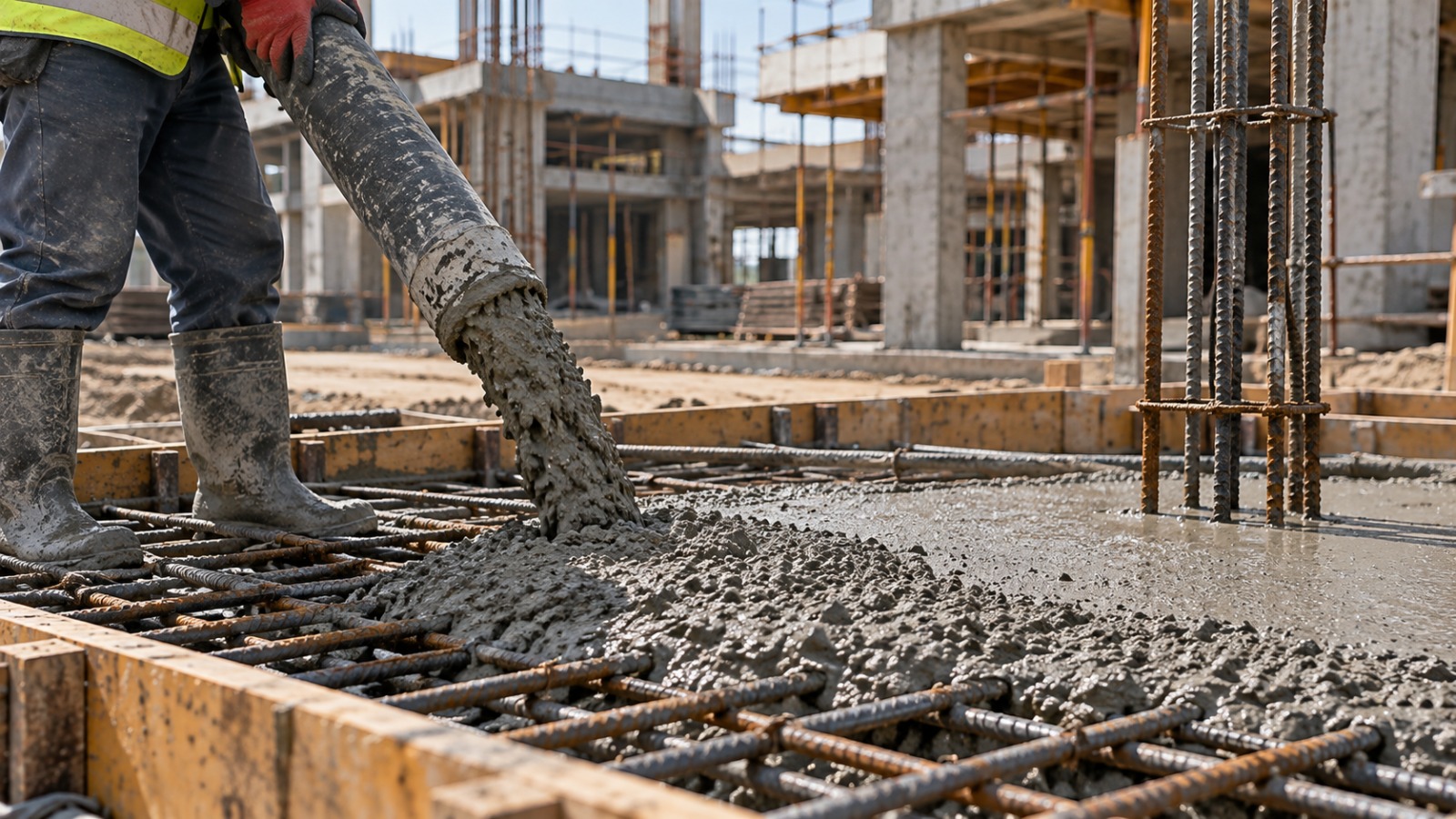
In reinforced concrete structures, not only compressive strength but also placement quality and concrete homogeneity are extremely important. If concrete cannot fully fill the areas around reinforcement or certain parts of the formwork, voids may form on the surface or inside the concrete.

This condition is commonly referred to as honeycombing, void formation or concrete cavities.

Honeycombing is not only a visual surface defect. Depending on the size and location of the voids, it can affect concrete homogeneity, concrete cover around reinforcement and the long-term durability of the structure.

The right concrete mix design, suitable workability, balanced aggregate grading and an appropriate concrete admixture system can help concrete fill the formwork more effectively and uniformly.

What Is Honeycombing in Concrete?

Honeycombing is an irregular concrete structure in which coarse aggregates become visible because the cement paste has not completely filled the spaces between them.

After removing the formwork, visible coarse aggregate particles with gaps between them are among the most common signs of honeycombing.

The problem may remain limited to the surface or extend deeper into the concrete depending on the application conditions.

For this reason, serious honeycombing should not be evaluated only by surface appearance.

What Causes Voids in Concrete?

There is no single cause of honeycombing or void formation.

Insufficient workability, unsuitable concrete consistency, dense reinforcement, poor aggregate grading, inadequate compaction, uncontrolled placement from excessive heights and difficulty filling narrow formwork sections can all contribute to void formation.

A mismatch between concrete mix design and the actual application method is also an important factor.

For example, using concrete with insufficient mobility in a heavily reinforced structural element can make it difficult for the concrete to pass through reinforcement.

How Does Concrete Workability Affect Honeycombing?

Concrete workability describes the behavior of fresh concrete during mixing, transportation, pumping and placement.

Concrete with insufficient workability may have difficulty moving through narrow formwork sections or around dense reinforcement.

As a result, certain areas may not be completely filled, leading to void formation.

However, the solution is not simply to make the concrete more fluid.

When flowability is increased, mix stability must also be maintained and segregation risk must be controlled.

Is Adding More Water the Solution?

No.

Adding water on site to make concrete easier to place may temporarily increase flowability, but it can negatively affect overall concrete performance.

Excess water can increase the water/cement ratio and create a more porous structure after hardening.

It can also increase the risk of segregation and bleeding.

For this reason, when additional workability is required, suitable high-range water-reducing and water-reducing admixtures should be used instead of uncontrolled water addition.

How Do High-Range Water-Reducing Admixtures Help?

High-range water-reducing admixtures help cement particles disperse more effectively, allowing concrete to achieve the required workability with less mixing water.

This can help concrete move more easily within the formwork and fill heavily reinforced areas more effectively.

The correct superplasticizer system can provide important advantages in pumped concrete, heavily reinforced structural elements and applications requiring high surface quality.

The admixture system should always be compatible with the concrete mix design and the raw materials used.

Why Is Aggregate Grading Important?

Aggregate particle-size distribution directly affects the void structure and placement performance of concrete.

An unsuitable balance between coarse and fine aggregates can create areas that are more difficult to fill.

A well-balanced aggregate grading helps reduce internal voids and supports a more homogeneous concrete structure.

Maximum aggregate size is also important, particularly in heavily reinforced elements.

Oversized aggregate particles may have difficulty passing through narrow reinforcement spacing.

Does Dense Reinforcement Increase the Risk of Honeycombing?

In heavily reinforced columns, walls, beams and foundation sections, the available space for concrete movement can be significantly reduced.

Concrete must have sufficient flowability and suitable aggregate characteristics to pass through reinforcement.

Concrete with poor passing ability may accumulate on one side of the reinforcement while leaving voids in other areas.

For this reason, heavily reinforced elements should be evaluated not only according to slump, but also according to passing ability and mix stability.

Why Is Concrete Vibration Important?

In conventional concrete applications, vibration helps remove trapped air and allows concrete to fill the formwork more effectively.

Insufficient vibration can prevent concrete from fully consolidating in certain areas and may lead to void formation.

However, excessive or incorrect vibration may also cause segregation.

For this reason, vibration duration, equipment position and application method should be selected according to the characteristics of the concrete.

Does Formwork Design Affect Concrete Placement?

Formwork geometry also plays an important role in concrete placement.

Narrow sections, sudden changes in geometry and difficult-to-access areas can restrict concrete movement.

The formwork should also be strong and properly sealed.

If cement paste escapes through gaps in the formwork, aggregate-rich areas with insufficient paste may develop and create surface defects.

For this reason, formwork design and workmanship should be evaluated together with the concrete mix design.

Can Dropping Concrete from Excessive Height Cause Honeycombing?

Uncontrolled placement of concrete from excessive height can cause the different components of the mix to separate.

Coarse aggregates may move differently from cement paste and fine materials.

This can lead to segregation and reduce the homogeneity of the placed concrete.

Concrete should therefore be transferred into the formwork in a controlled manner using a placement method suitable for the geometry of the structural element.

Why Are Surface Voids Important in Precast Concrete?

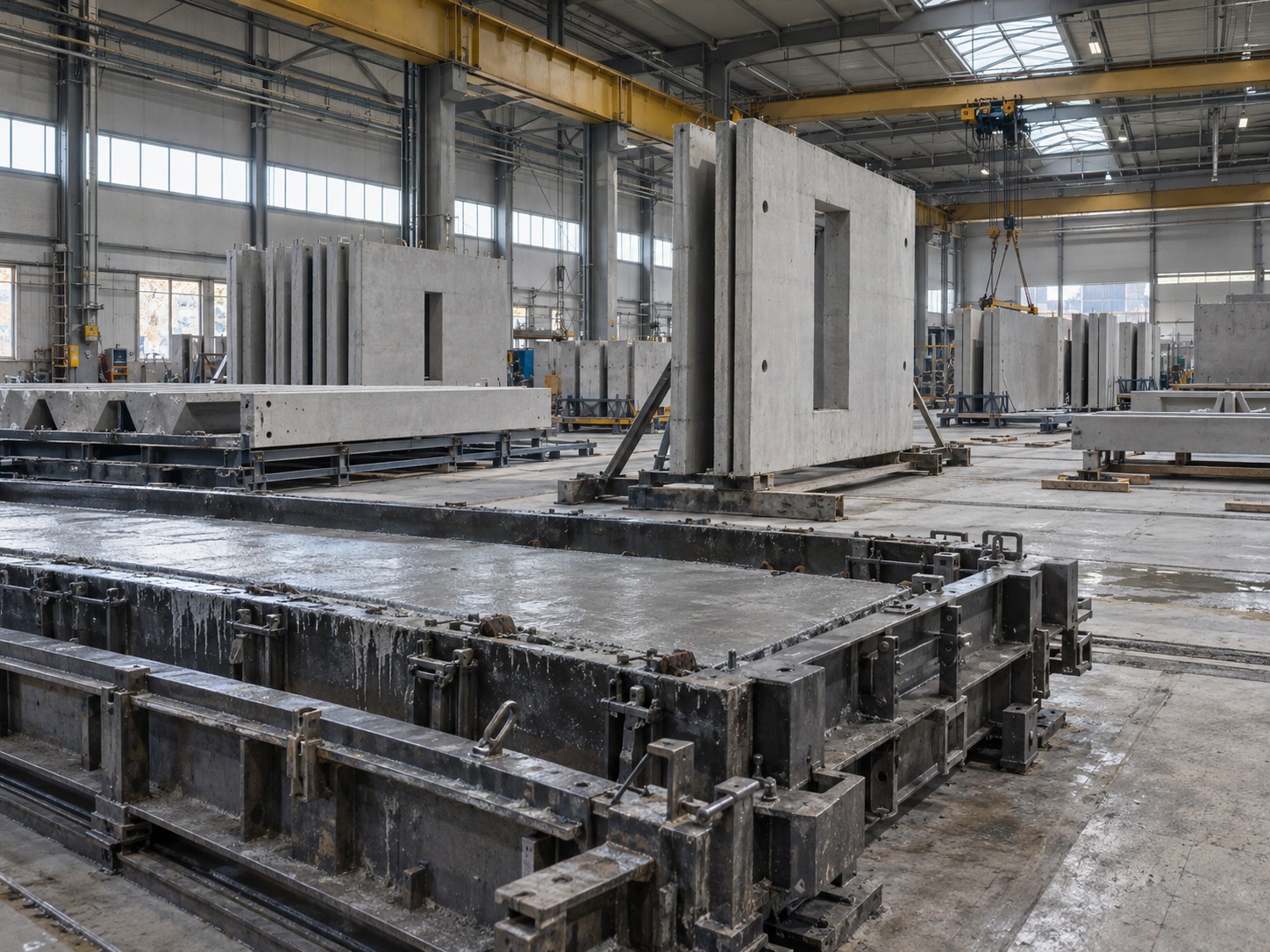
In precast and prefabricated concrete production, the concrete surface often forms the final visible surface of the product.

For this reason, surface voids, air pockets and honeycombing can directly affect product quality.

The correct concrete admixture system can help improve mold filling and support more controlled movement of concrete through complex geometries.

In precast production, formwork surface, release agents, concrete consistency and vibration systems should all be evaluated together.

Can Self-Compacting Concrete Reduce Honeycombing Risk?

Self-compacting concrete can be an effective alternative in heavily reinforced and geometrically complex applications.

Properly designed SCC can flow under its own weight, pass through reinforcement and fill the formwork without mechanical vibration.

However, high flowability alone is not sufficient.

The mixture must also provide strong segregation resistance so that coarse aggregate moves together with the cement paste.

For this reason, high-range water-reducing admixtures and, when necessary, viscosity-modifying admixtures can be evaluated together in SCC applications.

Is Every Surface Void Considered Honeycombing?

No.

Small surface air voids and serious honeycombing involving visible aggregate separation are not the same defect.

Small surface pores may result from formwork characteristics, air content, concrete consistency or the vibration method.

In honeycombing, there are typically visible gaps between coarse aggregate particles where the cement paste has failed to completely fill the area.

Correctly identifying the type of defect is essential for selecting the appropriate solution.

How Can Honeycombing Be Prevented?

Preventing honeycombing requires the entire concrete production and placement process to be considered together.

Concrete should have suitable workability, balanced aggregate grading, a controlled water/cement ratio and an appropriate admixture system.

Proper transportation, controlled placement into the formwork and sufficient vibration where required are also important.

For heavily reinforced or geometrically complex elements, the suitability of the concrete should be evaluated under actual site conditions before application.

Why Are Laboratory and Field Trials Important?

A concrete mix cannot be considered successful based only on compressive strength results.

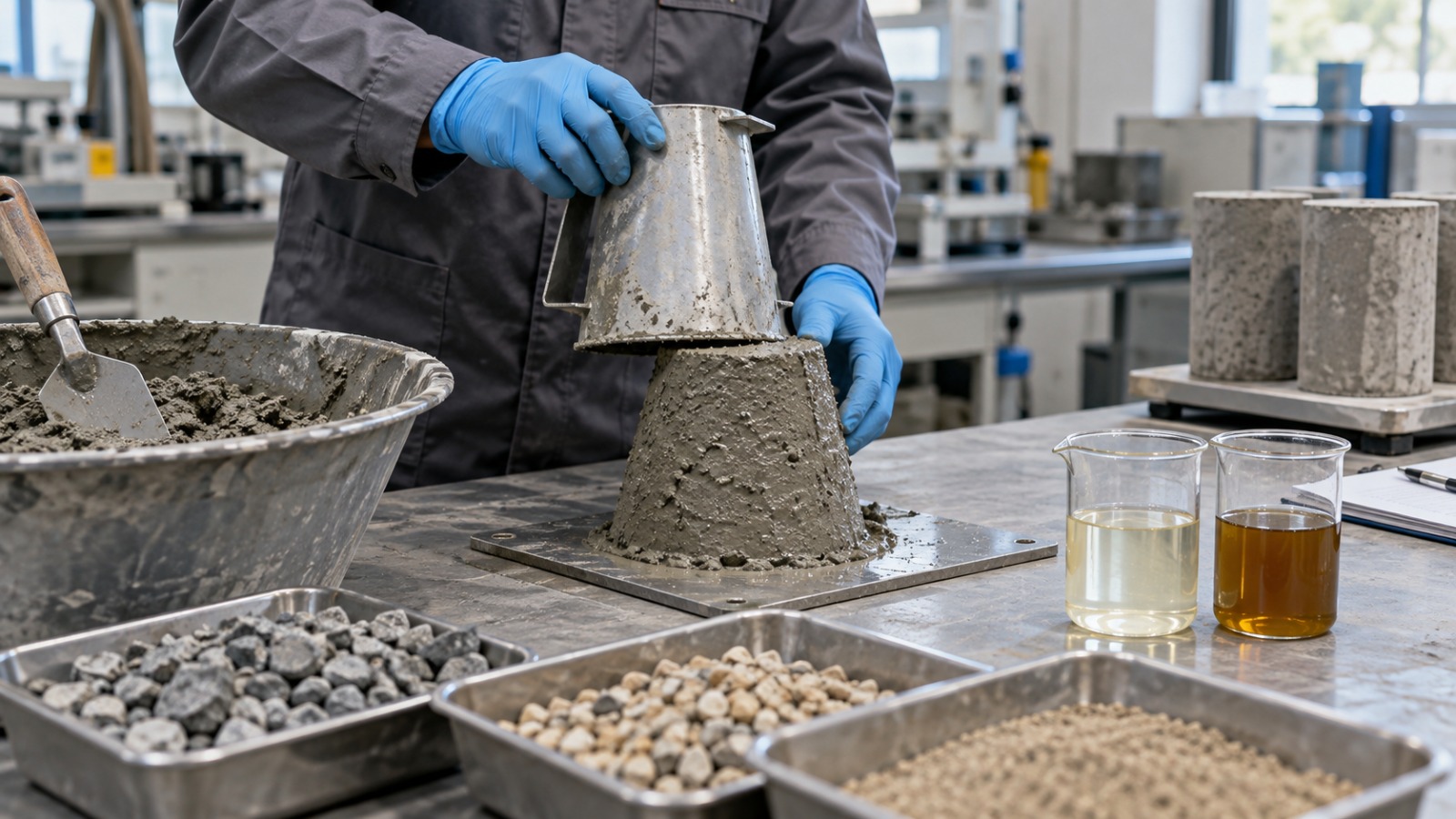
Fresh concrete properties such as workability, slump retention, segregation resistance and placement performance should also be evaluated.

Laboratory trials using the actual cement, aggregates and admixtures intended for production help optimize the concrete mix design.

Field trials provide additional information about pumping, placement and the actual behavior of concrete inside the formwork.

EMA Kimya Homogeneous Concrete and Surface Quality Solutions

EMA Kimya develops professional concrete admixture technologies for ready-mixed concrete plants, precast and prefabricated manufacturers, heavily reinforced concrete structures, pumped concrete and high-performance concrete applications.

High-range water-reducing, water-reducing and auxiliary concrete admixture systems can be optimized according to cement type, aggregate grading, fine material content, water/cement ratio and target workability.

EMA Kimya's technical approach focuses not only on increasing concrete flowability, but also on improving homogeneous placement, mix stability, surface quality, reduced void content and concrete strength together.

Homogeneous, high-quality concrete is achieved not only through a strong mix design, but by correctly managing the entire process from production to final placement in the formwork.

Related News

What Causes Plastic Shrinkage Cracks in Concrete? How Can Early Surface Cracking Be Prevented?

Publication Date: 25 Eylül 2026

What Causes Efflorescence in Concrete? How Can White Stains on Concrete Surfaces Be Prevented?

Publication Date: 25 Eylül 2026

The Right Admixture Technology for Early Strength and Faster Demolding in Precast Concrete Production

Publication Date: 25 Eylül 2026

What Is the Difference Between Superplasticizers and High-Range Water-Reducing Concrete Admixtures?

Publication Date: 25 Eylül 2026

The Importance of Concrete Admixtures in the Construction Industry

Publication Date: 25 Eylül 2026

How Does the Use of Recycled Water in Ready-Mixed Concrete Production Affect Concrete Quality? Concrete Admixtures and Water Management

Publication Date: 25 Eylül 2026

How Much Concrete Admixture Should Be Used? How Does the Correct Dosage Affect Concrete Performance?

Publication Date: 25 Eylül 2026

What Is an Air-Entraining Concrete Admixture? How Can Freeze-Thaw Resistance and Long-Term Concrete Durability Be Improved?

Publication Date: 25 Eylül 2026

Shotcrete Admixtures for Fast and Controlled Application in Tunnel and Underground Projects

Publication Date: 25 Eylül 2026

What Are Auxiliary Concrete Admixtures? How Can Stability and Performance Be Controlled in Ready-Mixed Concrete?

Publication Date: 25 Eylül 2026

What Are Construction Chemicals and Where Are They Used?

Publication Date: 25 Eylül 2026

The Importance of the Right Admixture Technology for Shrinkage and Crack Control in Concrete

Publication Date: 25 Eylül 2026

What Is Cement-Admixture Incompatibility? How Can Rapid Slump Loss, Setting Problems and Admixture Performance Be Controlled in Ready-Mixed Concrete?

Publication Date: 25 Eylül 2026

How Can Concrete Workability Be Improved?

Publication Date: 25 Eylül 2026

How to Improve Quality in Ready-Mixed Concrete Production

Publication Date: 25 Eylül 2026

Web Design & Software | COUR Media