English
×
All rights reserved. All content and images used on this website
belong to EMA Kimya and may not be used without permission.
cour
 EMA Kimya | Concrete Admixtures, Cement Additives, Construction Chemicals, Superplasticizers, High-Range Water Reducers, Concrete Performance Solutions, Ready-Mix and Precast Concrete Technologies, Infrastructure, Industrial Projects, Technical Support, Production and Cost Consulting  EMA Kimya | Concrete Admixtures, Cement Additives, Construction Chemicals, Superplasticizers, High-Range Water Reducers, Concrete Performance Solutions, Ready-Mix and Precast Concrete Technologies, Infrastructure, Industrial Projects, Technical Support, Production and Cost Consulting
EMA Kimya | Concrete Admixtures, Cement Additives, Construction Chemicals, Superplasticizers, High-Range Water Reducers, Concrete Performance Solutions, Ready-Mix and Precast Concrete Technologies, Infrastructure, Industrial Projects, Technical Support, Production and Cost Consulting

"Strength in Every Mix,
Quality in Every Drop"

×

Quality, reliability, and a commitment to sustainable production.

We provide professional solutions in concrete admixtures and construction chemicals.

Menu

Quality, reliability, and a commitment to sustainable production.

We provide professional solutions in concrete admixtures and construction chemicals.

01 October 2026

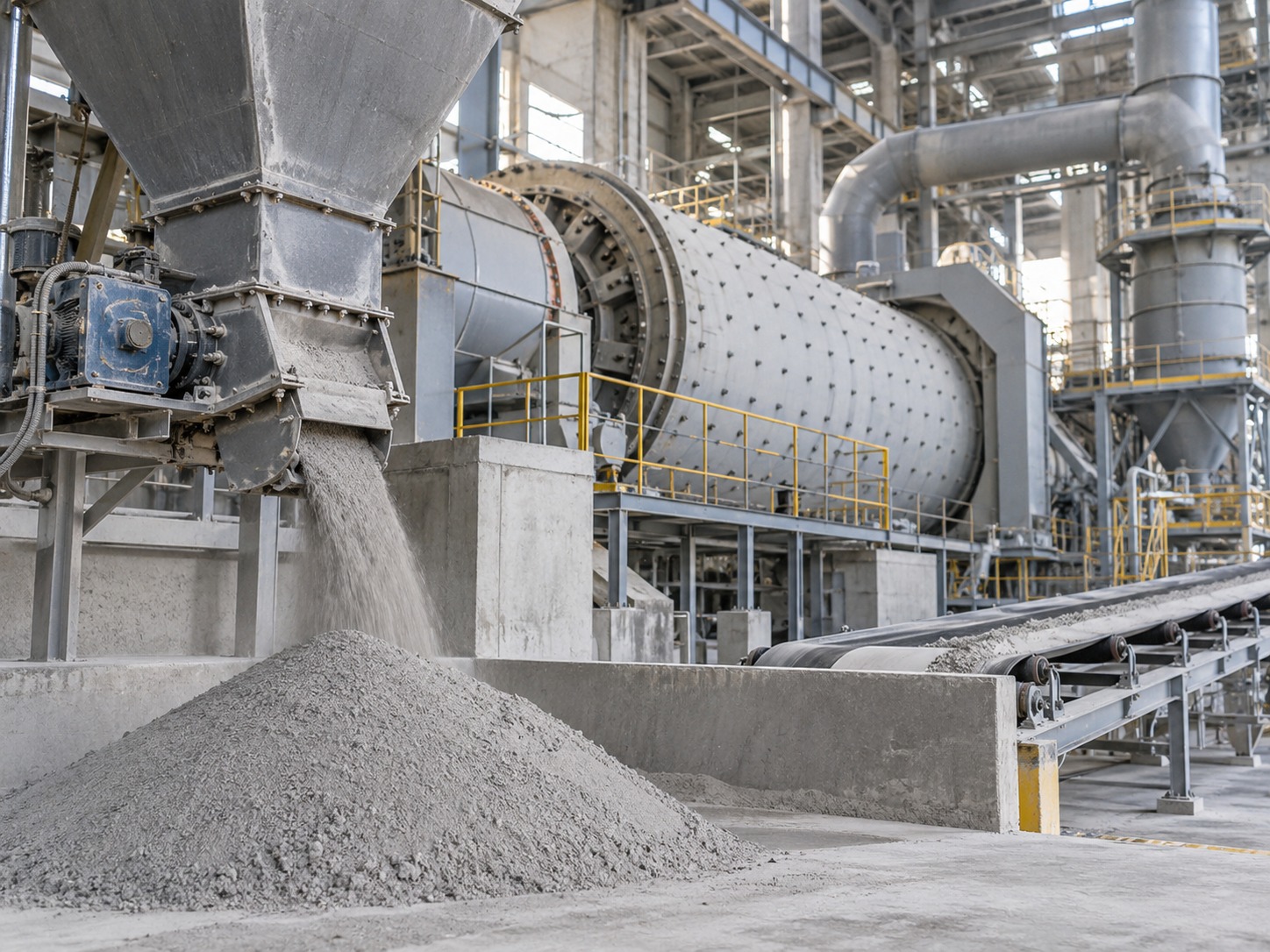
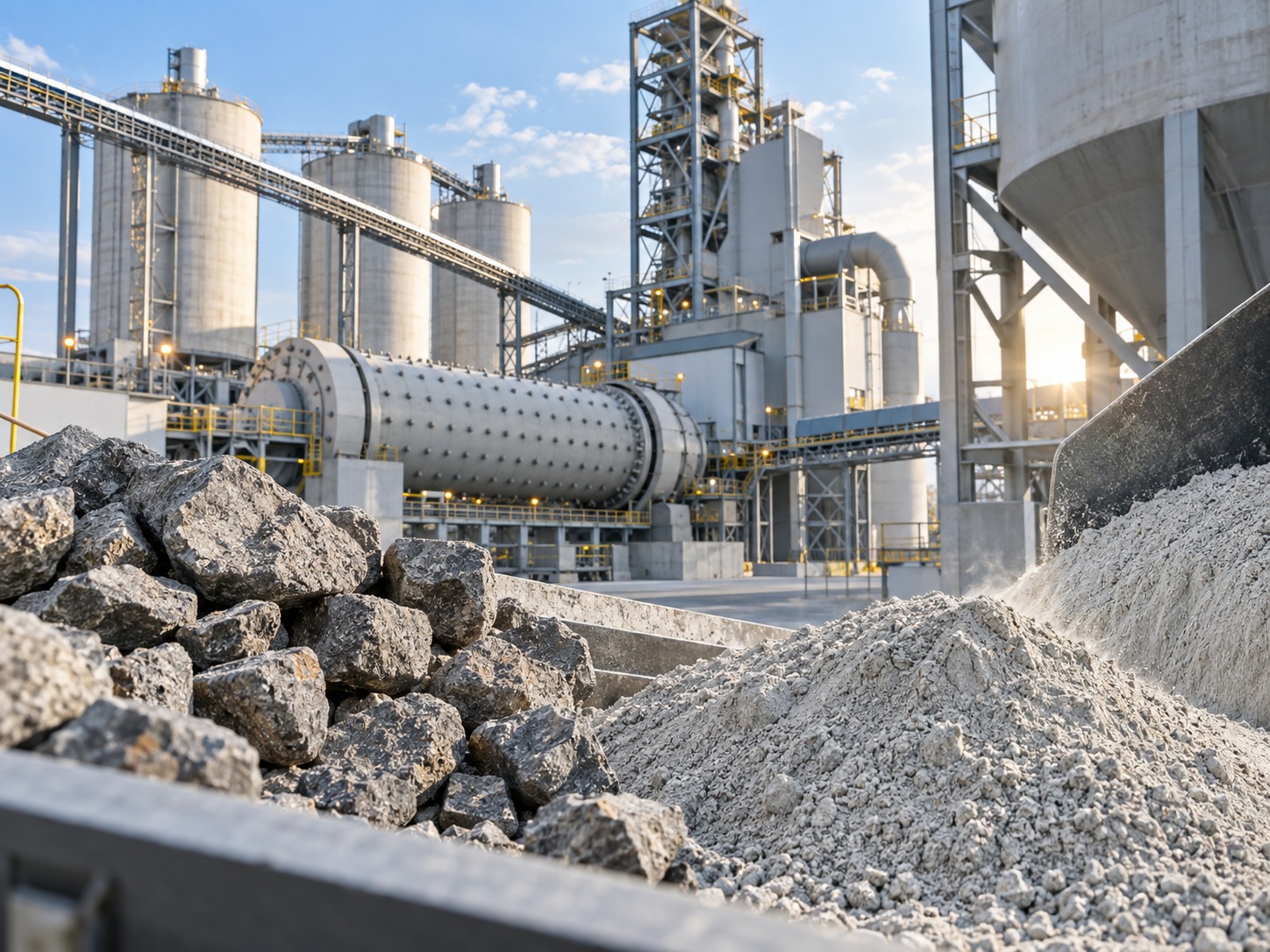
In cement production, not only the quality of raw materials but also grinding efficiency and the performance of the final product are extremely important. Increased energy consumption during grinding, reduced mill capacity or failure to achieve the desired particle-size distribution can directly affect production costs.

At this point, cement grinding aids and cement performance additives can help improve grinding efficiency, control particle dispersion more effectively and support specific performance characteristics of cement.

The right additive system can contribute not only to mill performance, but also to early strength, final strength, workability and the behavior of cement in concrete.

What Is a Cement Grinding Aid?

Cement grinding aids are specialized chemical products used during the grinding stage of cement production.

Their main purpose is to help reduce adhesion and agglomeration between cement particles during grinding.

Limiting particle agglomeration can help improve material movement inside the mill and support a more efficient grinding process.

As a result, the existing production equipment can be used more effectively.

Why Does Agglomeration Occur During Cement Grinding?

Very fine particles are produced as cement clinker is ground.

Because of their high surface energy, these fine particles tend to adhere to one another and form larger agglomerates.

This can reduce grinding efficiency and increase the amount of energy required to achieve the target fineness.

Grinding aids can help reduce these particle interactions and support a more balanced grinding process.

How Do Grinding Aids Affect Energy Efficiency?

Grinding is one of the major energy-consuming stages in cement production.

If a mill must operate longer to produce the same amount of cement, both energy consumption and production costs increase.

Suitable grinding aids can help improve particle movement and material flow inside the mill, contributing to more efficient energy use per ton of cement.

However, the actual performance depends on factors such as mill type, clinker characteristics, target fineness and production conditions.

Can Cement Mill Capacity Be Increased?

Improved grinding efficiency can help make better use of mill capacity under suitable production conditions.

Reducing agglomeration and improving material flow may allow more cement to be processed within a given period.

This can be particularly important for cement plants aiming to increase production using existing equipment.

However, capacity improvement does not depend on chemical additives alone. Mill settings, separator efficiency, clinker properties and overall process conditions should also be evaluated together.

Why Is Cement Fineness Important?

Cement particle-size distribution can directly influence hydration behavior and strength development.

Very fine particles may react more rapidly and contribute to early-age strength, while larger particles can continue contributing to hydration over a longer period.

For this reason, the objective is not simply to produce the finest possible cement, but to achieve a particle-size distribution suitable for the intended application.

Grinding aid selection should also support this objective.

What Is a Cement Performance Additive?

Cement performance additives are chemical systems designed not only to improve grinding efficiency but also to support specific mechanical or application properties of cement.

Depending on formulation, these additives may help improve early strength, final strength, workability or other performance characteristics.

Selecting the appropriate performance additive is especially important when different combinations of clinker, gypsum and mineral components are used.

How Can Early Strength Be Supported?

Early strength performance is particularly important in precast concrete production, fast demolding applications and projects requiring short production cycles.

Clinker mineralogy, grinding fineness and the additive system can all influence early strength development.

Suitable cement performance additives can help support early-age strength in certain cement systems.

However, early strength should not be improved at the expense of final strength or other important cement properties.

Why Is Final Strength Important?

Evaluating cement only according to its performance during the first few days is not sufficient.

7-day, 28-day and longer-term strength values are important indicators of final cement performance.

For this reason, when selecting performance additives, both early strength and long-term strength development should be monitored.

The objective is not simply faster reaction, but balanced and consistent mechanical performance.

Performance Optimization in Cements with Mineral Components

Modern cement technology increasingly uses different mineral components as part of the binder system.

Reducing clinker content or using different mineral additions can change grinding behavior and strength development.

In these systems, a standard additive approach may not always produce the same results.

Cement grinding and performance additives should therefore be optimized according to the mineral components used.

Do Grinding Aids Affect Cement Quality?

A properly selected grinding aid can help support not only process efficiency but also cement homogeneity and production consistency.

However, focusing only on production capacity is not sufficient.

Setting time, strength development, fineness and the behavior of cement in concrete should also be evaluated.

For this reason, quality-control results should be monitored regularly throughout production.

Why Is Additive Dosage Important?

Using a higher dosage of grinding aid does not always result in better performance.

Insufficient dosage may fail to provide the required grinding effect, while excessive use may increase product cost or affect process balance.

For this reason, optimum dosage should be determined through laboratory and plant trials.

Mill capacity, energy consumption, cement fineness and strength results should all be evaluated together when determining the most suitable dosage.

How Should the Cost of Cement Additives Be Evaluated?

The cost of a cement additive should not be evaluated only according to price per kilogram or ton.

Production capacity, energy consumption, target cement quality and actual dosage all determine overall economic performance.

An additive with a higher unit price may still provide a cost advantage if it allows lower dosage or improved production efficiency.

For this reason, the most accurate comparison is based on total additive cost per ton of cement and the process performance achieved.

Why Are Laboratory and Plant Trials Necessary?

Every cement plant uses different clinker, gypsum, mineral additions and production equipment.

For this reason, an additive system that performs successfully at one plant may not deliver the same results at another.

Different additive formulations and dosage levels can first be compared in laboratory studies.

Mill trials can then be used to monitor actual production capacity, energy consumption, fineness, setting time and strength performance.

This approach helps optimize the additive system according to real production conditions.

EMA Kimya Cement Performance and Grinding Additive Solutions

EMA Kimya develops cement performance and grinding additive technologies for cement plants, ready-mixed concrete facilities, precast concrete manufacturers and high-performance concrete applications.

Clinker characteristics, mineral additions, target cement class, mill system, production capacity and strength requirements can be evaluated together to optimize plant-specific additive systems.

EMA Kimya's technical approach focuses not only on accelerating the grinding process, but also on improving energy efficiency, mill capacity, particle-size distribution, early and final strength, and total production cost together.

Efficient cement production is not simply about grinding faster; it is about optimizing energy, capacity and final product performance together.

Related News

Shotcrete Admixtures for Fast and Controlled Application in Tunnel and Underground Projects

Publication Date: 01 Ekim 2026

What Causes Segregation and Bleeding in Concrete? How Can Homogeneous Concrete Be Achieved?

Publication Date: 01 Ekim 2026

The Importance of Concrete Admixtures in the Construction Industry

Publication Date: 01 Ekim 2026

What Causes Efflorescence in Concrete? How Can White Stains on Concrete Surfaces Be Prevented?

Publication Date: 01 Ekim 2026

More Efficient Production and Balanced Cement Performance with Cement Grinding Aids

Publication Date: 01 Ekim 2026

How Can Concrete Workability Be Improved?

Publication Date: 01 Ekim 2026

Concrete Protection Products and Their Advantages

Publication Date: 01 Ekim 2026

What Is an Air-Entraining Concrete Admixture? How Can Freeze-Thaw Resistance and Long-Term Concrete Durability Be Improved?

Publication Date: 01 Ekim 2026

What Are Polycarboxylate-Based Concrete Admixtures? Next-Generation Superplasticizer Technology

Publication Date: 01 Ekim 2026

Why Do Honeycombing and Voids Occur in Concrete? The Right Application and Admixture Technology for More Homogeneous Concrete

Publication Date: 01 Ekim 2026

What Are Construction Chemicals and Where Are They Used?

Publication Date: 01 Ekim 2026

The Importance of Set-Retarding Concrete Admixtures in Hot Weather and Long Transportation Times

Publication Date: 01 Ekim 2026

How Can Concrete Strength Be Increased?

Publication Date: 01 Ekim 2026

What Are Auxiliary Concrete Admixtures? How Can Stability and Performance Be Controlled in Ready-Mixed Concrete?

Publication Date: 01 Ekim 2026

What Is an Air-Entraining Concrete Admixture? How Is Freeze-Thaw Resistant Concrete Produced?

Publication Date: 01 Ekim 2026

Web Design & Software | COUR Media