English
×
All rights reserved. All content and images used on this website
belong to EMA Kimya and may not be used without permission.
cour
 EMA Kimya | Beton Katkıları, Çimento Katkıları, Yapı Kimyasalları, Süper Akışkanlaştırıcılar, Yüksek Akışkanlaştırıcılar, Beton Yardımcı Katkıları, Beton Koruma Ürünleri, Püskürtme Beton Katkıları, Çimento Performans ve Öğütme Katkıları, Priz Hızlandırıcılar, Priz Geciktiriciler, Hava Sürükleyici Katkılar, Beton Dayanım Artırıcı Katkılar, Endüstriyel Yapı Kimyasalları, Hazır Beton Tesisleri, Prefabrik Beton Üretimi, Çimento Fabrikaları, Beton Santralleri, Köprü, Tünel, Baraj, Yol, Metro, Havalimanı, Viyadük ve Büyük Ölçekli Altyapı Projeleri İçin Yüksek Performanslı Beton ve Çimento Teknolojileri, Teknik Destek, Üretim ve Maliyet Danışmanlığı Hizmetleri  EMA Kimya | Beton Katkıları, Çimento Katkıları, Yapı Kimyasalları, Süper Akışkanlaştırıcılar, Yüksek Akışkanlaştırıcılar, Beton Yardımcı Katkıları, Beton Koruma Ürünleri, Püskürtme Beton Katkıları, Çimento Performans ve Öğütme Katkıları, Priz Hızlandırıcılar, Priz Geciktiriciler, Hava Sürükleyici Katkılar, Beton Dayanım Artırıcı Katkılar, Endüstriyel Yapı Kimyasalları, Hazır Beton Tesisleri, Prefabrik Beton Üretimi, Çimento Fabrikaları, Beton Santralleri, Köprü, Tünel, Baraj, Yol, Metro, Havalimanı, Viyadük ve Büyük Ölçekli Altyapı Projeleri İçin Yüksek Performanslı Beton ve Çimento Teknolojileri, Teknik Destek, Üretim ve Maliyet Danışmanlığı Hizmetleri
EMA Kimya | Beton Katkıları, Çimento Katkıları, Yapı Kimyasalları, Süper Akışkanlaştırıcılar, Yüksek Akışkanlaştırıcılar, Beton Yardımcı Katkıları, Beton Koruma Ürünleri, Püskürtme Beton Katkıları, Çimento Performans ve Öğütme Katkıları, Priz Hızlandırıcılar, Priz Geciktiriciler, Hava Sürükleyici Katkılar, Beton Dayanım Artırıcı Katkılar, Endüstriyel Yapı Kimyasalları, Hazır Beton Tesisleri, Prefabrik Beton Üretimi, Çimento Fabrikaları, Beton Santralleri, Köprü, Tünel, Baraj, Yol, Metro, Havalimanı, Viyadük ve Büyük Ölçekli Altyapı Projeleri İçin Yüksek Performanslı Beton ve Çimento Teknolojileri, Teknik Destek, Üretim ve Maliyet Danışmanlığı Hizmetleri

"Strength in Every Mix,
Quality in Every Drop"

×

Quality, reliability, and a commitment to sustainable production.

We provide professional solutions in concrete admixtures and construction chemicals.

Menu

Quality, reliability, and a commitment to sustainable production.

We provide professional solutions in concrete admixtures and construction chemicals.

16 Haziran 2026

Concrete strength is one of the most important factors affecting the safety, durability, and service life of a structure. Today, high-strength concrete is widely required in projects ranging from high-rise buildings and bridges to dams, industrial facilities, tunnels, and major infrastructure developments. Increasing concrete strength is not achieved simply by using more cement; it requires correct material selection, an optimized mix design, precise production control, suitable chemical admixtures, proper placement, and effective curing.

One of the most influential factors affecting concrete strength is the water-to-cement ratio. As the amount of water in a concrete mixture increases, workability may improve, but strength and durability can decline. Excess water creates additional capillary voids as the concrete hardens, resulting in a more porous structure with lower compressive strength and higher permeability.

Modern concrete production uses superplasticizers and high-range water-reducing admixtures to achieve high workability without adding unnecessary water. These products disperse cement particles more effectively and reduce internal friction within the mixture. As a result, concrete can be produced at a lower water-to-cement ratio while maintaining the flowability required for transportation, pumping, placement, and compaction.

A lower water-to-cement ratio supports the formation of a denser and more compact cement matrix. This improves compressive strength, reduces permeability, limits the penetration of water and harmful substances, and contributes to greater long-term durability.

Select the Right Cement

The type, quality, fineness, and strength development characteristics of cement directly influence concrete performance. Cement should be selected according to the required early and final strength, ambient conditions, exposure class, structural application, and production method.

Using more cement does not automatically guarantee stronger concrete. Excessive cement content may increase heat generation, shrinkage, cracking risk, and cost. The objective should be to determine the optimum cement content through a professionally designed mix rather than increasing it without technical evaluation.

Supplementary cementitious materials such as silica fume, fly ash, ground granulated blast-furnace slag, and other pozzolanic materials may also be incorporated into the mixture. Depending on their properties and dosage, these materials can improve particle packing, reduce permeability, support later-age strength, and enhance resistance to aggressive environmental exposure.

Use High-Quality and Properly Graded Aggregates

Aggregates make up a large proportion of concrete volume and therefore have a major effect on strength. Strong, clean, durable, and properly graded aggregates help create a more stable and compact internal structure.

An appropriate particle-size distribution reduces voids between aggregate particles and decreases the amount of cement paste required to fill those spaces. This improves packing density, mixture homogeneity, and mechanical performance.

Aggregate shape and surface texture also influence concrete behavior. Angular aggregates may provide stronger mechanical interlock, while rounded aggregates can improve flowability. The correct balance should be determined according to the required strength, workability, pumping conditions, and placement method.

Dust, clay, organic matter, weak particles, and other contaminants can interfere with bonding between cement paste and aggregate. For this reason, aggregate cleanliness and quality control are essential for reliable strength development.

Optimize the Concrete Mix Design

A professionally prepared mix design is fundamental to achieving high concrete strength. The proportions of cement, water, aggregates, mineral additions, and chemical admixtures must be optimized according to the target strength class, exposure conditions, workability requirement, pumping distance, element geometry, and application method.

Laboratory trials should be conducted before full-scale production. These trials help verify material compatibility, determine the optimum water-to-cement ratio, identify suitable admixture dosage, and evaluate both early and final strength.

The mix should provide sufficient workability without becoming unstable. Concrete that is too stiff may be difficult to compact, while excessively fluid concrete may segregate if cohesion is inadequate. High strength requires a balanced mixture with reliable flow, stability, and compactability.

Use Suitable Concrete Admixtures

Concrete admixtures play a critical role in increasing strength while maintaining workability. Superplasticizers and water-reducing admixtures enable the production of concrete with less water and better particle dispersion.

Accelerating admixtures can support faster early strength development when rapid demolding, short production cycles, emergency repairs, or cold-weather applications are required. Retarding or slump-retaining admixtures may be necessary when long transportation periods, hot weather, or large-volume pours require extended workability.

Performance-enhancing admixtures can also improve mixture homogeneity, density, cohesion, and long-term durability. The selected product must be compatible with the cement, aggregates, mineral additions, and project conditions.

Admixture dosage should be determined through laboratory and field trials. Incorrect or excessive use may cause rapid slump loss, delayed setting, segregation, bleeding, or inconsistent strength development.

Ensure Accurate Batching and Mixing

Even a well-designed concrete mix cannot achieve its intended strength if production control is inadequate. Cement, water, aggregates, mineral additions, and admixtures must be measured accurately in every batch.

Aggregate moisture content should be monitored regularly because changes in moisture directly affect the actual amount of water entering the mixture. Incorrect moisture correction can alter the water-to-cement ratio and lead to variations in slump and compressive strength.

Mixing sequence and duration should also be controlled. Sufficient mixing ensures that all materials are distributed uniformly and that the chemical admixture performs effectively. Inadequate mixing can result in non-homogeneous concrete and inconsistent strength.

Batching equipment, weighing systems, water meters, and admixture dispensers should be calibrated regularly. Automated control systems and detailed production records help maintain repeatability between batches.

Improve Placement and Compaction

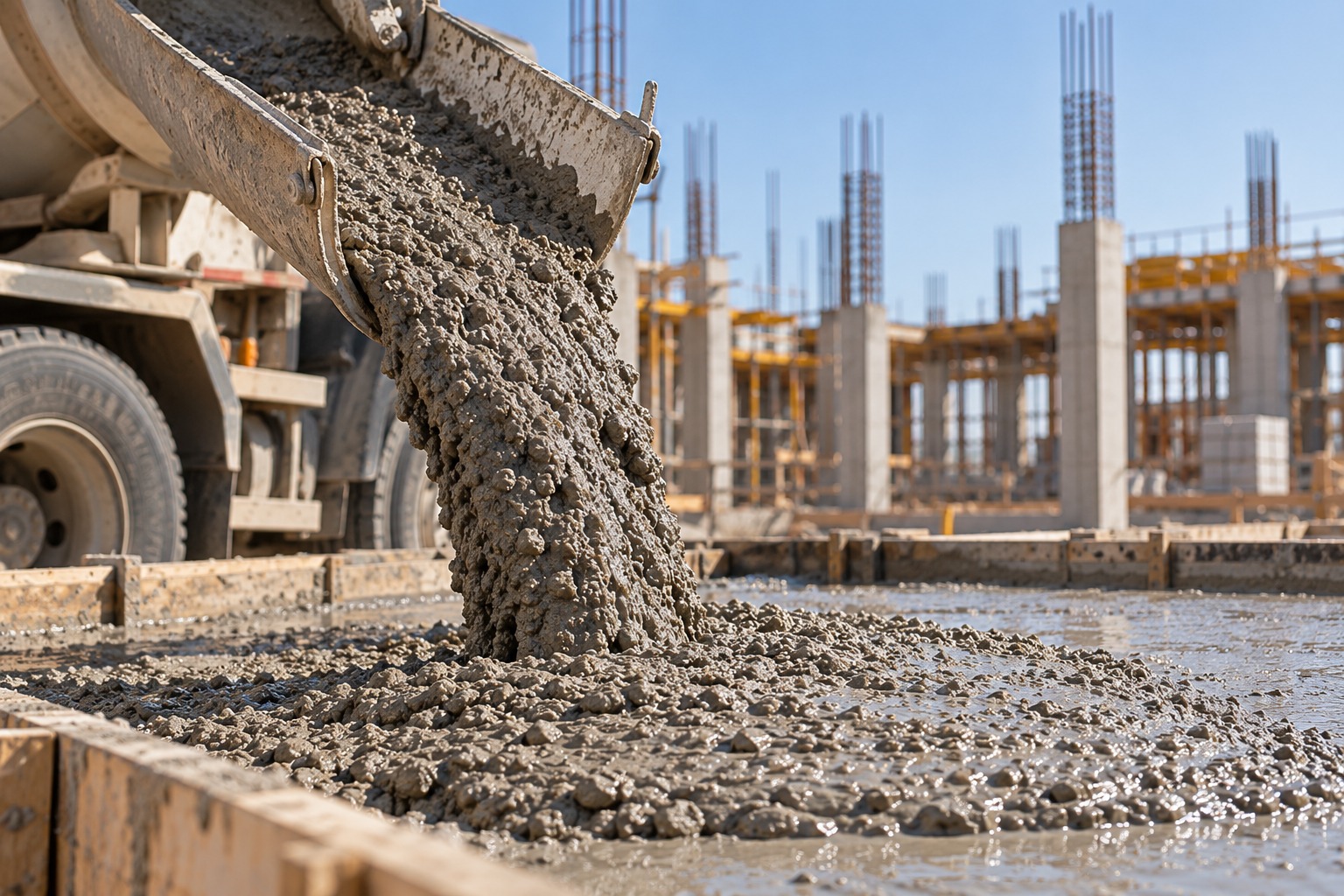
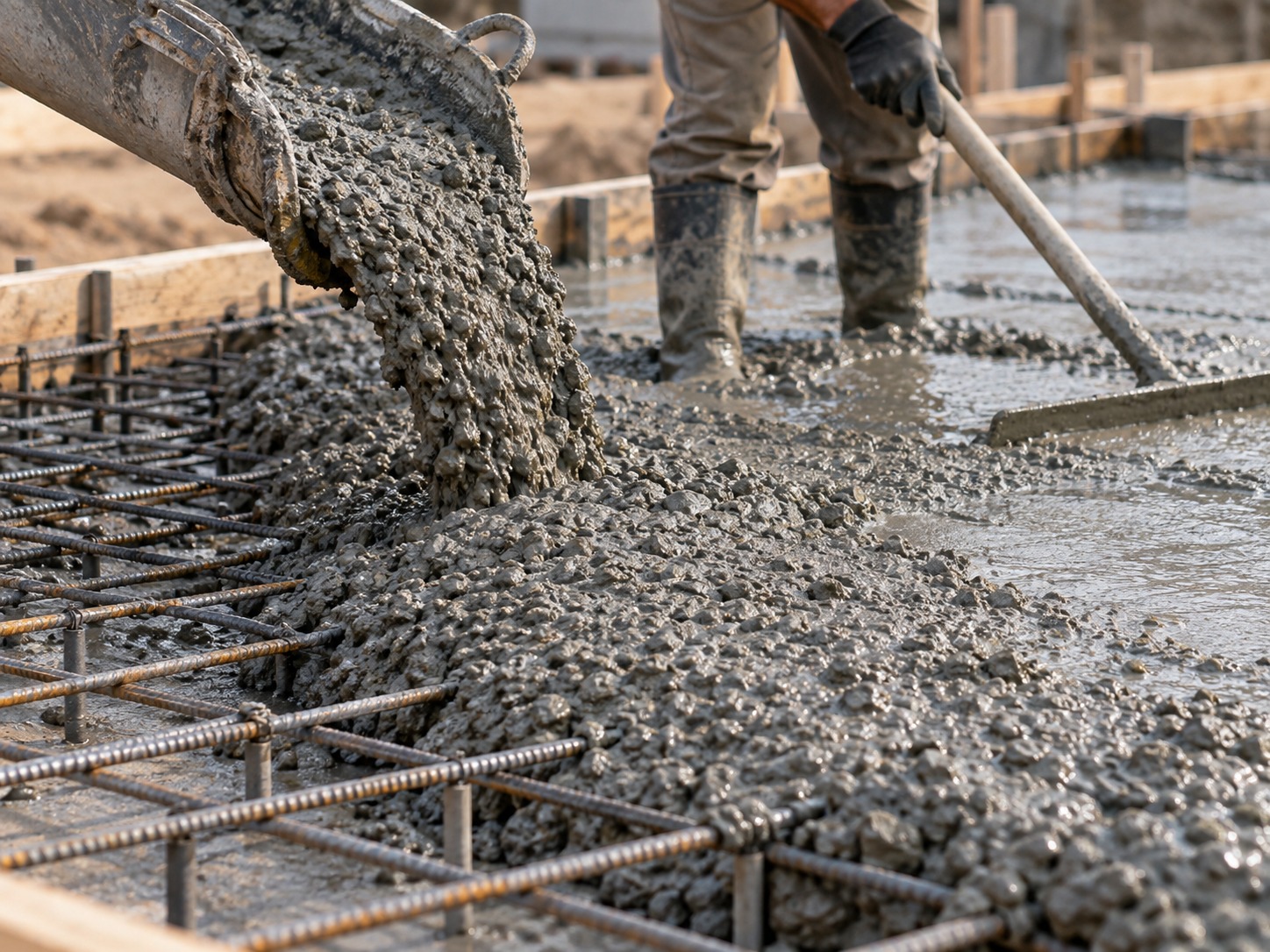
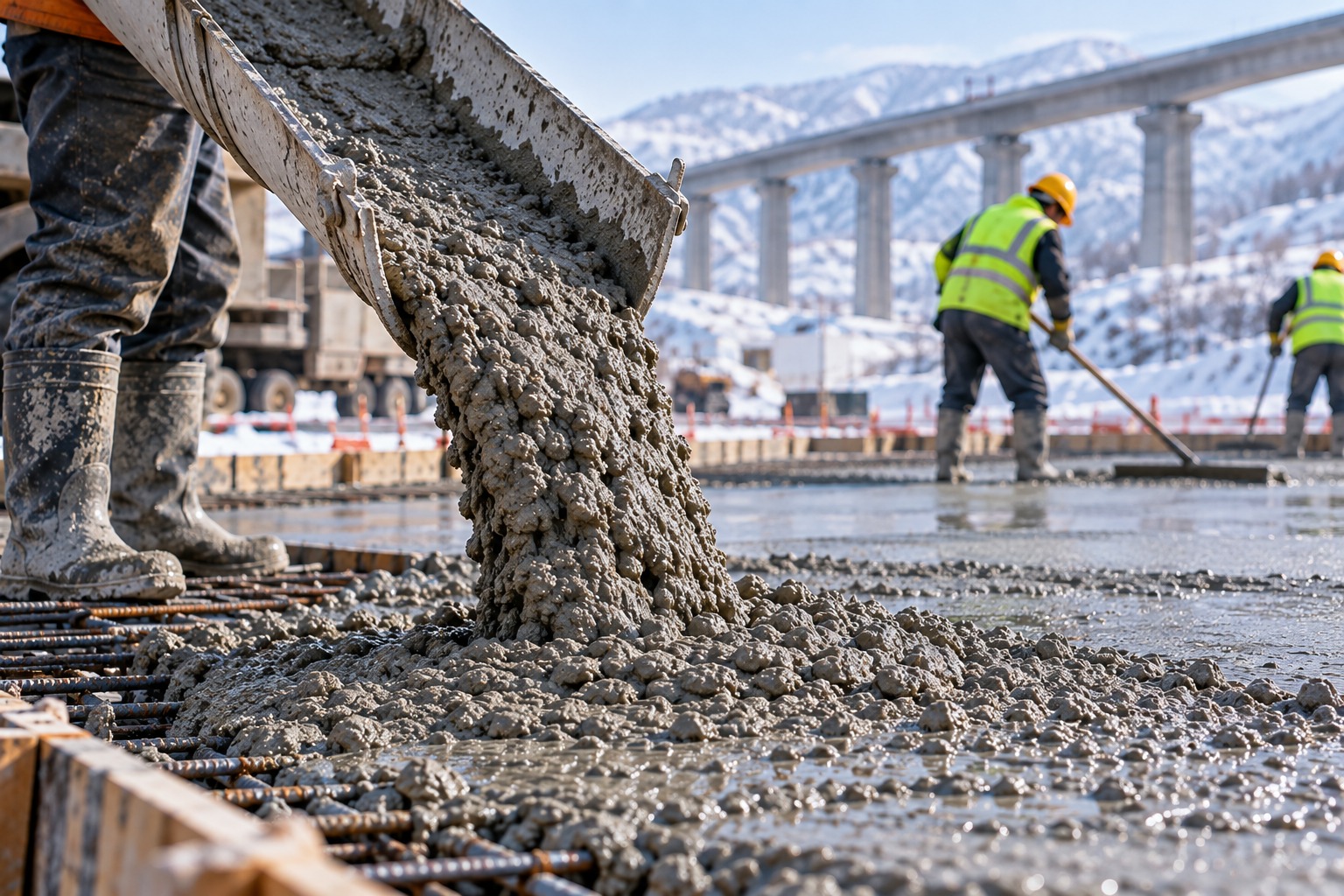
Concrete must be placed and compacted correctly to achieve its designed strength. Poor placement can trap air, create voids, cause honeycombing, and weaken the bond around reinforcement.

Concrete should be placed continuously and as close as possible to its final position. Excessive free fall, uncontrolled movement, and long delays between layers can cause segregation and cold joints.

Appropriate vibration removes entrapped air and helps the concrete fill the formwork completely. Insufficient vibration leaves voids, while excessive vibration can cause segregation. The vibration method and duration should therefore be selected according to the concrete consistency and structural element.

Highly workable or self-compacting concrete can provide advantages in complex formwork and heavily reinforced sections, but the mixture must maintain sufficient cohesion to prevent segregation.

Apply Proper Curing

Correct curing is essential for concrete strength development. After placement, concrete requires sufficient moisture and suitable temperature conditions for cement hydration to continue effectively.

If concrete loses moisture too quickly, hydration may remain incomplete and the concrete may fail to reach its potential strength. Inadequate curing can also increase surface cracking, permeability, dusting, and long-term durability problems.

Curing methods may include water curing, wet coverings, curing membranes, protective sheets, or controlled curing environments. The selected method should be suitable for the element, climate, concrete composition, and project requirements.

High temperatures, low humidity, wind, and direct sunlight can accelerate moisture loss. In cold weather, concrete must be protected against freezing before sufficient strength has developed. Temperature and moisture control are therefore critical during the early-age period.

Control Concrete Temperature

Concrete temperature affects setting, workability, hydration, and strength development. Excessively high temperatures can cause rapid slump loss, accelerated setting, increased water demand, and greater cracking risk.

In hot weather, measures such as cooling aggregates, using chilled water, shading materials, planning pours during cooler periods, and using suitable retarding or slump-retaining admixtures may be required.

In cold weather, heated materials, insulation, protective enclosures, and accelerating admixtures may be used to support hydration and prevent freezing. All measures should be selected according to technical requirements and relevant standards.

Test and Monitor Concrete Quality

Quality-control testing is essential for confirming that concrete achieves the required performance. Fresh concrete tests may include slump, temperature, density, air content, and unit weight.

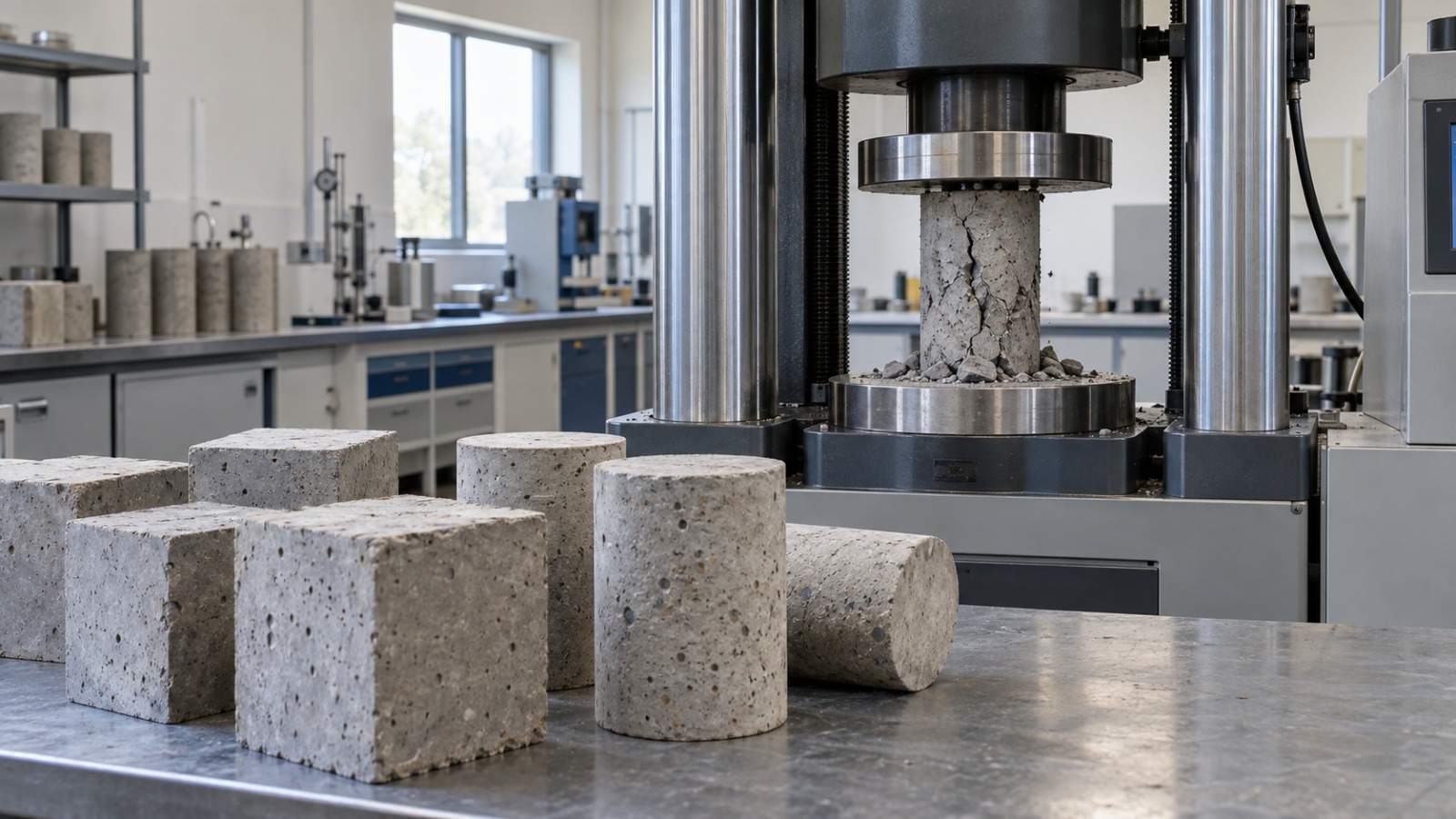
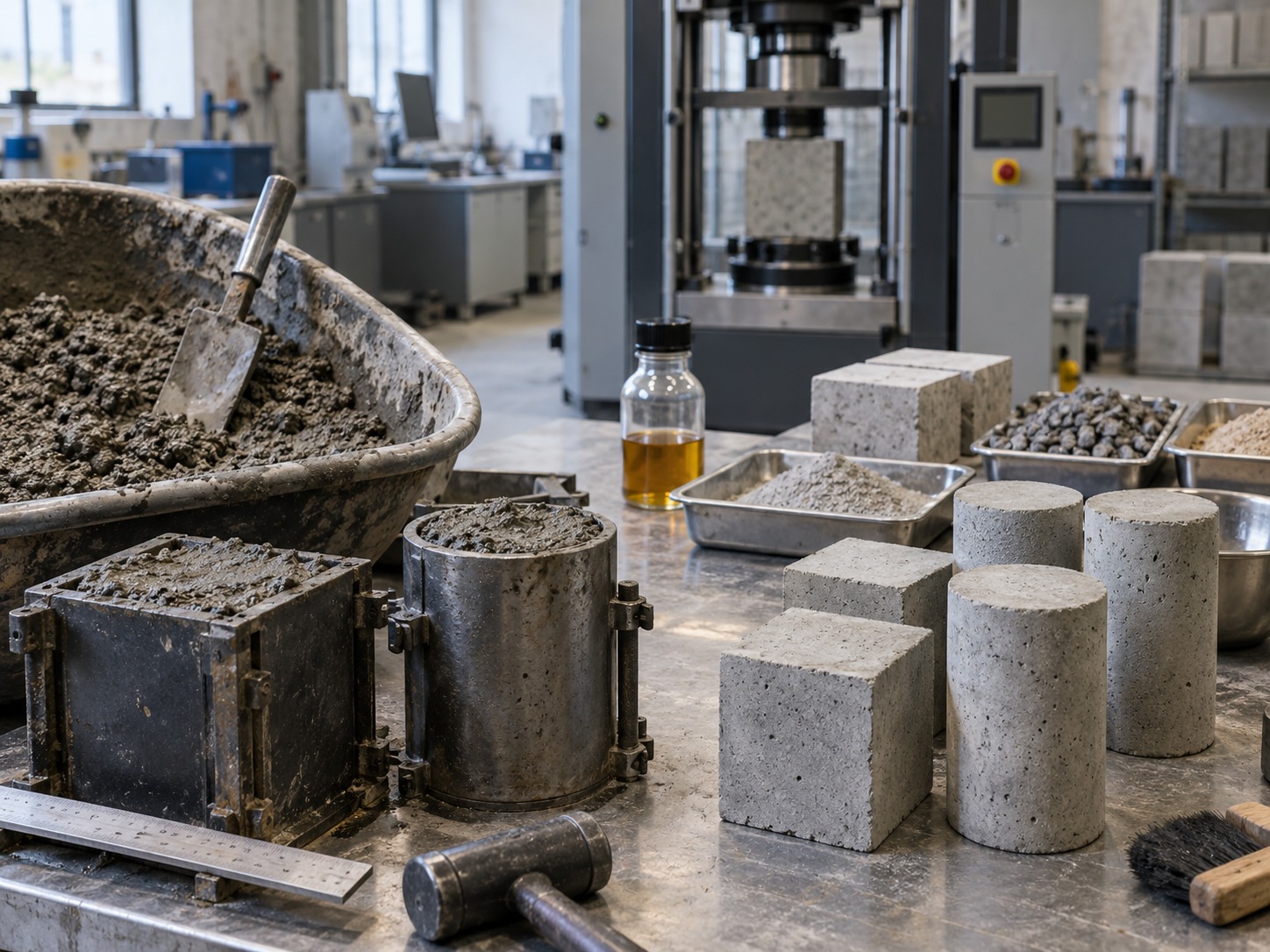
Compressive strength specimens should be prepared, cured, and tested under controlled conditions. Early-age and final strength results help identify production trends and confirm compliance with project specifications.

Additional tests such as water absorption, permeability, flexural strength, splitting tensile strength, shrinkage, and durability assessments may be required for high-performance or exposure-sensitive projects.

Test results should be analyzed together with production records, raw material data, moisture measurements, admixture dosages, transportation times, and site conditions. This enables producers to identify variations and make informed improvements.

Prevent Uncontrolled Water Addition

Adding water at the construction site without technical control is one of the most common causes of reduced concrete strength. Although extra water may temporarily increase slump, it also raises the water-to-cement ratio and can significantly reduce strength and durability.

When workability needs adjustment, approved admixture solutions should be used under technical supervision rather than uncontrolled water addition. Delivery time, drum rotation, temperature, and slump retention should also be managed through proper planning.

Support Long-Term Durability

Concrete strength should not be evaluated only through compressive strength values. A strong concrete structure must also resist water penetration, freeze-thaw cycles, chlorides, sulfates, carbonation, abrasion, and chemical exposure according to its service environment.

A dense, low-permeability concrete matrix protects reinforcement and reduces the risk of corrosion. Correct cover thickness, crack control, suitable curing, and project-specific protection systems further improve structural performance.

The most successful concrete is not simply the concrete with the highest initial strength, but the concrete that preserves its required performance throughout its intended service life.

Conclusion

Increasing concrete strength requires a complete and controlled approach. The most effective results are achieved through a low and carefully managed water-to-cement ratio, high-quality cement and aggregates, optimized mix design, suitable concrete admixtures, accurate batching, effective mixing, correct placement and compaction, proper curing, and continuous quality control.

When these factors are managed professionally, it is possible to produce stronger, denser, safer, and more durable concrete structures. Modern concrete admixtures and production technologies provide major advantages, but their effectiveness depends on correct product selection, technical compatibility, and disciplined application.

Related News

Web Design & Software | COUR Media