English
×
All rights reserved. All content and images used on this website
belong to EMA Kimya and may not be used without permission.
cour
 EMA Kimya | Concrete Admixtures, Cement Additives, Construction Chemicals, Superplasticizers, High-Range Water Reducers, Concrete Performance Solutions, Ready-Mix and Precast Concrete Technologies, Infrastructure, Industrial Projects, Technical Support, Production and Cost Consulting  EMA Kimya | Concrete Admixtures, Cement Additives, Construction Chemicals, Superplasticizers, High-Range Water Reducers, Concrete Performance Solutions, Ready-Mix and Precast Concrete Technologies, Infrastructure, Industrial Projects, Technical Support, Production and Cost Consulting
EMA Kimya | Concrete Admixtures, Cement Additives, Construction Chemicals, Superplasticizers, High-Range Water Reducers, Concrete Performance Solutions, Ready-Mix and Precast Concrete Technologies, Infrastructure, Industrial Projects, Technical Support, Production and Cost Consulting

"Strength in Every Mix,
Quality in Every Drop"

×

Quality, reliability, and a commitment to sustainable production.

We provide professional solutions in concrete admixtures and construction chemicals.

Menu

Quality, reliability, and a commitment to sustainable production.

We provide professional solutions in concrete admixtures and construction chemicals.

01 October 2026

In ready-mixed concrete production, chemical admixtures represent a relatively small portion of the concrete mix by quantity, but they can have a significant impact on overall performance. A properly selected admixture can help reduce water demand, maintain workability, improve pumpability and support more controlled achievement of the target strength.

However, not every ready-mixed concrete admixture provides the same results with every cement, aggregate or production condition.

For this reason, admixture selection should not be based only on product price or general technical data. Raw materials, concrete class, transportation time, temperature, application method and production targets should all be evaluated together.

What Is a Ready-Mixed Concrete Admixture?

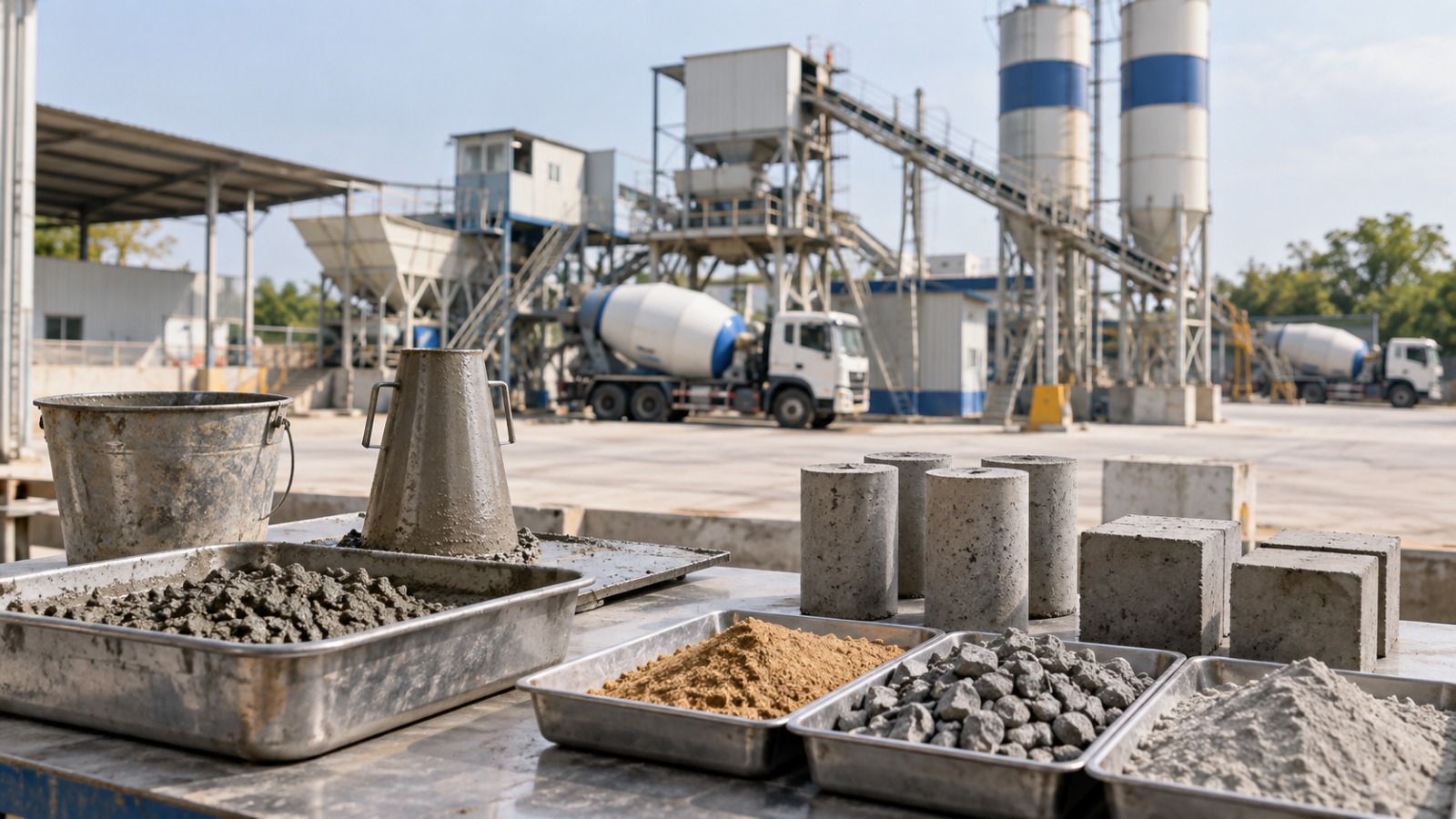
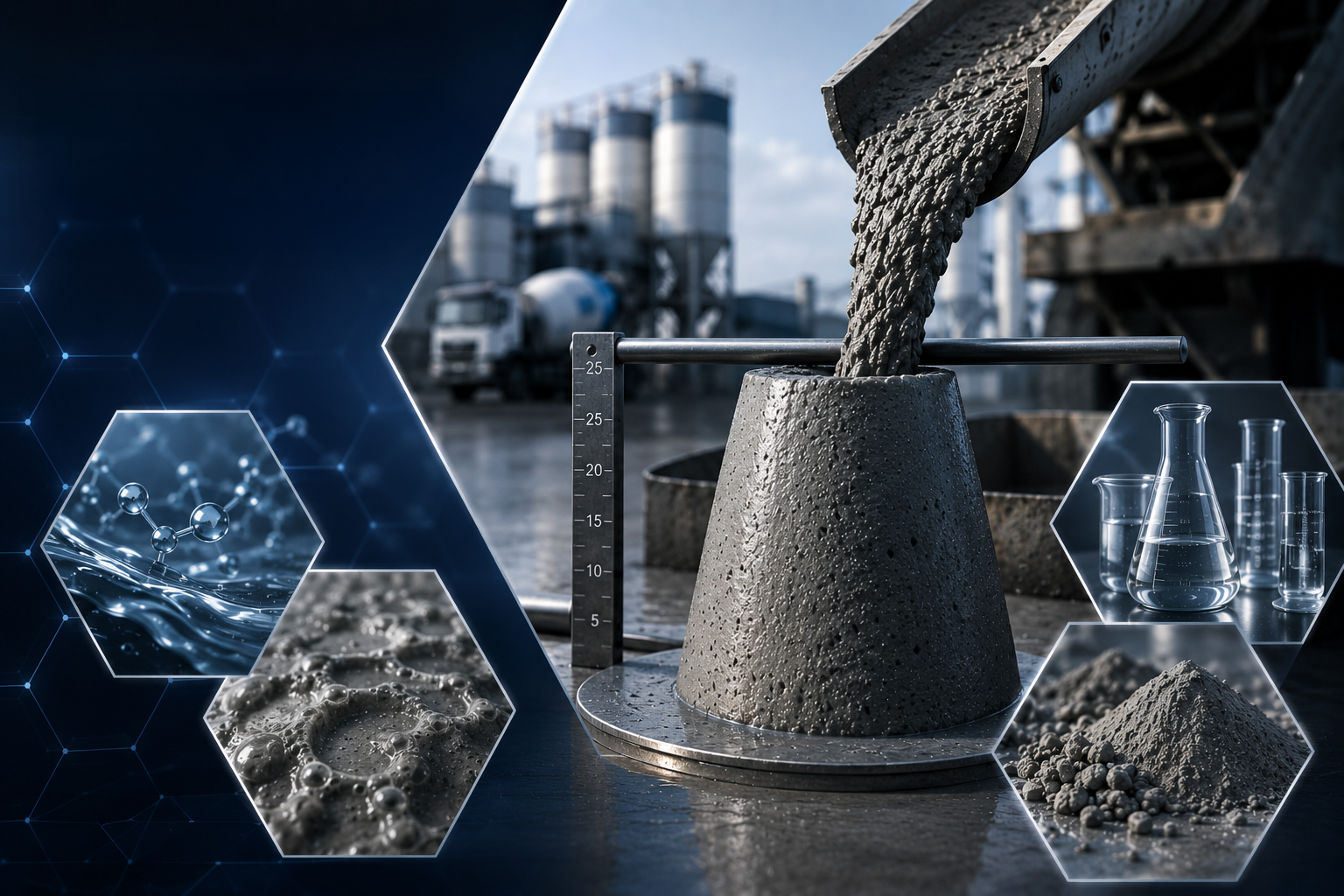
Ready-mixed concrete admixtures are chemical products added to the concrete mixture in controlled amounts to modify or improve fresh and hardened concrete properties.

Depending on application requirements, concrete admixtures may be used for:

water reduction, increased flowability, slump retention, setting-time control, air entrainment, early or final strength development and general concrete performance improvement.

For this reason, “concrete admixture” does not refer to a single product, but to a broad group of products designed for different technical needs.

What Should Be the First Criterion When Selecting a Concrete Admixture?

The first criterion should be identifying the actual requirement of the concrete.

One ready-mix plant may struggle with rapid slump loss, while another may experience high water demand, low early strength or pumpability problems.

Each of these problems may require a different admixture performance profile.

For example, in a plant with long transportation times, an admixture that provides strong initial flowability but loses slump quickly may not be the right choice.

For this reason, admixture selection should be based on the question:

“Which product is most suitable for this concrete mix?” rather than “Which product is the strongest?”

Why Is Cement-Admixture Compatibility Important?

The performance of concrete admixtures is directly influenced by the cement used.

Cement mineralogy, fineness, sulfate balance, alkali content and other mineral components can change the behavior of an admixture in concrete.

The same superplasticizer may provide different initial slump or slump-retention performance with two different cements.

For this reason, the admixture should be retested when the cement source or cement type changes.

Do Aggregate Properties Affect Admixture Performance?

Yes.

Aggregate grading, crushed or natural characteristics, moisture content, fine material content and clay content can affect both water demand and admixture demand.

Certain fine materials and clay minerals can reduce the efficiency of modern high-performance admixtures.

This may result in lower flowability or faster slump loss at the same dosage.

For this reason, the admixture system and aggregate system should be evaluated together.

Superplasticizer or High-Range Water Reducer?

This decision should be based on target performance rather than product terminology.

Superplasticizing and high-range water-reducing admixtures can help achieve high workability with less mixing water.

However, their water-reduction capacity, initial flowability, slump-retention behavior and cement compatibility may differ.

For ready-mixed concrete plants, what matters is not only achieving a high slump when the concrete leaves the mixer.

The concrete must also maintain sufficient workability when it reaches the construction site and during pumping.

How Does Transportation Time Affect Admixture Selection?

The distance between the batching plant and the construction site is an important factor in admixture selection.

For short-distance deliveries, one performance profile may be sufficient, while projects requiring 60–90 minutes or longer transportation due to traffic or distance may require stronger slump-retention performance.

For this reason, not only initial performance but also time-dependent concrete behavior should be tested.

Trials that reflect actual production conditions provide more reliable product selection.

Why Should Temperature Be Considered?

Concrete admixture performance can be affected by seasonal conditions.

At high temperatures, cement hydration may accelerate and concrete can lose workability more quickly.

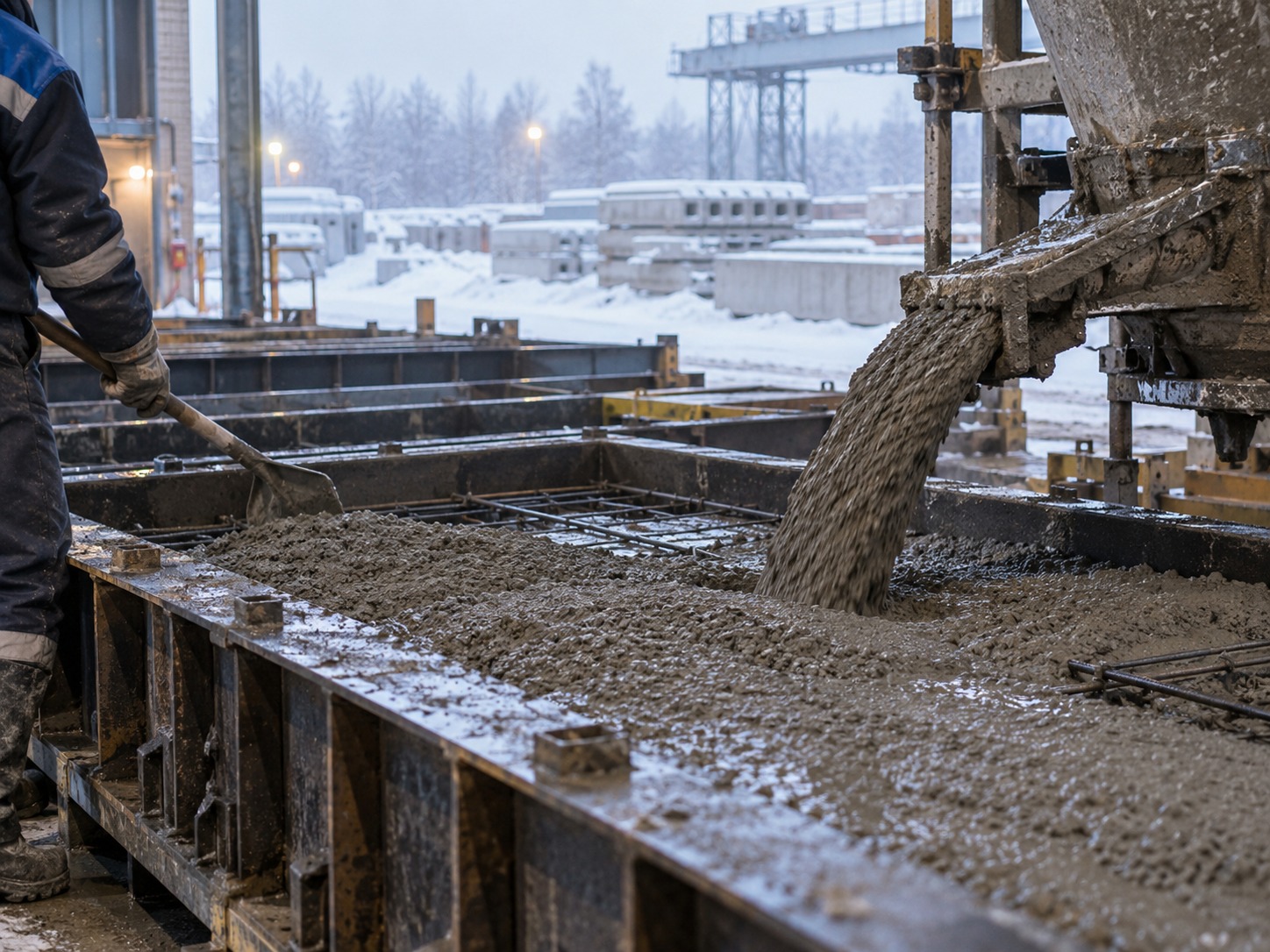
At low temperatures, setting and early strength development may slow down.

For this reason, an admixture system that performs well in summer may not produce the same result at the same dosage during winter.

Seasonal mix and admixture optimization can help maintain production consistency in ready-mixed concrete plants.

How Should Concrete Admixture Dosage Be Determined?

Using more admixture does not always mean better concrete performance.

Insufficient dosage may fail to provide the required water reduction or slump retention.

Excessive dosage may affect setting time, mix stability or cost depending on the admixture type.

For this reason, the optimum dosage should be determined through laboratory trials at different dosage levels.

Initial slump, time-dependent slump loss, air content, setting behavior and compressive strength should all be evaluated together.

How Should Ready-Mixed Concrete Admixture Prices Be Compared?

One of the most common mistakes in admixture selection is comparing products only by price per kilogram or ton.

For example, a cheaper product may require a higher dosage, resulting in a higher actual admixture cost per cubic meter of concrete.

Similarly, a higher-priced product may reduce total cost by working effectively at a lower dosage or by improving the efficiency of other components in the concrete mix.

For this reason, the correct comparison should consider:

Admixture price + actual dosage + technical and economic contribution to the concrete mix

Should the Cheapest Concrete Admixture Always Be Preferred?

Not necessarily.

Concrete admixture cost represents only one part of the total concrete production cost.

Delays caused by slump loss, high pump pressure, returned concrete, insufficient strength or excessive cement use can create much larger costs.

For this reason, the economic value of an admixture should be evaluated according to its overall contribution to the concrete production system rather than purchase price alone.

Can a Concrete Admixture Affect Cement Content?

Suitable high-performance concrete admixtures can help reduce the amount of mixing water.

A lower water/cement ratio can support improved concrete strength.

In some mix designs, this may allow the binder system to be re-optimized.

However, there is no fixed percentage by which cement can always be reduced.

Every concrete mix should be evaluated separately according to cement type, aggregate characteristics, target strength and project requirements.

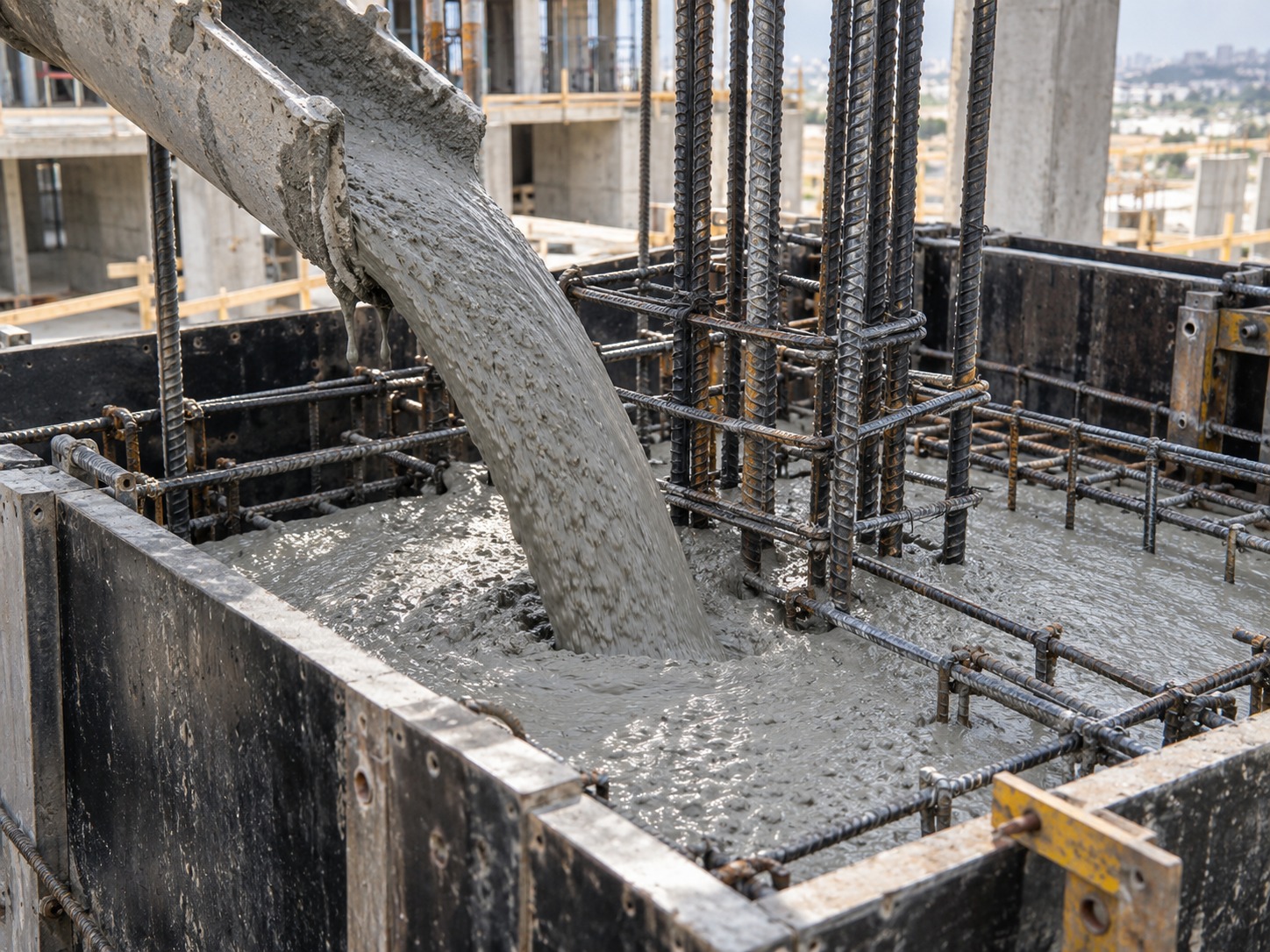
Admixture Selection for Pumped Concrete

High flowability alone is not sufficient in pumped concrete.

The concrete must maintain a homogeneous structure inside the pump line, resist segregation and retain workability throughout the placement process.

For this reason, pumpable concrete admixture selection should consider mix stability and slump retention together with high-range water-reducing performance.

Aggregate grading and fine material content should also be evaluated as part of the same system.

Can the Same Admixture Be Used for Precast Concrete?

Ready-mixed and precast concrete may have different performance requirements.

In precast production, fast demolding, high early strength, smooth surface quality and short production cycles may be more important.

For this reason, strong initial flowability and early strength performance may be prioritized in precast admixtures.

In ready-mixed concrete, longer transportation time and slump retention may be more critical.

Admixture technology should therefore be selected according to the production process.

How Should Concrete Strength Be Evaluated During Admixture Selection?

The effect of an admixture should not be evaluated only through fresh concrete tests.

1-day, 2-day, 7-day and 28-day compressive strength results can also provide important information.

If an admixture provides very high initial flowability but negatively affects setting or strength development, it may not be the optimum solution for the mix.

For this reason, fresh and hardened concrete performance should be evaluated together.

What Should Be Considered When Choosing a Concrete Admixture Supplier?

A concrete admixture supplier should not be evaluated only as a company that delivers chemical products.

Raw materials and production conditions in ready-mix plants can change over time.

For this reason, laboratory support, field trials, mix optimization and technical problem-solving capability are important.

Especially in high-volume production plants, fast technical support can provide an important advantage for production continuity.

Why Is Technical Support Important in Concrete Admixture Distribution?

In regional concrete admixture distribution, product availability alone may not be sufficient.

Cement and aggregate properties can vary between different cities and plants.

For this reason, technical support familiar with local production conditions can make it easier to determine the correct admixture and dosage.

Combining product supply with technical service can create a more sustainable working model for ready-mixed concrete plants.

Choosing Ready-Mixed Concrete Admixtures in Central Anatolia

Raw materials and seasonal temperature differences in Central Anatolia can directly affect concrete admixture performance.

Cement and aggregate sources may vary between ready-mix plants in Konya, Ankara, Kayseri, Aksaray, Karaman, Niğde, Nevşehir, Kırşehir, Eskişehir, Sivas and Yozgat.

For this reason, selecting a ready-mixed concrete admixture for Central Anatolia should be based on laboratory and plant trials using local raw materials rather than relying on a single standard mix.

An admixture system optimized for regional conditions can help improve production consistency.

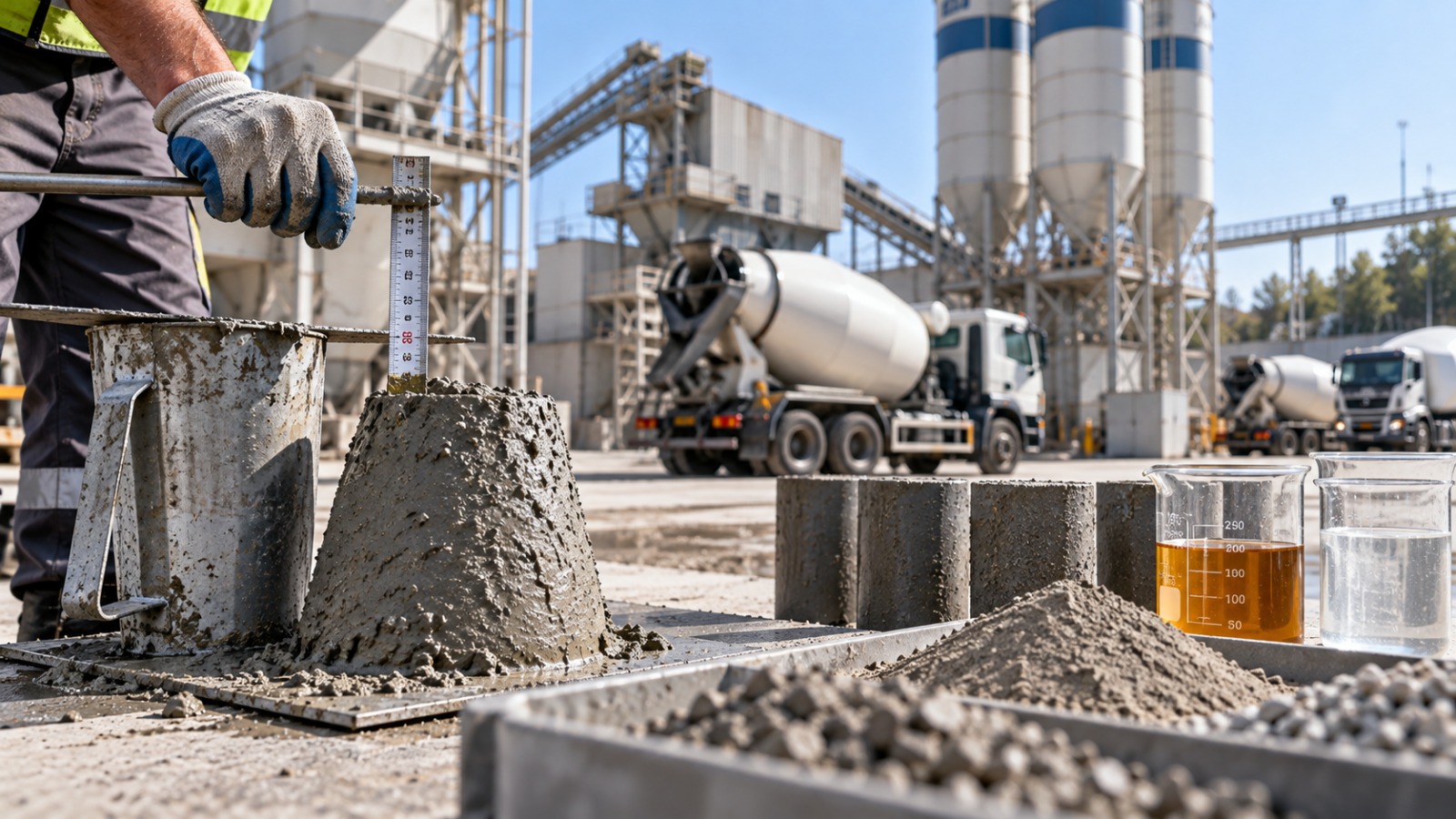
What Should Be Checked in Laboratory Trials?

Different product and dosage alternatives should be compared using the same concrete mix design.

Initial slump, 30-60-90 minute slump retention, concrete temperature, air content and segregation behavior can all be evaluated.

Setting time and early and final strength results should also be included.

The objective is not simply to identify the product that produces the highest flowability, but the admixture system that provides the most balanced overall performance.

Why Are Field Trials Necessary?

Laboratory conditions provide an important starting point, but they may not represent every condition encountered in actual production.

Batching plant mixers, transit mixers, transportation distance, pumping systems, temperature and waiting times can all affect concrete behavior.

For this reason, critical applications should be followed by real production and field trials after laboratory testing.

This makes it possible to evaluate admixture performance from the batching plant to the final placement point.

EMA Kimya Ready-Mixed Concrete Admixture Solutions

EMA Kimya develops professional concrete and cement admixture technologies for ready-mixed concrete plants, batching plants, precast and prefabricated manufacturers, cement plants, bridges, tunnels, dams, roads, metro systems, airports, viaducts and large-scale infrastructure projects.

Superplasticizers, high-range water reducers, water-reducing admixtures, set accelerators, set retarders, air-entraining admixtures, strength-enhancing admixtures and auxiliary concrete admixtures can be optimized according to the raw materials used and production targets.

EMA Kimya's approach is not limited to ready-mixed concrete admixture sales. It focuses on developing plant-specific systems through laboratory studies, batching plant trials, technical support and production-cost optimization.

The right ready-mixed concrete admixture is not simply the cheapest product or the product that provides the highest initial flowability; it is the admixture that delivers the required concrete performance in the most technically and economically balanced way with the actual raw materials used.

Related News

What Are Concrete Admixture Dosing Errors? Correct Storage and Use in Ready-Mixed Concrete Plants

Publication Date: 01 Ekim 2026

What Is an Air-Entraining Concrete Admixture? How Can Freeze-Thaw Resistance and Long-Term Concrete Durability Be Improved?

Publication Date: 01 Ekim 2026

How to Improve Quality in Ready-Mixed Concrete Production

Publication Date: 01 Ekim 2026

Concrete Protection Products and Their Advantages

Publication Date: 01 Ekim 2026

What Is High-Performance Concrete? What Are Its Main Properties?

Publication Date: 01 Ekim 2026

Why Are Cement Additives Used?

Publication Date: 01 Ekim 2026

Support Surface Strength and Long-Term Performance with Concrete Curing and Protection Products

Publication Date: 01 Ekim 2026

How Can Ready-Mixed Concrete Production Costs Be Reduced? Mix Design and Cost Optimization with Concrete Admixtures

Publication Date: 01 Ekim 2026

Why Do Honeycombing and Voids Occur in Concrete? The Right Application and Admixture Technology for More Homogeneous Concrete

Publication Date: 01 Ekim 2026

The Importance of the Right Admixture Technology for Shrinkage and Crack Control in Concrete

Publication Date: 01 Ekim 2026

How Can Concrete Workability Be Improved?

Publication Date: 01 Ekim 2026

High Flowability and Controlled Concrete Performance with Self-Compacting Concrete Admixtures

Publication Date: 01 Ekim 2026

What Is Cement-Admixture Incompatibility? How Can Rapid Slump Loss, Setting Problems and Admixture Performance Be Controlled in Ready-Mixed Concrete?

Publication Date: 01 Ekim 2026

How to Improve Water Resistance in Concrete? The Right Admixture Technology for Low-Permeability Concrete

Publication Date: 01 Ekim 2026

What Is a Set-Accelerating Concrete Admixture? How Can Setting Time and Early Strength Be Controlled in Cold Weather?

Publication Date: 01 Ekim 2026

Web Design & Software | COUR Media